Posts

January 2 is National Buffet Day

Today is National Buffet Day. It’s about time the U.S. recognized its favorite low-impact, dangerous sport: overeating! The essential feature of the various buffet formats is that diners can view the food, immediately select the dishes they wish to consume, and can also usually decide how much food they take. Whether it has a chocolate fountain or a sneeze guard, there’s a buffet for everybody.

National Buffet Day

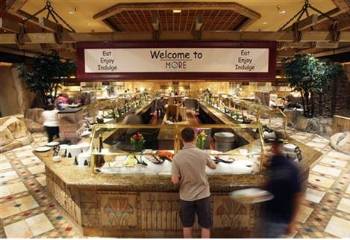
In 1946, Herb McDonald introduced the $1.00 all-you-can-eat buffet at El Rancho Vegas, the first hotel-casino on what would become the famous Las Vegas Strip. The low price brought people in to be ensnared by the games. It also kept hungry gamblers from leaving the casino at all.
national buffet day

The publicist’s idea was a hit. It became a feature of every casino that followed and continues to be the best “deal” in Las Vegas. With varying levels of excess–Las Vegas steam tables are a modern bacchanal–the buffet caught on across the United States.

It conjures a uniquely American image of obese families trundling along a seemingly endless line, clutching plates, resolute in their determination to wring value from the proprietors by eating as much as they possibly can. Otherwise, they’re not just getting ripped off; they’re facilitating it.

 The History of Buffet Day

The buffet table dates back to the 16th-century Swedish brännvinsbord, or Schnapps table. Despite the name, it also included bread, cheese, fish, sausages, etc.

In the 19th century, the brännvinsbord turned into the smörgåsbord, a table where guests gathered for a pre-dinner drink and light meal; it was not part of the formal dinner to follow. The smörgåsbord was often held in separate rooms for men and women before the dinner was served.

Smörgåsbord became internationally known as “smorgasbord” at the 1939 New York World’s Fair exhibition. The Swedish Pavilion had a restaurant called The Three Crowns that included a revolving smorgasbord. Removing accents was meant to make the word less confusing to visitors.

Sometime in the mid 20th century, buffet, yet another table–this time a French sideboard–nudged out smorgasbord as the most popular term for the meal. Since then the offerings have expanded along with our waistlines.

How to Celebrate National Buffet Day

There’s only one rule to follow when celebrating this holiday: Consume! Whether you celebrate Swedish tradition by drinking a bit of schnapps and finger food or celebrate the American Way by strapping on a feedbag, have a happy National Buffet Day!

Remember to save room for Ice Cream for Breakfast Day on February 4, National Jerky Day on June 12, Eat an Extra Dessert Day on September 4, National Cream-Filled Donut Day on September 14, and International Beer & Pizza Day on October 9. Bon appétit!

Copyright © 2018 Worldwide Weird Holidays

November 17 is National Unfriend Day

On November 17, 2010, comedian and late-night talk show host Jimmy Kimmel inaugurated National Unfriend Day with an advisory about fairweather Facebook friends.

Test them by asking for help with a move, he said. The people who respond are your friends. No one else. He capped off the proceedings with a public service announcement by William Shatner.

According to data from a 2014 Edison Research report, 58% of Americans are on Facebook and have an average of 350 Facebook friends. A holiday begun as a lark has never been more relevant.

In 2016, Kimmel asked his audience to post on his Facebook page who they had unfriended and why:

Happy National Unfriend Day!

Copyright © 2017 Worldwide Weird Holidays

November 16 is National Button Day

National Button DayNational Button Day
Today is National Button Day. How did it get its start and why should we celebrate it? We use this humble fastener every day but how much do we really know about it?

National Button Day may never have existed were it not for Otto Lightner, publisher of Hobbies magazine, who democratized collecting during the Great Depression when he said, “Even with no money, everyone could collect something.” He became fascinated by other people’s collections, amassing them and buying real estate for the sole purpose of housing them. (The Lightner Museum in St. Augustine, Florida, exhibits a few.)

Lightner organized a hobby show in 1938 at the Hotel Sherman in Chicago. Button collectors contributed to the show and founded the National Button Society (NBS) later that year. On November 16, 1939, NBS hosted its own event in Chicago to recognize button collecting as an organized hobby that anyone, rich or poor, could enjoy and declared it National Button Day.

Today, NBS  has more than 3,000 members on four continents, with 39 of the 50 states represented by state and local button clubs. Per its website:

Membership in the National Button Society is open to individuals and organizations who collect buttons and who wish to support the objectives of the NBS. Principal among those objectives are the promotion of educational research and exhibitions, the publishing and dissemination of information about buttons, and the preservation of the aesthetic and historical significance of buttons for future generations.

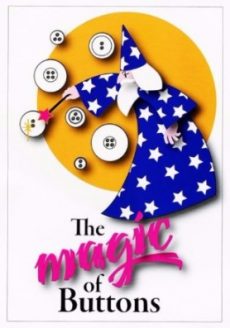
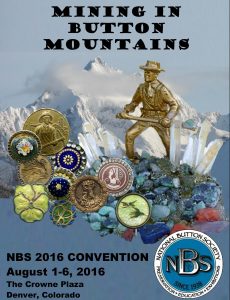
NBS holds a weeklong convention every August. In 2016, “Mining in Button Mountains” paid homage to its host city of Denver, Colorado.  Organizers chose “The Magic of Buttons” as the theme for the 2017 celebration in Appleton, Wisconsin. Each year, collectors meet to share finds, stories, craft ideas and fellowship.

national button dayNational Button Day

Do you have what it takes to join? The answer is yes. Every one of us can enjoy collecting buttons. Look around your home. Maybe you still have buttons that belonged to your grandmother. Have you ever noticed that while buttons may not be appreciated, they are rarely thrown out? You probably have a container sitting around right now.

A Brief History of the Button

The earliest known button was found in what is now Pakistan; it is made of a curved shell and is about 5000 years old. In ancient Rome, buttons were ornamental and rarely appeared in straight rows. Beginning in the Middle Ages, buttons became status symbols made of precious metals and stones. The number of buttons one wore communicated wealth.

The first guild of button-makers was formed in France in 1250. The buttonhole appeared around the same time but didn’t catch on right away. Most buttons remained strictly decorative, applied atop a garment while functional underpinnings such as the hook-and-eye and laces did the actual work of holding clothes together.

Even after the buttonhole helped forever change fashion design, many buttons were nonfunctional. There is a rumor about the origin of the seemingly useless line of buttons along the sleeves of coats and jackets, especially military uniforms.

According to legend, one of three leaders–Catherine the Great, King Frederick I of Prussia or Admiral Lord Nelson–inspected the troops (in Nelson’s case, the sailors) and ordered that buttons be sewn onto uniforms to discourage the young men from wiping their noses on their sleeves. Pockets weren’t yet features of most uniforms, so carrying a handkerchief was not a viable alternative. We’re loath to picture the scene of soldiers going off to battle with mucus streaming down their faces.

Over the years, buttons became increasingly ornate. Among the more extreme were “habitat” buttons, made to hold keepsakes like dried flowers, hair clippings or tiny insects under glass. Hollowed-out buttons allowed thieves to secretly transport jewels and other contraband. (This practice was revived unsuccessfully by a heroin-smuggling ring in 2009.)

Button orientation was formalized during the Victorian Era. Then as now, men tended to dress themselves so buttons faced right for their convenience.  Women wore their buttons on the left to make it easier for their maids to adjust while facing them.  (The presumption was that most people were right-handed.)

The servants are gone, but the convention remains. Right-handed women and left-handed men successfully button their clothes every day without giving a thought to the discrimination that decided their sartorial fate.

Go Forth and Button!

Now that you know more, it’s time to go round up some buttons. Check out these craft ideas for inspiration and have a happy and fun National Button Day!

Copyright © 2017 Worldwide Weird Holidays

Chaos Never Dies Day: Part Two

In Which I Inadvertently Prove that Chaos Never Dies

Chaos Never Dies Day proved all too true for me today, November 9, 2017,  when I was briefly interviewed by Michael S. Robinson on Microbin Radio. I had been invited to be a guest on the radio show only the day before so I dutifully spent a day cramming the online equivalent of Chaos Theory for Dummies to prepare.

I’d been told I’d be quizzed on how I came to write about weird holidays and asked about holidays taking place before the end of the year. I gathered information on two of the wackiest: Start Your Own Country Day and Tió de Nadal, which involves a Christmas log that craps out presents. I’ve never been on the radio before and was wargaming it all out until three minutes before I went on-air.

What I didn’t know ahead of time was that the guests on the docket before me were scheduled to talk about the mass shooting in Texas and the difficulties of parenting. The theme for the day was “Are we Stuck in a Bad News Hell?”

The Michael S Robinson Show banner

When Mr. Robinson introduced me, I launched into a description of the beauty of the order that dwells in chaos even though we can’t perceive it.

I gave the example of football, which can’t be predicted in strictly linear terms by the sum of the players’ and team’s rankings because of variables like team chemistry, whether it’s a home or away game, the quarterback’s attitude, etc. Since I’m confident that you’ll never hear this, I’m going to say it was brilliant.

But Mr. Robinson wanted to talk about the chaos we deal with every day. Of course. I have a lot to say about the unprecedented amount of chaos we’re experiencing nowadays, but I ended up being woefully unprepared. I should have known that was what he would want to discuss.

How did I make such a mistake and overshoot what should have been an interesting and informative conversation? I didn’t just strike out. I left my bat in the dugout and brought a cello to the plate. I’d like to credit chaos in some artful way, say it created a perfect trajectory I can’t identify. That’s hogwash, of course—or is it? (It is.)

Also, I had feedback blasting my words back at me, making it almost impossible to speak normally. There’s nothing worse than hearing your own voice faltering in near-real time. Again, chaos. I don’t think I’ll get invited back. It’s probably just as well that they spelled my name Kathlene Zaya.

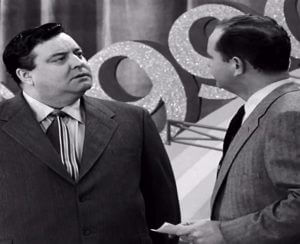
$99,000 Answer The Honeymooners Ralph KramdenAll this reminds me of the $99,000 Answer, an episode of The Honeymooners in which Ralph Kramden prepares to go on a game show where he’ll be required to identify songs by the first few bars.

He rents a piano and has Ed Norton play musical selections all week to prepare for the event. Ed always warms up by playing the first few bars of “Swanee River,” which never fails to annoy Ralph.

The night of the show, the first tune played is “Swanee River,” which he can’t name. He loses in spite of all his preparation. I laughed but felt bad for Ralph, perpetual loser.

It also reminds me of every Curb Your Enthusiasm episode when Larry David does something stupid or thoughtless by misunderstanding the context of a situation—or just because he’s a jerk. (That’s every episode.)

Fictional chaos theorist David Malcom said in Jurassic Park, “Life finds a way.” So do laughs but not always the ones you want or on the schedule you’d prefer.

CHAOS NEVER DIES, PART THREE:

November 9. 2018: I have not been invited for a return engagement by Michael S. Robinson. Perhaps my invitation was lost in the (e)mail. There certainly is quite a bit of chaos to discuss: the midterm elections, Trump’s firing of Jeff Sessions, the discovery that the Mayans invented television. (In honor of Chaos Never Dies Day, I invite you to Google that last one.)

Correction: In Part Two, I misidentified fictional character Ian Malcolm as fictional character David Malcom. I regret the error and know that my use of flawed web research one year ago has introduced another tiny bit of chaos to the Internet. So, I guess you could say I’m doing my part.

Copyright © 2018 Worldwide Weird Holidays

Share this: