strange, bizarre and kooky holidays in January

January 19 is Tin Can Day

tin can day

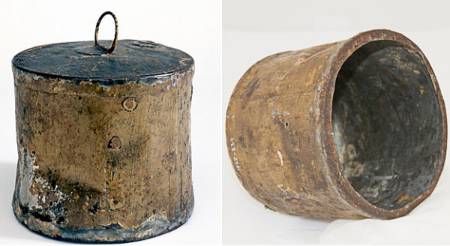
Today is Tin Can Day. On this date in 1825, the first U.S. patent for the invention of the tin can was awarded to  Ezra Daggett and Thomas Kensett. Like many things, the story of the tin can is not without intrigue. (Tintrigue?) A little history:

France

Paris confectioner Nicolas Appert invented a method of sealing foods in glass jars, then placing them in boiling water, effectively sterilizing them, decades before Louis Pasteur demonstrated that heat killed bacteria.

In 1810, Appert entered a competition sponsored by the French military. He won a cash prize in exchange for making his findings public. The preserved goods were a boon to the armed forces, especially the French navy, which had no fresh food for long stretches while at sea. Appert is considered by many to be the “father of canning,” despite never using cans.

England

There were drawbacks to Appert’s system: glass was heavy, fragile and prone to rupture from internal pressure. Later in 1810, British merchant Peter Durand received a patent from King George III to preserve foods in tinplated cans.

Durand is well-known as the inventor of the tin can but his patent application reveals it was “an invention communicated to him by a certain foreigner residing abroad.” Evidence suggests that Frenchman Philippe de Girard came to London and used Durand as an agent to patent his own creation.

On January 28, 1811, Sir Charles Blagden, a fellow of the Royal Society, wrote of Girard’s frequent visits to test his canned foods on the members. “M Girard came and brought his preserved foods…The broth had been kept since August last, he said. The milk and beef six weeks…His patent is taken out in the name of Durand.”

Why not file in France? Girard had recently designed a flax-spinning loom for which Napoleon promised a reward of one million francs but never paid. But there’s no record of Durand paying him for the rights.

In any case, Durand sold the British patent to Bryan Donkin for one thousand pounds. In 1818, Durand received a U.S. patent for the same design he’d sold in England. Perhaps Durand should be hailed, not as an inventor, but as a recycler. (Girard continued to innovate, without much financial success, until his death in 1844.)

United States

Until America won its independence in 1783, the power to grant patents was that of the British crown. The United States Constitution of 1787 first included provision for the Congress to issue patents:

The Congress shall have Power . . . To promote the Progress of Science and useful Arts, by securing for limited Times to Authors and Inventors the exclusive Right to their respective Writings and Discoveries.

The first Patent Act, “An Act to promote the progress of useful arts,” was enacted in 1790 and enabled any two of the secretary of state, the secretary of war, and the attorney general to grant patents lasting 14 years for new inventions and innovations that were “useful and important.”

We have finally arrived at our stated destination. Daggett and Kensett received their patent for the process of “preserving animal substances” on January 19, 1825. More than 4,000 patents had been granted in the United States by that time, one of them Durand’s.

So who should we credit for the tin can? We’re not sure but one person we should all thank is Ezra J. Warner, who patented the first can opener —decades later—on January 5, 1858.

Copyright © 2017 Worldwide Weird Holidays

January 18 is Thesaurus Day

Today is Thesaurus Day. It celebrates the birthday on January 18, 1779, of Peter Roget, who published his Thesaurus of English Words and Phrases in 1852, at the age of 72.

Thesaurus DayAccording to Joshua Kendall’s biography, The Man Who Made Lists, Roget was compelled from an early age to create lists and tally objects to bring order to a chaotic childhood filled with mentally ill family members, including an uncle who cut his own throat and died in Roget’s arms.

Roget’s obsessions followed him into adulthood. He found that counting things gave him comfort and noted, ” I every day go up at least 320 steps.” He marveled at his ability to control the movement of his own irises.

He found Paris filthy but admired the precision of Napoleon’s military parades. Later, as a doctor in his native England, he helped introduce lifesaving public health policy in Manchester. The city’s squalor drove him to spend his evenings composing the synonymic word lists that would eventually make up the Thesaurus.

He never intended it as a book of synonyms: he felt there was “really no such thing” because of the unique meaning of every word. Instead, it was an elaborate system of 1,000 lists meant to spur readers to higher levels of scholarship. The index he added, almost as an afterthought, is the only part that most people use. He continued to revise and update it until his death at the age of 90.

To honor Thesaurus Day, we consulted it for a synonym for “synonym.” We found “analogue,” “equivalent” and the obviously trying-too-hard “metonym.”

What about synonyms for “thesaurus?” Along with “glossary” and “lexicon,” we found less worthy terms such as “sourcebook” and “reference book.” Our favorite? “Onomasticon.” Try to sneak that into a sentence today and have a happy Thesaurus Day!

Copyright © 2017 Worldwide Weird Holidays

January 17 is Palomares Hydrogen Bomb Accident Day

Palomares Hydrogen Bomb Accident Day

January 17, 2016, marked the fiftieth anniversary of the worst nuclear accident you’ve probably never heard of, which took place over and on Palomares, Spain, and its 2,000 inhabitants. Its effects are still being discovered and its dangers are evolving as plutonium, with a half-life of 24,000 years, continues to contaminate the town and its people, plants and animals.

On January 17, 1966, the Cold War was in full swing and the US Air Force was on continuous airborne alert, flying routes across the Atlantic Ocean and the Mediterranean Sea to points along the border of the Soviet Union. The lengthy flights required two mid-air refuelings.

palomares hydrogen bomb accident day

A B-52 carrying four hydrogen bombs collided with its refueling plane, killing seven airmen and dropping its bombs. Conventional explosives in two detonated on impact, scattering radioactive plutonium over the farming town of Palomares.

Luckily—luck being a relative thing—the warheads were unarmed, preventing thermonuclear explosions, each of which would have been 73 times more powerful than the Hiroshima bomb.

The story most of the world heard was that one bomb had fallen and was eventually retrieved intact from the water eighty days later. The search for that bomb overshadowed the calamitous radioactive fallout that resulted. No one was evacuated from the village.

palomares hydrogen bomb accident day

U.S. Ambassador Angier Duke told the press, “This area has gone through no public health hazard of any kind, and no trace whatsoever of radioactivity has ever been found.” On March 8, he (and tourism minister Manuel Fraga) took a much-publicized swim at a local beach to prove the water was safe. “If this is radioactivity,” he told reporters, “I love it!”

palomares hydrogen bomb accident day

For three months, U.S. personnel and Spanish Civil Guards worked to decontaminate the area. Radioactive topsoil covering 5.4 acres was shoveled into thousands of barrels and shipped to the Savannah River Plant in South Carolina for processing. Land with lower surface contamination levels, totaling 42 acres, was plowed under to a depth of 12 inches.

palomares hydrogen bomb accident day

palomares hydrogen bomb accident day

Buildings were pressure-washed; those that still registered significant radiation were painted to cover the plutonium. Chipping, scraping, or sanding to repaint would, of course, reintroduce it into the atmosphere to be inhaled, ingested and absorbed.

Palomares was known for its delicious raf tomatoes. In 1966, all of them were burned (an action that dispersed more plutonium). After the cleanup, the next several crops failed but farmers persevered. They continue to grow them today, resentful that they have to sell them under a false name because of safety concerns about local produce.

palomares hydrogen bomb accident day

It has never been officially acknowledged that the humans who grew those tomatoes should be worried about their own exposure to radiation. In 1971, Wright Langham, a scientist at Los Alamos Laboratories, visited Palomares to assess the monitoring program put in place post-cleanup.

He found that only 100 villagers had undergone lung and urine testing; 29 tested positive, but that number was deemed “statistically insignificant.” None of the participants were allowed access to their medical records until 1985, after the town’s mayor successfully agitated to have them released.

In 2006, radiation levels detected in snails and other wildlife indicated the presence of dangerous amounts of radioactive material underground. In April 2008, two trenches containing debris and contaminated earth were discovered near the crash sites. American troops dug them in 1966, most likely in a last-minute effort to complete the cleanup before the mission ended. The U.S. government denied any wrongdoing.

Even when the U.S. began making payments to Spain shortly after the accident to help monitor the aftermath, it took no responsibility for loss of life or livelihood, let alone poisoning the land. When the agreement lapsed in 2009, their payments stopped. A new deal between the two countries seemed unlikely.

That, at least, has changed. On October 19,  2015, U.S. Secretary of State John Kerry and Spanish Foreign Minister José García-Margallo y Marfil  signed a “statement of intent.” (full text here)

The United States of America and the Kingdom of Spain (hereinafter collectively the “Participants”) intend to cooperate in a program to further remediate the site of a radioactive accident near Palomares, Spain, and with that aim they intend to negotiate as soon as possible an agreement to establish the necessary activities, roles and responsibilities of each Participant in that remediation and disposal project.

When? Soon. Until then, here’s a fence to keep everyone safe. Happy 50th anniversary, Palomares Hydrogen Bomb Accident Day!

palomares hydrogen bomb accident day

UPDATE:

On June 20, 2016, the New York Times ran an article about the American servicemen ordered to do cleanup at the site with no protective gear. After fifty years, government records have been declassified, showing systemic negligence toward the servicemen put in harm’s way.

When urine tests taken during the cleanup showed alarmingly high concentrations of plutonium, the Air Force threw out the results as “clearly unrealistic.” Although its own report recommended it, there was no effort to do follow-up tests and the Air Force has kept the radiation tests out of the men’s files.

The Department of Veterans Affairs relies on the Air Force’s records, which maintain that there was no harmful radiation in Palomares. The result? Veterans suffering multiple forms of cancer due to plutonium contamination are unable to receive full health care coverage; their claims are denied again and again.

Ronald R. Howell, 71, told the New York Times, “First they denied I was even there, then they denied there was any radiation.” Regarding a recent brain tumor removal, he said, “I submit a claim, and they deny. I submit appeal, and they deny. Now I’m all out of appeals. Pretty soon, we’ll all be dead and they will have succeeded at covering the whole thing up.”

Copyright © 2017 Worldwide Weird Holidays


January 16 is National Nothing Day

national nothing dayToday is National Nothing Day, created by journalist Harold Pullman Coffin and celebrated every year on January 16th since 1973.

Its purpose is “to provide Americans with one national day when they can just sit without celebrating, observing or honoring anything.”

In 1983, a law was passed declaring the third Monday of January to be Martin Luther King, Jr. Day.

Once every several years, the two holidays intersect, effectively nullifying Nothing Day—2012, 2017, 2024, 2034, etc. We think Coffin would appreciate the irony if he’d lived to see it. He died September 26, 1981, at the age of 76.

Feel free to honor or ignore this un-holiday any way you choose. You could take a nap, although we hope you’ll wait until you’ve finished reading this post. Lie back and (don’t) think of National Nothing Day!

Copyright © 2017 Worldwide Weird Holidays