Posts

February 3 is the Day the Music Died

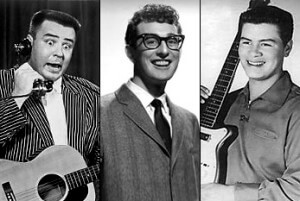
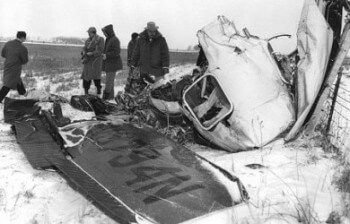
On February 3, 1959, musicians Buddy Holly, Ritchie Valens, and J. P. “The Big Bopper” Richardson were killed when their plane crashed in an Iowa cornfield. The tragic accident became known as “The Day the Music Died,” after a lyric in singer-songwriter Don McLean‘s 1971 anthem American Pie.

the day the music died

Richardson, Holly and Valens

At the time, they were on their way to a gig in Moorland, MN, a stop on their “Winter Dance Party” tour of the Midwest. Waylon Jennings, Tommy Allsup, and Dion DiMucci were on the way there on a school bus.

The tour began in Milwaukee, WI, on January 23, 1959. The first tour bus they rented was unequipped for the freezing winter weather. Due to the long distances between venues, everyone was stuck on the bus for many hours at a time.

The heater on the bus broke down. Drummer Carl Bunch suffered frostbite on his feet and was hospitalized in Ironwood, MI. The tour bus was replaced with a school bus and Bunch was left behind. Holly, Valens, and DiMucci took turns playing drums for each other at the performances in Green Bay, WI, and Clear Lake, IA.

By the time they reached Clear Lake on the evening of February 2, Holly was frustrated and decided to charter a plane to take him to Fargo, ND, after the show. The bus could then pick him up for the performance in nearby Moorhead, MN, sparing him hours of misery and allowing him to get some rest.

The four-seat Beechcraft 35 Bonanza Holly chartered was not named American Pie as many surmised from McLean’s song. It was known only by its registration number, N3794N. Except for a change in DiMuccio’s recollection timed to his book release more than 50 years later, the other survivors have always agreed on how the two remaining passengers ended up on that fateful flight.

The seats were meant for Holly’s bandmates Jennings and Allsup.  Along with Carl Bunch, they had formed a group after Holly left his band The Crickets. Holly felt responsible for convincing them to come on this miserable trip. Valens asked Allsup for his seat on the plane. He initially refused before agreeing to a coin toss to determine who would fly and who would take the dreaded bus. Valens won. Richardson had the flu so Jennings gave up his seat.

In Waylon: An Autobiography, Jennings related the conversation that would haunt him for the rest of his life. When Holly learned he wouldn’t be coming along on the flight,  he jokingly said, “Well, I hope your ol’ bus freezes up.” Jennings replied, “Well, I hope your ol’ plane crashes.”

day the music died

The cause of the crash has been under investigation on and off ever since. It was initially blamed on the poor judgment of the 21-year-old pilot, who was not yet qualified to fly using instrumentation in conditions of poor visibility. But it was also found that warnings about worsening weather weren’t relayed to the pilot before he took off in light snow.

In early 2015, the National Transportation Safety Board (NTSB) was petitioned to reopen the case and look for evidence of mechanical failure as well as proof that the pilot had made a heroic attempt to land. (The latter is unlikely as the plane hit nose down at 170 miles per hour.) In May 2015, the NTSB announced it will not reopen the case.

It’s a somber occasion to remember the death of these rock and roll legends but also an opportunity to celebrate the music they brought into the world. Listen to some of their hits today. It’s one way to keep the music alive.

Copyright © 2017 Worldwide Weird Holidays

January 20 is National Disc Jockey Day

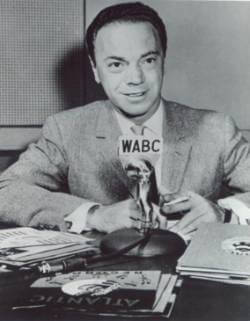
Today is National Disc Jockey Day. It marks the death of legendary radio DJ Albert James “Alan” Freed (December 15, 1921 – January 20, 1965).

national disc jockey day freed

Freed’s radio career began in 1945 at WAKR in Akron, Ohio, where he played rhythm and blues (R&B) records. He moved to WJW Cleveland in 1951 and continued to champion music without regard to race, at a time when stations that targeted white listeners ignored black artists.

Freed began calling the music “rock and roll” because “it seemed to suggest the rolling, surging beat of the music.” The term was suggestive, already in use as slang for sex, but Freed was the first radio DJ to use it.

As his show’s popularity increased, Freed decided to stage a dance at the Cleveland Arena. Tickets to the “Moondog Coronation Ball” on March 21, 1952, sold out. Thousands more showed up to crash the party. Although the police shut it down early, it is considered by many historians as the first real rock concert.

In 1954, after a salary dispute, Freed moved to WINS New York and called his late-night show “Rock ‘n’ Roll Party.” The concerts he organized in New York and other cities began to draw white as well as black youth. Soon enough, Freed made enemies of the three Ps: parents, priests, and press. The Daily News labeled the music “an inciter of juvenile delinquency” and named Freed the chief instigator.

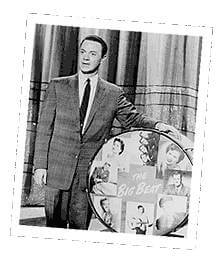
At first, this only increased his fame. WINS doubled his airtime; he began to get co-writing credits and royalties on the songs he played. He played himself in a series of musical films. In July of 1957, ABC hired Freed to host a TV show called The Big Beat but canceled it after the fourth episode showed a black singer dancing with a white girl, drawing protests from the network’s southern affiliates. It kept him on at WABC radio in the New York market.

national disc jockey day

On May 5, 1958, when police refused to lower the lights, potentially allowing teenagers to “neck” in the dark at a Boston event, Freed told the crowd, “It looks like the Boston police don’t want you to have a good time.” As a result, Freed was arrested and charged with attempting to incite a riot, One local paper printed the opinion that Freed’s “jam sessions…tend to become the magnet for hoodlums whose jungle instincts are aroused by the caterwauling and mass hypnotism, particularly if enough police are not alerted.”

He was subsequently fired by WINS but continued to spin records for WABC and host a local version of Big Beat on WNEW-TV New York until November 1959 when he was fired from the network after “payola” accusations surfaced and he refused to sign a statement denying involvement. Freed said he had accepted gifts that didn’t influence airplay.

Payola,” a contraction of the words “pay” and “Victrola” (an LP record player),  refers to payments from record companies to play specific records, a practice that was controversial but not illegal at the time. Alan Freed and Dick Clark were the top DJs in the country and the focus of the investigation.

Dick Clark gave up all his musical interests when ordered to do so by ABC-TV. He admitted a $125 investment in Jamie Records had returned a profit of $11,900 and that, of the 163 songs he had rights to, 143 were given to him, but denied accepting payola. As Clark told Rolling Stone in 1989, the lesson he learned from the payola trial was: “Protect your ass at all times.”

Freed didn’t fare so well. He was convicted on two counts of commercial bribery—which was a crime—for accepting $2,700, which he claimed was only a token of gratitude. He paid a $300 fine and received a six-month suspended sentence. Accepting “payola” was put on the books as a misdemeanor offense later.

Blackballed by the industry, he never worked for a prestigious station again and drifted between small stations in California and Florida before dying a poor and bitter man on January 20, 1965, due to cirrhosis of the liver brought on by alcohol abuse. He was 43 years old.

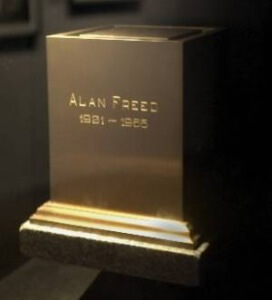
Freed was cremated and interred in Ferncliff Cemetery in Hartsdale, NY. In March 2002, his ashes were moved to the Rock and Roll Hall of Fame in Cleveland, Ohio. Freed’s association with Cleveland was a large part of the decision to locate the museum there.

national disc jockey day

Thirty years ago, on January 23, 1986, he was in the first group inducted into the Hall of Fame, with Elvis Presley, James Brown, Chuck Berry, Buddy Holly, Jerry Lee Lewis, Ray Charles and others. The radio station that broadcasts from within the museum is named the Alan Freed Studio.

On August 1, 2014, the Hall of Fame removed his ashes from view and asked his family to come get them. Executive Director Greg Harris said that the original request to put the urn on view at the museum came from the Freed family. “We planned on returning them all along,” he said.

In 2002, then Rock Hall CEO Terry Stewart said, “I’m sure some people will find it unusual and others might find it morbid. It’s certainly appropriate in a rock ‘n’ roll sense to have his final resting place here.” The key word is final.  There is no indication that Freed’s family intended to loan out his ashes.

The removal came just days after the museum opened an exhibit featuring Beyoncé’s costumes, including the black leotards she wore in her 2008 “Single Ladies” video. Harris defended the timing, saying, “Rock and roll isn’t just about yesterday. It continues to evolve, and we continue to embrace it and refine our operations.”

Perhaps it’s a fitting end for Freed’s ashes, considering that the man was rejected by the industry he helped to create. His family decided to keep his ashes in Cleveland at Lake View Cemetery. The Hall of Fame continues to pay tribute to Freed with other artifacts and sells a bronze-plated coin celebrating the inductees of 1986 for $32.39 at its gift shop. Rock on.

Copyright © 2017 Worldwide Weird Holidays


December 20 is Mudd Day

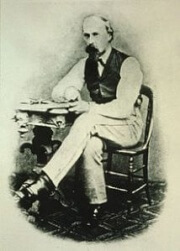
Today is Mudd Day. It commemorates the birthday of Dr. Samuel Mudd, who was accused of conspiring to assassinate President Abraham Lincoln and hiding his killer, John Wilkes Booth, after the fact.

Mudd Day

Dr. Samuel Mudd

After killing Lincoln on April 14, 1865, Booth fractured his fibula when he jumped from the president’s box seat to the stage of the Ford Theater and fled the scene. He and co-conspirator David Herold rode on horseback to Dr. Mudd’s house, arriving in the middle of the night. Mudd splinted Booth’s leg and let the men rest in a bedroom upstairs. They were at the house for at least twelve hours before leaving in late afternoon to continue their flight.

(The fugitives were cornered two weeks later in a Virginia tobacco shed by Union cavalry. Herold surrendered. Booth refused. Soldiers set the shed on fire and shot Booth as he tried to escape the flames.)

It’s possible Mudd didn’t know about the assassination. He went into town to run errands during the day of April 15th and certainly would have learned the news then. But he failed to report Booth’s visit for another twenty-four hours.

Authorities found Mudd’s hesitation suspicious. His inaction certainly allowed the men more time to escape. Under interrogation, he changed his story several times. He may have done so due to the stress of being questioned. He was arrested on April 26th, coincidentally the same day Booth was killed and Herold taken prisoner.

On June 29, 1865, Mudd was found guilty of conspiring to murder President Lincoln. He was sentenced to life in prison, escaping the death penalty by one vote. Four of the convicted, including Herold, were hanged eight days later.

Mudd was pardoned by President Andrew Johnson and released from prison in 1869. He died of pneumonia on January 10, 1883. Despite ongoing efforts to have his record expunged, Mudd’s conviction has never been overturned. A Facebook page is dedicated to clearing his name and his home has become a museum.

*****

One thing is clear, however. The phrase “your name is mud” has no connection to Dr. Mudd. Use of the word “mud” to label things as worthless or unwholesome dates back as far as the 16th century. Its usage was later applied to people, as documented in a 1703 description of London’s low life, Hell upon Earth:

Mud, a Fool, or thick skull Fellow.

The following citation appeared in an 1823 dictionary of slang terms.

Mud – a stupid twaddling fellow. ‘And his name is mud!’ ejaculated upon the conclusion of a silly oration, or of a leader in the Courier.

Oddly, “mud” was also used as a general intensifier. There are many published examples of “as fat as mud,” “as rich as mud,” “as sick as mud” etc. Eventually, the meanings coalesced into an epithet that insulted a person’s worth and identity, and sometimes carried a threat of violence. “Your name is mud” has been in use ever since.

Happy Mudd Day, we think.

Copyright 2016 Worldwide Weird Holidays

December 12 is Poinsettia Day

poinsettia dayToday is Poinsettia Day, which marks the death of Joel Roberts Poinsett on December 12, 1851. Poinsett was appointed in 1825 by President John Quincy Adams as Envoy Extraordinary and Minister Plenipotentiary to Mexico. (The title “Ambassador” wasn’t created until 1896.)

While there, Poinsett, an amateur botanist, introduced the American elm to Mexico. In 1829, he returned to his home in South Carolina with cuttings of a shrub with red flowers and cultivated it in his greenhouse.

The plant has a rich history in Mexico. The Aztecs called it Cuitlaxochitl (from cuitlatl, for residue, and xochitl, for flower) and used the leaves to dye fabrics and the sap to control fevers. Today it’s known in Mexico and Guatemala as La Flor de la Nochebuena (Flower of the Holy Night) and is displayed during celebrations of the Dia de la Virgen de Guadalupe, which also happens to take place on December 12.

poinsettia day

We’re not sure who started the rumor that poinsettias are poisonous, but we’ve found many studies refuting it, including this one, published in the American Journal of Emergency Medicine:

To determine if there was any validity to the toxicity claims, 849,575 plant exposures reported to the American Association of Poison Control Centers were electronically analyzed. Poinsettia exposures accounted for 22,793 cases and formed the subset that was analyzed to critically evaluate the morbidity and mortality associated with poinsettia exposures. There were no fatalities among all poinsettia exposures and 98.9% were accidental in nature, with 93.3% involving children. The majority of exposed patients (96.1%) were not treated in a health care facility and 92.4% did not develop any toxicity related to their exposure to the poinsettia.

Experts say a fifty-pound child would have to eat at least five hundred leaves just to get a bellyache. Since they taste terrible and a plant has a fraction of that number of leaves, it’s unlikely anyone is going to make a meal of them.

Although poinsettia leaves won’t kill pets, either, its emetic properties can make them throw up which, let’s face it, is no fun for anyone involved. Just to be on the safe side, keep it away from Fido and Mr. Whiskers. Everyone else can enjoy the sight of this iconic symbol of the holiday season and have a happy (and healthy) Poinsettia Day!

Copyright 2016 Worldwide Weird Holidays