Posts

January 8 is Show and Tell at Work Day

show and tell at work dayToday is Show and Tell at Work Day, created by Thomas & Ruth Roy of Wellcat Holidays & Herbs. Remember those halcyon days of youth when you’d take something to school and show it to the class, getting jeered at for being lame or reprimanded by the teacher for bringing something mucus-related?

Relive the good old days of childhood with Show and Tell at Work Day. Encourage your coworkers to participate by bringing in something of significance to them. You can all get to know each other better and have fun in the process. (Because the Roys specified January 8th, the holiday will not always fall during the regular workweek. Reschedule at your own risk. They’re sticklers about that kind of thing.)

We feel it only prudent to share a few suggestions to ensure that you’ll still be gainfully employed the following day. Here are a few items you should probably leave at home: roadkill, chainsaws, taxidermied pets, jars of fingernail clippings, and your child’s crayon-filled stool after he wanted to find out what blue tasted like (we’re giving you the benefit of the doubt that it’s his stool).

More no-nos:  a necklace of human ears (or any ears, really), the diorama of the Nuremberg trials you made with stolen office supplies, your Civil War reenactor’s uniform (either side), adult diapers (fresh or soiled), the detonator switch of the bomb you just placed under your boss’s car, the mask you wore in a convenience store robbery, nude selfies that show your torso tattooed with the names of every coworker, and the smartphone video of you peeing into the pot of coffee everyone is now drinking.

Of course, this is only a partial list. Use your own judgment and have a happy Show and Tell at Work Day!

Copyright 2016 Worldwide Weird Holidays

January 6 is National Bean Day

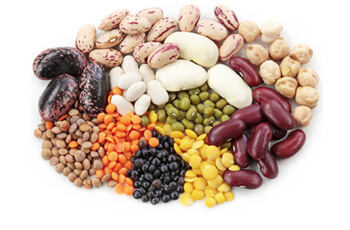
Today is National Bean Day. With over forty thousand varieties, the hardworking bean deserves its own day. Why is it celebrated on January 6th? No one knows for sure, but we have a couple of ideas and a suggestion.national bean day

Some claim it commemorates the death of renowned geneticist, Gregor Mendel, an Austrian monk who experimented with pea plants to test his theories of inheritance. He has been called the father of modern genetics. He died on January 6, 1884.

A number of holiday sites assert that Paula Bowen originated Bean Day because January is a bleak month with very few holidays to celebrate. She also wanted to honor her father, a pinto bean farmer. Consequently, she grew up eating a lot of beans.

We have been unable to confirm either theory. We know that Gregor Mendel existed but can’t say the same about Paula Bowen. We can find no source material and, frankly, it would take too long to contact every Paula Bowen in the United States. (Ms. Bowen, we’d love to hear from you.)

Beans are an excellent source of protein, iron and fiber. A British fellow named Gary Watkinson claims it’s all he eats. His girlfriend Beth says, “It’s a nightmare.” Maybe we should inaugurate International Bean Day and dedicate it to him?

national bean day

Happy National and International Bean Day!

Copyright 2016 Worldwide Weird Holidays

December 30 is National Bicarbonate of Soda Day

national bicarbonate of soda dayIt’s National Bicarbonate of Soda Day! Yes, that’s right: baking soda has its own day. As we shall see, this hardworking substance earns at least one holiday’s worth of celebration.

Sodium bicarbonate is a chemical compound with the formula NaHCO3. A component of the mineral natron, it is a white, odorless, water-soluble crystalline solid that is found dissolved in many mineral springs.

Ancient Egyptians used natron as a cleanser. In 1791, French chemist Nicolas Leblanc introduced sodium bicarbonate in its modern form. Fifty-five years later, two New York bakers, John Dwight and Austin Church, began to manufacture and sell the compound we know as baking soda today under the name John Dwight and Co.

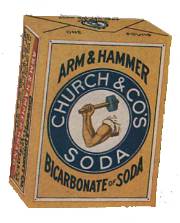
In 1867, the company became Church and Co. and debuted its Arm & Hammer packaging, depicting the hammer-wielding arm of Vulcan, Roman god of fire. It was marketed mainly as a leavening agent for use in baking until 1925, when the company published a booklet called A Friend in Need, touting baking soda as a “proven medical agent.”

Modern quack science makes extraordinary claims regarding baking soda. A Google search for “sodium bicarbonate cures cancer” returns 82,600 results; 7 of 10 on its first page advocate the treatment. As a thought experiment, ask this: if one (or many) doses of baking soda can “alkalinize” our blood and that in turn can cure cancer, what would the acid in a glass of orange juice do to our blood? Surely, adding a shot of vodka would be a death sentence, wouldn’t it?

While baking soda cannot differentiate between normal and cancer cells in our bodies, it can treat indigestion and make our laundry smell fresh, relieve insect bites, polish silverware, clean crayon stains from walls, remove grease from pans and oil from garage floors. It also kills ants and roaches, whitens teeth, freshens breath and exfoliates skin.

Here are five more uses:

  1. Keep cut flowers fresh longer by adding a teaspoon of baking soda to the vase.
  2. Make a paste with water or add to bath to relieve the pain of sunburn.
  3. Add a teaspoon to the water when you soak beans to neutralize their gassy effects.
  4. Throw onto small grease or electrical fires to extinguish them. Do not use on fires in deep fryers; the sudden release of carbon dioxide may cause the grease to splatter.
  5. Unclog a drain by pouring in 1/2 to 1 cup of baking soda, and then 1/2 to 1 cup of white vinegar. Let sit for five minutes—covered, if possible. Follow with a gallon of boiling water.

There are hundreds of uses for this amazing product. Discover a few more and have a happy National Bicarbonate of Soda Day!

Copyright 2016 Worldwide Weird Holidays

December 29 is National Pepper Pot Day

Today is National Pepper Pot Day. Pepper pot soup has been called the soup that won the Revolutionary War. By the time American troops reached Valley Forge on December 19, 1777, in the midst of a harsh winter, soldiers and the many wives, mothers and children who accompanied them were running desperately low on provisions. Local farmers refused the weak continental currency carried by General George Washington’s troops, instead selling their crops to the British.

On December 23, Washington wrote to the Continental Congress, “…I am now convinced, beyond a doubt that unless some great and capital change suddenly takes place in that line, this Army must inevitably be reduced to one or other of these three things. Starve, dissolve, or disperse, in order to obtain subsistence in the best manner they can; rest assured Sir this is not an exaggerated picture, but that I have abundant reason to support what I say.”

According to legend, on December 29, Washington instructed chief cook Christopher Ludwick to make a soup “that will warm and strengthen the body of a soldier and inspire his flagging spirit.” Only scraps re­mained in the kit­chen ex­cept for beef tripe donated by a nearby butcher, and pep­per­corns, a gift from a Ger­man­town pat­ri­ot. Ludwick combined them and named the soup Philadelphia Pepper Pot, a re­mind­er of Amer­ica’s claim to the Brit­ish-held city.

national pepper pot day

Because Ludwick hailed from Philadelphia, which was then a center of the slave trade, it’s thought that his pepper pot soup was an Americanized version of Jamaican callaloo. If you’d like to make it yourself, try this version from Northeast Times which states, “Al­though this re­cipe may not be identic­al to the Val­ley Forge ori­gin­al, you know it’s bound to be of­fal good. Still, some people just don’t have the stom­ach for it.” (There’s nothing like a good tripe-based pun!)

Philadelphia Pepper Pot Soup

2 me­di­um onions, diced
1 small green pep­per, diced
3 stalks cel­ery, diced
1 lb. tripe, cut in­to small, bite-sized pieces
4 Tb­sp. but­ter
3 qts. wa­ter
1 beef mar­row bone or 1 veal knuckle bone
1 tsp. ground pep­per
1/2 tsp. cay­enne pep­per
2 tsp. salt
2 bay leaves
2 tsp. dried thyme
1 tsp. dried mar­joram
2 me­di­um car­rots, diced
2 me­di­um pota­toes, diced
1 can to­ma­toes, (16 oz.)
1/4 cup pars­ley, chopped
1 tsp. dried mar­joram

Tripe Pre­par­a­tion:

– Blanch tripe be­fore adding to soup.
– Wash tripe well.
– Put tripe in a pot, cov­er with wa­ter and add 1 tsp. salt.
– Bring to a boil and al­low to cook for three minutes.
– Pour off wa­ter and cov­er tripe with cold wa­ter.
– Drain again.
– Cut tripe in­to small, bite-sized pieces with kit­chen shears.

Soup:

– In a soup pot, saute onions, green pep­per, cel­ery and tripe in but­ter for about 10 minutes.
– Add wa­ter, bone, pep­pers, salt, bay leaves, thyme and mar­joram.
– Cov­er and al­low soup to sim­mer for 45 minutes.
– Add car­rots, pota­toes, to­ma­toes and pars­ley.
– Con­tin­ue to sim­mer for 30 minutes.
– Re­move bay leaves.

Be­fore serving, you can add the fol­low­ing spaet­zle to the soup, if de­sired.

Spaet­zle:

1/2 cup flour
1/8 tsp. salt
1 egg
1 Tb­sp. milk

– Mix to­geth­er flour and salt, and make a well in cen­ter of flour.
– Put egg and milk in­to well and beat them slightly with a fork.
– Mix egg mix­ture and flour in­to a sticky dough.
– Drop about 1/3 tsp. of the bat­ter at a time in­to the sim­mer­ing soup.
– Al­low to sim­mer a few minutes un­til done.

Feeling a little less adventurous? Substitute chicken for the tripe. Feed your inner patriot on National Pepper Pot Day.


Copyright 2016 Worldwide Weird Holidays