Posts

November 16 is National Button Day
National Button DayNational Button Day

Today is National Button Day. How did it get its start and why should we celebrate it? We use this humble fastener every day but how much do we really know about it?

National Button Day may never have existed were it not for Otto Lightner, publisher of Hobbies magazine, who democratized collecting during the Great Depression when he said, “Even with no money, everyone could collect something.” He became fascinated by other people’s collections, amassing them and buying real estate for the sole purpose of housing them. (The Lightner Museum in St. Augustine, Florida, exhibits a few.)

Lightner organized a hobby show in 1938 at the Hotel Sherman in Chicago. Button collectors contributed to the show and founded the National Button Society (NBS) later that year. On November 16, 1939, NBS hosted its own event in Chicago to recognize button collecting as an organized hobby that anyone, rich or poor, could enjoy and declared it National Button Day.

Today, NBS  has more than 3,000 members on four continents, with 39 of the 50 states represented by state and local button clubs. Per its website:

Membership in the National Button Society is open to individuals and organizations who collect buttons and who wish to support the objectives of the NBS. Principal among those objectives are the promotion of educational research and exhibitions, the publishing and dissemination of information about buttons, and the preservation of the aesthetic and historical significance of buttons for future generations.

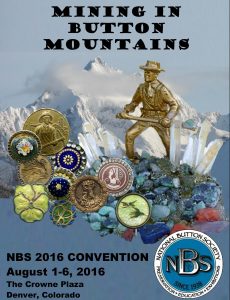
NBS holds a weeklong convention every August. In 2016, “Mining in Button Mountains” paid homage to its host city of Denver, Colorado.  Organizers chose “The Magic of Buttons” as the theme for the 2017 celebration in Appleton, Wisconsin. Each year, collectors meet to share finds, stories, craft ideas and fellowship.
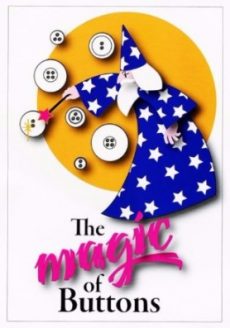
national button dayNational Button Day

Do you have what it takes to join? The answer is yes. Every one of us can enjoy collecting buttons. Look around your home. Maybe you still have buttons that belonged to your grandmother. Have you ever noticed that while buttons may not be appreciated, they are rarely thrown out? You probably have a container sitting around right now.

A Brief History of the Button

The earliest known button was found in what is now Pakistan; it is made of a curved shell and is about 5000 years old. In ancient Rome, buttons were ornamental and rarely appeared in straight rows. Beginning in the Middle Ages, buttons became status symbols made of precious metals and stones. The number of buttons one wore communicated wealth.

The first guild of button-makers was formed in France in 1250. The buttonhole appeared around the same time but didn’t catch on right away. Most buttons remained strictly decorative, applied atop a garment while functional underpinnings such as the hook-and-eye and laces did the actual work of holding clothes together.

Even after the buttonhole helped forever change fashion design, many buttons were nonfunctional. There is a rumor about the origin of the seemingly useless line of buttons along the sleeves of coats and jackets, especially military uniforms.

According to legend, one of three leaders–Catherine the Great, King Frederick I of Prussia or Admiral Lord Nelson–inspected the troops (in Nelson’s case, the sailors) and ordered that buttons be sewn onto uniforms to discourage the young men from wiping their noses on their sleeves. Pockets weren’t yet features of most uniforms, so carrying a handkerchief was not a viable alternative. We’re loath to picture the scene of soldiers going off to battle with mucus streaming down their faces.

Over the years, buttons became increasingly ornate. Among the more extreme were “habitat” buttons, made to hold keepsakes like dried flowers, hair clippings or tiny insects under glass. Hollowed-out buttons allowed thieves to secretly transport jewels and other contraband. (This practice was revived unsuccessfully by a heroin-smuggling ring in 2009.)

Button orientation was formalized during the Victorian Era. Then as now, men tended to dress themselves so buttons faced right for their convenience.  Women wore their buttons on the left to make it easier for their maids to adjust while facing them.  (The presumption was that most people were right-handed.)

The servants are gone, but the convention remains. Right-handed women and left-handed men successfully button their clothes every day without giving a thought to the discrimination that decided their sartorial fate.

Go Forth and Button!

Now that you know more, it’s time to go round up some buttons. Check out these craft ideas for inspiration and have a happy and fun National Button Day!

Copyright © 2017 Worldwide Weird Holidays

Chaos Never Dies Day: Part Two

In Which I Inadvertently Prove that Chaos Never Dies

Chaos Never Dies Day proved all too true for me today, November 9, 2017,  when I was briefly interviewed by Michael S. Robinson on Microbin Radio. I had been invited to be a guest on the radio show only the day before so I dutifully spent a day cramming the online equivalent of Chaos Theory for Dummies to prepare.

I’d been told I’d be quizzed on how I came to write about weird holidays and asked about holidays taking place before the end of the year. I gathered information on two of the wackiest: Start Your Own Country Day and Tió de Nadal, which involves a Christmas log that craps out presents. I’ve never been on the radio before and was wargaming it all out until three minutes before I went on-air.

What I didn’t know ahead of time was that the guests on the docket before me were scheduled to talk about the mass shooting in Texas and the difficulties of parenting. The theme for the day was “Are we Stuck in a Bad News Hell?”

The Michael S Robinson Show banner

When Mr. Robinson introduced me, I launched into a description of the beauty of the order that dwells in chaos even though we can’t perceive it.

I gave the example of football, which can’t be predicted in strictly linear terms by the sum of the players’ and team’s rankings because of variables like team chemistry, whether it’s a home or away game, the quarterback’s attitude, etc. Since I’m confident that you’ll never hear this, I’m going to say it was brilliant.

But Mr. Robinson wanted to talk about the chaos we deal with every day. Of course. I have a lot to say about the unprecedented amount of chaos we’re experiencing nowadays, but I ended up being woefully unprepared. I should have known that was what he would want to discuss.

How did I make such a mistake and overshoot what should have been an interesting and informative conversation? I didn’t just strike out. I left my bat in the dugout and brought a cello to the plate. I’d like to credit chaos in some artful way, say it created a perfect trajectory I can’t identify. That’s hogwash, of course—or is it? (It is.)

Also, I had feedback blasting my words back at me, making it almost impossible to speak normally. There’s nothing worse than hearing your own voice faltering in near-real time. Again, chaos. I don’t think I’ll get invited back. It’s probably just as well that they spelled my name Kathlene Zaya.

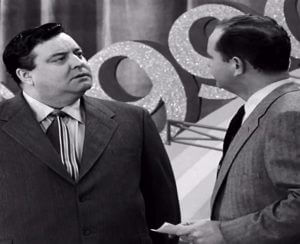
$99,000 Answer The Honeymooners Ralph KramdenAll this reminds me of the $99,000 Answer, an episode of The Honeymooners in which Ralph Kramden prepares to go on a game show where he’ll be required to identify songs by the first few bars.

He rents a piano and has Ed Norton play musical selections all week to prepare for the event. Ed always warms up by playing the first few bars of “Swanee River,” which never fails to annoy Ralph.

The night of the show, the first tune played is “Swanee River,” which he can’t name. He loses in spite of all his preparation. I laughed but felt bad for Ralph, perpetual loser.

It also reminds me of every Curb Your Enthusiasm episode when Larry David does something stupid or thoughtless by misunderstanding the context of a situation—or just because he’s a jerk. (That’s every episode.)

Fictional chaos theorist David Malcom said in Jurassic Park, “Life finds a way.” So do laughs but not always the ones you want or on the schedule you’d prefer.

CHAOS NEVER DIES, PART THREE:

November 9. 2018: I have not been invited for a return engagement by Michael S. Robinson. Perhaps my invitation was lost in the (e)mail. There certainly is quite a bit of chaos to discuss: the midterm elections, Trump’s firing of Jeff Sessions, the discovery that the Mayans invented television. (In honor of Chaos Never Dies Day, I invite you to Google that last one.)

Correction: In Part Two, I misidentified fictional character Ian Malcolm as fictional character David Malcom. I regret the error and know that my use of flawed web research one year ago has introduced another tiny bit of chaos to the Internet. So, I guess you could say I’m doing my part.

Copyright © 2018 Worldwide Weird Holidays

November 4 is Use Your Common Sense Day

use common sense dayUse Your Common Sense Day celebrates the birthday of Will Rogers, who once remarked, “Common sense ain’t common.” He was a witty self-made gentleman whose homespun wisdom still resonates today. He was born William Penn Adair Rogers on November 4, 1879, in Oolagah, Cherokee Nation, now known as Oklahoma.

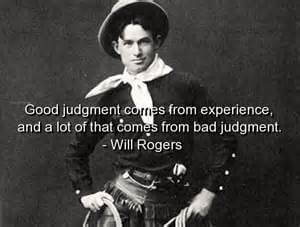
His official website lists him as an actor, author, humorist and pundit. He was also a genuine cowboy. If Nature combined Mark Twain and Ben Franklin with a liberal dose of Groucho Marx, then taught him how to rope a steer, the result could only be Will Rogers.

He quit school in 1902 and traveled the world with circuses and “wild west” shows, doing rope tricks. He graduated to vaudeville and the Ziegfeld Follies, becoming known for his sense of humor as much as his lasso skills. He married Betty Blake on November 25, 1908, and they had four children. Rogers went on to star in fifty silent films and twenty-one “talkies.” He also wrote 4,000 syndicated newspaper columns and was a favored guest on radio shows.

In 1926, Rogers returned from a trip to Europe, noting advances in commercial aviation there that sharply contrasted with the United State’s almost non-existent facilities. He took every opportunity to point out the safety, speed and convenience of air travel and helped sway public opinion.

In 1935, aviator Wiley Post decided to survey a possible mail-and-passenger air route from Washington State to Russia. Rogers visited Post often at the Burbank, CA airport where he was outfitting his plane with floats to land on the lakes of Alaska and Siberia. He asked Post to fly him through Alaska in search of new material for his newspaper column.

Post and Rogers left Seattle in early August, making several stops in Alaska. While Post piloted the aircraft, Rogers wrote his columns on his typewriter. On August 15, they left Fairbanks for Point Barrow. They were a few miles away when they lost their bearings and landed in a lagoon to ask directions. On takeoff, the engine failed at low altitude and plunged back into the lagoon, killing both men.

The nation mourned the loss of Will Rogers. He was only 55 years old.  Eighty years later, he is still quoted. Volumes of his essays and quips still appear in bookstores. There are thirteen public schools in Oklahoma named after him as is the Will Rogers World Airport. But it is the story of how a statue of Rogers came to be placed in the United States Capitol that we feel sums him up best.

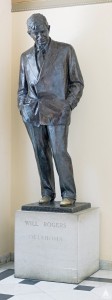
Not long before his death, Oklahoma leaders asked Rogers to represent the state as one of two statues in the National Statuary Hall housed in the United States Capitol. He agreed on one condition: that the statue must be placed facing the House Chamber so he could “keep an eye on Congress.”

Unveiled on June 6, 1939, almost four years after his death, the statue of Rogers is the only one that faces the floor entrance of the House of Representatives Chamber. According to guides at the Capitol, each President rubs the left shoe of the statue for good luck before entering the House Chamber to give the State of the Union address.

That may be bunk, as he liked to say—he even ran for president on an Anti-Bunk platform. (Rallying cry:  “Our support will have to come from those who want nothing and have the assurance of getting it.”) Scoff all you want but take a closer look at his shoes. They’re shiny: buffed by the hands of many a legislator. That’s no bunk.

use common sense day

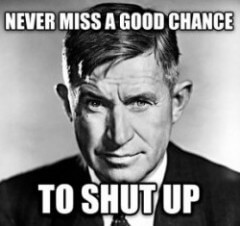
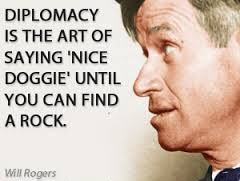
Will Rogers’ most famous quote is probably this: “I never met a man I didn’t like.” Here are a few more of our favorites.

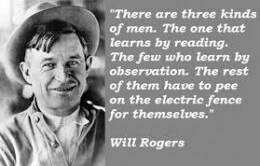
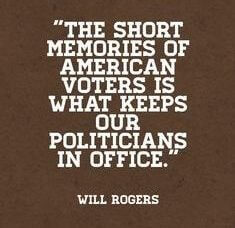
use your common sense rogers politicsuse common sense day rogers judgmentuse common sense day rogers laughsuse common sense day rogers shut upuse common sense day rogers diplomacyuse common sense day rogers 3 kinds

We can almost hear him chuckling now.

Happy Use Your Common Sense Day!

Copyright © 2017 Worldwide Weird Holidays

November 3 is National Sandwich Day

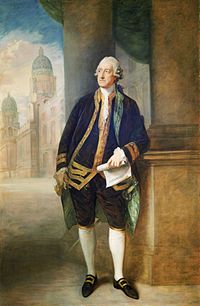
Today is National Sandwich Day. On November 3, 1762, John Montagu, 4th Earl of Sandwich, invented the—you guessed it!—sandwich. But why, where, how and who?National Sandwich Day Earl

Why?

He was hungry. That’s just about the only subject upon which everyone agrees.

Where?

He was either working long hours at his desk or playing poker in a gambling hall.

How?

He ordered a servant to fetch him salted meat between two slices of bread so he could continue working (or gambling) without smearing grease on his papers (or cards).

A version of events that spread the gambling rumor was reported by P.J. Grosley in his travelogue Tour to London:

A minister of state passed four and twenty hours at a public gaming-table, so absorpt in play that, during the whole time, he had no subsistence but a bit of beef, between two slices of toasted bread, which he eat without ever quitting the game. This new dish grew highly in vogue, during my residence in London: it was called by the name of the minister who invented it.

N.A.M. Rodger dismissed this account in his biography The Insatiable Earl:

The alternative explanation is that he invented it to sustain himself at his desk, which seems plausible since we have ample evidence of the long hours he worked from an early start, in an age when dinner was the only substantial meal of the day, and the fashionable hour to dine was four o’clock.

Who?

Thankfully, the 1st Earl changed his mind about taking the title of Earl of Portsmouth and decided to honor the town of Sandwich instead, possibly because the fleet he commanded was tied there in 1660. Ordering a Portsmouth would be tricky to pronounce correctly, depending on which side of the Pond you’re on.

His great-great-great grandson John, the 4th Earl of Sandwich, probably got the idea for his creation on a trip to the Mediterranean, where Turkish and Greek platters of dips, meats and cheese were served with layers of bread. The first known use of the word “sandwich” in its current context is attributed to historian Edward Gibbon, author of The History of the Decline and Fall of the Roman Empire, who wrote in a journal entry dated November 24, 1762:

That respectable body, of which I have the honour of being a member, affords every evening a sight truly English. Twenty or thirty, perhaps, of the first men in the kingdom, in point of fashion and fortune, supping at little tables covered with a napkin, in the middle of a coffee-room, upon a bit of cold meat, or a sandwich, and drinking a glass of punch.

By 1773, the word “sandwich” had been used in a cookbook for the first time and would forever be associated with Montagu.

Of course, he didn’t invent the sandwich. Rabbi Hillel the Elder is said to have begun, in the 1st Century B.C., the Passover tradition of placing lamb, nuts and herbs between two pieces of unleavened bread in the 1st Century BC. In the Middle Ages, thick slices of stale bread were used as plates for cooked meats and vegetables. The Dutch have a long tradition of serving bread & butter with meat, fish or other fillings and toppings.

But the name stuck so that’s what we call it and it is, for most of us, the only reason we know anything about John Montagu. Though he must have been a big hit with bakers, he was branded as immoral and incompetent by many of his contemporaries. Recently, some historians have suggested that previous accounts have relied too heavily on sources from his political enemies.

Lord Sandwich was also haunted by his troubled personal history. His wife Dorothy became increasingly mentally ill during their marriage. They separated and she went on to live with her elder sister, continuing to deteriorate until she was declared insane and committed.

Montagu took a mistress, singer Martha Ray—reputed to be the inspiration for “My Fair Lady”— and lived with her and their children openly. Divorce was not an option, let alone living in sin. His reputation was irreparably damaged.  It ended in tragedy when she was shot to death by a clergyman who was later rumored to be her lover, although there was no evidence of anything more than a crush on his part.

There’s also the fact that he was First Admiral of the Navy during the American Revolutionary War. That didn’t go so well for the British Empire, as you may recall.

Clearly, there is too much meat in this story to fit between two slices of bread, metaphorically speaking. You can learn much more at  PBS.orgEncyclopaedia BritannicaMontague Millenium, Open Sandwich and Your Dictionary,

Happy National Sandwich Day!

Copyright © 2017 Worldwide Weird Holidays