Posts

February 15 is Susan B. Anthony Day

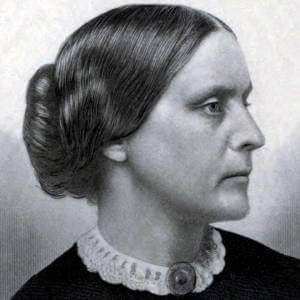
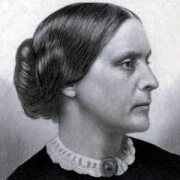
Susan B. Anthony DayToday is Susan B. Anthony DaySusan Brownell Anthony, born February 15, 1820,  was an American abolitionist and feminist who fought for women’s rights, including the right to vote, until her death in 1906.

The only weird thing about this holiday is that it is officially observed in only five states: Wisconsin, Florida, West Virginia, New York, and California.

Anthony’s father believed his daughters should get a good education and sent her away to study. When she returned at age 14—when women weren’t allowed to attend college—she took one of the few jobs deemed acceptable: teaching. She earned $2.50 a week while her male counterparts earned $10.00. She felt equal work deserved equal pay.

At that time, married women were required to give their wages to their husbands. Wives were property, as were their children. Any inheritance a wife received automatically belonged to her husband as well. Only single women could enter into contracts. Women, regardless of marital status, were not allowed to vote on social and political issues that affected their lives.

In 1840, Elizabeth Cady Stanton and Lucretia Mott, two women who would later become Anthony’s compatriots, were turned away and not allowed to speak against slavery at the World Anti-Slavery Convention in London—because they were women.

In 1848,  Mott, Stanton, and others held a historic meeting in Seneca Falls, NY, where they issued a Declaration of Sentiments and Resolutions, detailing the disenfranchisement of women. It’s widely believed that Anthony met Stanton and Mott there.

In fact, she was not introduced to the two women until 1851. According to Lisa Tetrault, author of The Myth of Seneca Falls: Memory and the Women’s Suffrage Movement, 1848-1898, this misperception was encouraged by Anthony and Stanton to depict a unified movement, with the 1840 incident leading directly to the Seneca Falls “watershed moment” for the cause of women’s equality.

In actuality, there were many divisive issues. Some wanted to prioritize African-American male suffrage above white women’s suffrage. Splinter groups formed in support of free love, tax resistance, temperance, and social purity. Many African-American women participated while also fighting to improve working conditions for freedwomen.

There’s no arguing that Susan B. Anthony was an essential part of the movement. She traveled around the country, rallying women with her rousing speeches. She was known to say, “The Constitution says, ‘We the people,’ not, ‘We the male citizens.'”

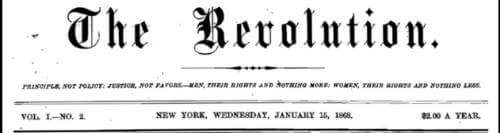
In January 1868, she and Stanton launched a weekly newspaper, The Revolution, in New York City. It focused primarily on women’s rights and suffrage, but also covered topics such as politics, finance, and the labor movement. Its motto was “Principle, not Policy—Men, their rights and nothing more: Women, their rights and nothing less.”
Susan B Anthony Day

The Fifteenth Amendment to the U.S. Constitution was ratified on February 3, 1870. It states, “The right of citizens of the United States to vote shall not be denied or abridged by the United States or by any State on account of race, color, or previous condition of servitude.”

Although it made no mention of women, Anthony decided to vote in the 1872 presidential election, arguing that she qualified as a “citizen” and was protected by the amendment. She and a group of other women were arrested after voting in her hometown of Rochester, NY. A trial was scheduled for early the following year.

Prior to 1878, federal courts barred criminal defendants from testifying or addressing the jury in their own trials. Before the trial, however, they were allowed to attempt to “educate” anyone who might be selected as a juror.

According to the Federal Judicial Center, “Anthony spoke in twenty-nine villages and towns of Monroe County, asking ‘Is It a Crime for a U.S. Citizen to Vote?’ When she delivered her lecture in Rochester, the county seat, a daily newspaper printed her speech in full, circulating it further.

In May, after many delays, U.S. Attorney Richard Crowley successfully petitioned to have the trial moved to a neighboring county, negating Anthony’s efforts to persuade the jury pool. She immediately drew up a schedule to visit every town she could in the month before her trial on June 17, 1783.

A jury of twelve men and Justice Ward Hunt listened to Crowley’s prosecutorial arguments for the better part of the day. Anthony’s defense attorney Henry Selden presented his case during the latter part of the afternoon.

The following day was devoted to Crowley’s recitation of the government’s case. At the end of the day, Justice Hunt declared that Anthony had knowingly violated the law and that, as a result, there was nothing for the jury to determine; it must return a verdict of guilty.

Selden argued for the jury’s right to decide guilt or innocence and its need to determine Anthony’s intent when voting. Hunt again told the jury it must deliver a guilty verdict, and the clerk refused to allow Selden to poll the jury.

Selden returned to court the next day to file a motion for a new trial. In circuit courts, a motion was heard by the same judge whose actions had caused an attorney to file that motion. In other words, Justice Hunt would be asked to decide whether he had violated the Constitution by denying Anthony a trial by jury.

Unsurprisingly, Hunt denied the motion, stating that the right to a trial by jury “exists only in respect of a disputed fact,” and no facts were in dispute. Before sentencing her, Hunt asked Anthony if she had anything to say.

She responded with perhaps the most impassioned speech in the history of the fight for women’s rights, offering a blistering indictment of everything from the trial to male sovereignty to the responsibility to disobey unjust laws, such as those that had made it illegal to give a cup of water to a fleeing slave. (Transcript here.)

She condemned the proceedings she said “trampled under foot every vital principle of our government.” She had not received justice under “forms of law all made by men,” “failing, even, to get a trial by a jury not of my peers.”

Sentenced to pay a $100 fine and the costs of the prosecution, she swore to “never pay a dollar of your unjust penalty.” In a move calculated to preclude an appeal to a higher court, Hunt ended the trial by announcing, “Madam, the Court will not order you committed until the fine is paid.”

She continued to agitate, traveling to almost every state, speaking publicly at each stop. It’s been estimated that, in 60 years of tireless effort to win women the right to vote, she gave 75 to 100 speeches per year.  She served as president of the National American Woman Suffrage Association (NAWSA) from 1892 to 1900 and continued to fight until her death on March 13, 1906, at the age of 86.

The Nineteenth Amendment to the U.S. Constitution was ratified on August 18, 1920. It states, “The right of citizens of the United States to vote shall not be denied or abridged by the United States or by any state on account of sex.”

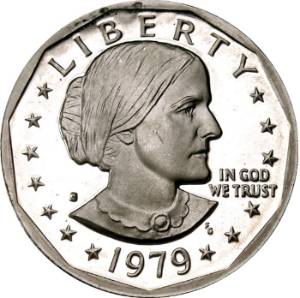
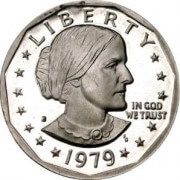
In 1979, the U.S. Mint introduced the Susan B. Anthony dollar, the first coin to bear the likeness of an American woman. We think she would have found it funny to be enshrined on federal money…
 Susan B. Anthony Day

…since she never paid that fine.
Copyright © 2017 Worldwide Weird Holidays

February 14 is National Ferris Wheel Day

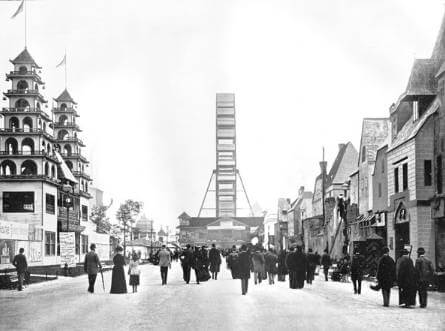
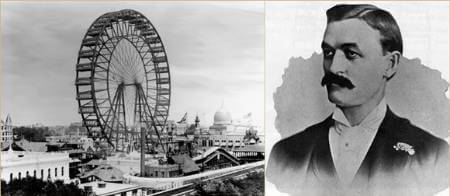
Today is National Ferris Wheel Day, a holiday that celebrates the birth of George Washington Gale Ferris on February 14, 1859. At age 33, he designed the first Ferris Wheel, which was introduced at the 1893 World’s Columbian Exposition.

national ferris wheel day

The exhibition was also known as the Chicago World’s Fair and commemorated the 400th anniversary of Columbus’ landing in the New World. It was one year late but, considering that Columbus actually landed on an island in the Caribbean, thought he was in Asia and never set foot on what would become the United States, maybe we should let it slide.

national ferris wheel day

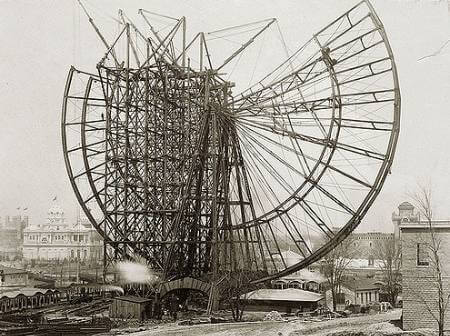
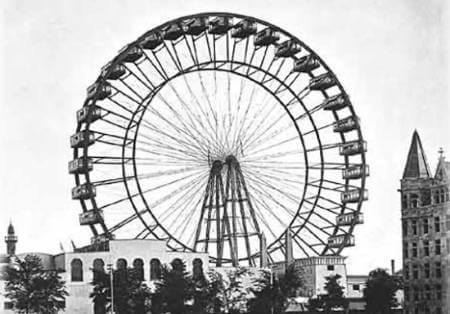
The Ferris Wheel was America’s answer to the Eiffel Tower, the jewel of the 1889 Paris Exposition. When completed, the ride stood 264feet high, with a circumference of 825 feet, and had 36 cars, each 24 feet long, 13 feet wide and 10 feet high, weighing 26,000 pounds. Screens were fitted over the glass windows on each side. Doors locked securely; firefighting equipment was included. Conductors rode in each car to answer questions and allay fears.

Cars held up to 60 passengers at a time, with a total capacity of 2,160. It took 20 minutes to complete two revolutions, stopping at six platforms to admit and unload passengers then making a nine-minute nonstop rotation. A guard was posted on each platform to signal the operator when it was safe to resume.

national ferris wheel day

The Ferris Wheel opened on June 21, 1893, carrying up to 38,000 passengers daily. A ticket cost 50¢. More than 1.4 million people rode it over the next 19 weeks. On clear days, it was possible to see the fairgrounds, the surrounding city and countryside of four neighboring states. Three thousand of Edison’s new lightbulbs mounted on the wheel made it a spectacle at night as well. The ride had a perfect safety record.

national ferris wheel day

After the fair closed, George Ferris became convinced he’d been cheated out of his share of the reported $750,000 profits the ride earned for exhibition management. His investors and suppliers pursued him for nonpayment. He was also sued by makers of similar “pleasure wheels” for patent infringement. He spent the next two years embroiled in litigation.

Although he eventually proved himself to be his ride’s rightful inventor, the efforts took an emotional and physical toll on him. In 1895, instead of selling the wheel to an amusement park like Coney Island, Ferris paid to have it dismantled and rebuilt in Chicago’s Lincoln Park, hoping to earn a profit from ticket sales. The venture was a failure.

In what would prove to be his last attempt to pay debts, he sold most of his interest in the business he’d built, G.W.G. Ferris & Company, to his partners. He died of typhoid fever on November 22, 1896, at the age of 37. After his death, it was revealed that he was bankrupt and his wife had left him the year before.

On June 3, 1903, the Chicago Tribune reported that the Ferris Wheel, with $400,000 in outstanding debts, had been sold at auction for $1,800 to a wrecking company called Old Truck, which took it down and reassembled it for the 1904 World’s Fair in St. Louis, Missouri. It’s estimated to have carried 2.5 million passengers from its inaugural day in 1893 through its last day of operation in 1904.

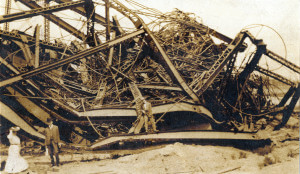
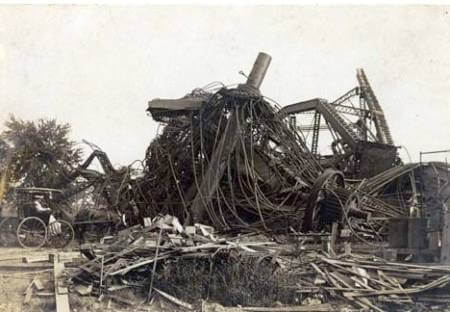
In 1906, with neighbors complaining about the eyesore that remained, the Ferris Wheel was reduced to rubble with dynamite. Demolition experts had to use twice the amount of TNT they thought would get the job done. The first 100 pounds brought down the wheel but didn’t destroy the foundation. Workers drilled holes into the concrete and dropped in 100 pounds’ worth of dynamite sticks. What was left was hauled away as scrap.

national ferris wheel day

national ferris wheel day

Perhaps what we should remember about Ferris are his contributions as an engineer to the modern usage of steel in building construction and the experience he gave to millions. As journalist Robert Graves reported in 1893, “It is an indescribable sensation, that of revolving through such a vast orbit in a bird cage.”

Happy National Ferris Wheel Day!

Copyright © 2017 Worldwide Weird Holidays

Share this:

February 11 is Pro Sports Wives Day

pro sports wives dayToday is the 11th annual Pro Sports Wives Day, a national day of recognition for the contributions of pro sports wives to their husband’s careers and the community. According to Statista, which gathers statistics from more than 18,000 sources, 2014 revenue of U.S. sports markets totaled 60.8 billion dollars.

Pro Sports Wives Day was instituted in 2006 by the Professional Sports Wives Association (PSWA), an organization that seeks to unite all sports wives and provide information about financial planning, childcare, household management, marital support, franchise opportunities and domestic violence.

PSWA publishes a quarterly e-magazine and its website includes videos about diabetes control and securing pensions. There is also a PSA that looks suspiciously like an ad for a traumatic brain injury treatment center, and another that turns out to be “an intimate message from God to you.”

The association began Pro Sports Wives Day to acknowledge the critical role that the wives of professional athletes play behind the scenes by helping to support their families, charities, foundations, and each other.

Pro Sports Wives Day honors the past year’s most distinguished mentors, philanthropists, and entrepreneurs. It also awards Married Female Athlete of the Year, Pro Sports Wives League of the Year and the Pro Sports Wives Courage Award, which typically goes to a wife who’s dealt with a devastating illness, either her own or that of a family member.

“Most fans think that the player’s lives are glamorous and that players, wives, and families do not have any problems that non-public families face, which is not true,” said Gena Pitts, founder of PSWA. “In fact, we face more physical, emotional, financial, divorce, and stressful situations simultaneously that money can not solve than most people face in a lifetime.”

That’s enlightening. We didn’t know that pro sports players and their families have it harder than the rest of us. No matter what we may think of that assertion, we should all take a moment to recognize the challenges these women face and overcome on a daily basis. And have a happy Pro Sports Wives Day!

Copyright © 2017 Worldwide Weird Holidays

February 2 is Sled Dog Day

Today is Sled Dog Day which recognizes the heroism of 20 men and 150 dogs who raced to save the town of Nome, Alaska from an epidemic. In January of 1925, children began to fall ill, gasping for breath. At least four died. Diphtheria is a highly contagious respiratory disease, often lethal without treatment. It’s curable, but the nearest supply of antitoxin serum was in Anchorage, 1,000 miles away.

On January 25th the town’s only doctor, Dr. Welch, arranged for the serum to be transported by train to Nenana, the end of the line, still almost 700 miles away. Experienced dogsledders, called mushers, decided to run their teams in relays to deliver the 20-pound batch of serum, wrapped in fur, to Nome.sled dog day

The serum arrived in Nenana on the evening of January 27th. Musher “Wild Bill” Shannon tied the package to his sled and set off on the first 52-mile leg of a 674-mile journey that became known as the “Great Race of Mercy.” Wind chill reached -60° Fahrenheit.

The teams averaged six miles per hour and covered about 30 miles of ground apiece, but when Leonhard Seppala, a famous musher at the time, received the serum on January 31st in Shaktoolik, he covered 91 miles with lead dog Togo. He then handed it off to Charlie Olson, who traveled 25 miles before giving it to Gunnar Kaasen for what was supposed to be the second-to-last leg of the relay.

sled dog day

Kaasen and Balto

Kaasen ran straight into a blizzard, the snow sometimes so intense it caused a white-out in which he couldn’t see any of his 13-dog team. He trusted his lead dog, Balto, who relied on scent to guide them. At one point the sled flipped, pitching the serum into a snowbank and sending Kaasen scrambling to find it.

He arrived in Port Safety in the early morning hours of February 2nd, but when the next team was not ready to leave, he pressed on to Nome himself. At 5:30 AM, Balto led the way into Nome to deliver the serum, frozen solid, to Dr. Welch. The doctor thawed the antitoxin, then injected the townspeople. Three weeks later, he lifted the quarantine.

sled dog day

Balto and team in Nome after delivering vaccine

The relay had taken five-and-a-half days, cutting the previous record by almost half. Many mushers had suffered frostbite and four of the dogs died from exposure.

The story got international attention and Balto became a superstar. Within weeks, he was contracted to star in a short Hollywood film entitled Balto’s Race to Nome. After traveling to Seattle, Washington and shooting on Mt. Rainier, Kaasen, his wife, Balto and the rest of the team embarked on a nine-month vaudeville tour of the country. They arrived in December of 1925 to witness the unveiling of a bronze likeness of Balto in New York City’s Central Park.

Statue of Balto in New York's Central Park (Credit: Getty Images)

The statue is located on the main path leading north from the Tisch Children’s Zoo. In front of it, a slate plaque depicts Balto’s sled team, and bears the following inscription:

Dedicated to the indomitable spirit of the sled dogs that relayed antitoxin six hundred miles
over rough ice, across treacherous waters, through Arctic blizzards from Nenana
to the relief of stricken Nome in the Winter of 1925.

Endurance · Fidelity · Intelligence

Although Seppala also toured the country and appeared with Togo in an advertising campaign for Lucky Strike cigarettes, he felt cheated by the attention lavished on Kaasen and Balto. He had raised Balto and considered him genetically inferior, with a boxy build; he’d neutered him as a puppy to ensure his line would not continue.

sled dog day

Seppala and Togo

A quote from biography Seppala: Alaskan Dog Driver reads, “The chief thing which disturbed me was that Togo’s records were given to Balto, a scrub dog who was pushed into the limelight and made immortal. It was almost more than I could bear when the ‘newspaper’ dog Balto received a statue for his ‘glorious achievements.'”

The timing and circumstances surrounding what happened next is unclear. Both men worked for Pioneer Mining and Ditch Company near Nome. Kaasen was recalled by the company, most likely at his superior Seppala’s behest. Some accounts say Seppala’s friend, mountaineer Roald Amundsen confronted Kaasen in Chicago, Illinois, a stop on the vaudeville tour he’d been forced to resume due to financial difficulties, and told him to return home immediately. With Kaasen in Alaska, there would be nothing to divert attention from a ceremony Seppala had planned in which Amundsen would award a gold medal to Togo.

No matter how it came to pass, Kaasen found himself financially unable to secure passage for the dogs and with no time to raise funds. He had no choice but to leave them with the tour’s promoter, who had no use for 13 dogs and sold them at a stop in Los Angeles, California to a “museum” where they were tied up in a small dark room, neglected and sometimes abused. For a dime, people could peek in the room’s one small window and see the hero dogs that had saved a town.

This went on for several months until businessman George Kimble, visiting from Cleveland, Ohio, saw an advertisement for the attraction and went to have a look. Incensed at their deplorable condition, fearing that they would soon pine away and die, he approached the owner who offered to sell them to him for $2,000.

Mr. Kimble worked together with a Cleveland newspaper, The Plain Dealer, to get the word out. Children and adults all over the country donated and in only ten days, Kimble was able to rescue the dogs and bring them to Cleveland. (At this point, only seven dogs remained. It’s unknown what happened to the other six.) On March 19, 1927, Balto and his teammates received a hero’s welcome in a triumphant parade. The dogs were then taken to the Brookside Zoo and lived the rest of their lives in comfort.

After Balto died in 1933, his remains were mounted by a taxidermist and donated to the Cleveland Museum of Natural History. In 1998, the Alaska legislature passed HJR 62- the ‘Bring Back Balto’ resolution. The museum refused to return Balto but in October of that year, they loaned him for five months to the Anchorage Museum of History and Art, which drew record crowds.

sled dog day

Sunlight has faded Balto’s coat from black to brown.

After Togo’s death in 1929, Seppala had him custom mounted and displayed at Yale University’s Peabody Museum of Natural History. (His skeleton is still there.) In 1964, the stuffed dog was transferred to a museum in Vermont.

During all the years he was displayed, Togo was not enclosed. His coat had begun to bald where he was petted. His significance forgotten, Togo was put into storage in 1979. A carpenter who happened to have a background in racing sled dogs discovered him in 1983 atop an old refrigerator.

The sled run of 1925 became international news again. The museum was pressured by legislators, dog clubs, and museums to do something, whether it was to try to repair the taxidermy, bury him where he had died or, as a letter-writing campaign begun by Alaskan schoolchildren urged, return him to the place of his greatest triumph. sled dog day

Today he is on display in a glass case at the Iditarod Trail Sled Dog Race Headquarters Museum in Wasilla, Alaska.

Raise a glass to Balto and Togo and all the dogs that save lives or just make our lives better. Hear, hear and have a happy Sled Dog Day!

Copyright © 2017 Worldwide Weird Holidays