weird and wacky holidays happening in November

National Nachos Day

Today is National Nachos Day and should not be confused with International Day of the Nacho (October 21) or with the International Nacho Festival (October 13-15). To be honest, we’re a bit confused ourselves. To get to the bottom of this delicious mystery, let’s dig in (sorry).

Although we’re not sure why it’s celebrated on November 6th, the origin of National Nachos Day is this: In 1943,  Ignacio “Nacho” Anaya inadvertently invented nachos at a restaurant in Piedras Negras, Mexico. (To pinpoint the exact date it happened would strain credulity, wouldn’t it?)

A group of officers’ wives whose husbands were stationed in Fort Duncan Airbase in Texas crossed the border to have dinner at the famed Victory Club. The women were more than fashionably late: the restaurant had closed, and the cook had gone home. The ladies were hungry.

Anaya’s son related the legend in an interview in the Sun Sentinel.

“My father was maître d’ and he said ‘Let me go quick and fix something for you.’ He went into the kitchen, picked up tostadas, grated some cheese on them – Wisconsin cheese, the round one – and put them under the Salamander [a broiling unit that quickly browns the top of foods]. He pulled them out after a couple minutes, all melted, and put on a slice of jalapeno.”

Whether Mamie Finan, one of the wives, or Anaya himself christened the dish Nacho’s Especiales is a matter of debate among snack historians. This much is certain: the dish was a hit. Somewhere along the way, the name was shortened to nachos. Anaya’s original recipe appeared in St. Anne’s Cookbook in 1954.

national nachos day

Ignacio Anaya went on to work at the Moderno Restaurant in Piedras Negras, where his original recipe is still used. He later opened his own establishment, appropriately named Nacho’s Restaurant, also in Piedras Negras.

By 1960, when he sought to claim ownership of the nacho, it had already been around for seventeen years and was in the public domain. To honor Anaya’s creation, Piedras Negras hosts the International Nacho Festival every year.

The snack’s popularity grew in 1976 when businessman Frank Liberto began selling a modified version at sporting events in Arlington Stadium, home of the Texas Rangers. That first year, sales totaled $800,000.

Liberto’s secret? He altered one ingredient, creating a pourable processed cheese product with a long shelf life that didn’t need to be heated. We can’t tell you the formula’s secret, proprietary ingredients; just that, by the Food and Drug Administration’s standards, it legally can’t be called cheese. But that’s never stopped anyone from tucking into a bowl of nachos. Better snacking through modern chemistry, right?

In 1978, the treat became available at the Dallas Cowboys’ stadium, where iconic sports announcer Howard Cosell was covering Monday Night Football with Don Meredith and Frank Gifford. At some point, a plate of nachos was brought up to the booth.
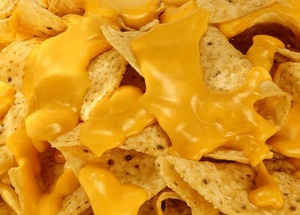
national nachos day nachos

The broadcasters needed to fill some dead airtime, so Cosell decided to riff on the snack’s name. “‘They brought us this new snack—what do they call them? knock-o’s or nachos?’” recalls Liberto. “He started using the word ‘nachos’ in the description of plays: ‘Did you see that run? That was a nacho run!’”

Cosell and others used the word for weeks afterward, helping Liberto’s nachos branch out from their Texas birthplace. Ignacio Anaya invented the original nacho. Frank Liberto modernized them, turning them into a concession snack and a profit machine.

Ignacio Anaya died in 1975. A bronze plaque erected in Piedras Negras honors his memory and October 21 was declared the International Day of the NachoWhy was that date chosen? Was it his birthday? The date he died? We don’t know.

So there you have it, folks. Hungry yet?
Share this:

Plan Your Epitaph Day

Depending on how you view it, a tombstone is your last chance to say goodbye, crack a joke, be profound, or otherwise make cemetery visitors imagine you were cool and wish they’d known you before they move on to visit their Nana’s weed-covered resting place.

Plan Your Epitaph Day was created by Lance Hardie in 1995 to coincide with the Day of the Dead (Dia de los Muertos), a Mexican holiday that honors the souls of departed loved ones. Hardie’s goal was simple: to make sure that we take control of our epitaphs, those few all-important words that will tell those who see them what we’d like them to think about who we used to be.

Playing with the idea of death is encouraged at this time of year. We dress up for Halloween and laugh, perhaps a bit timorously, at shadows. It’s also a time for reflection and mental housekeeping, as we’ve seen with holidays recently profiled here, such as Create a Great Funeral Day, Visit a Cemetery Day, and even National Magic Day, with its tribute to the death of Harry Houdini.

Let’s take a look at a couple of epitaphs quoted by Hardie.

W.C. Fields

Sadly, we must begin by debunking a favorite of ours: W.C. Fields did not have this on his gravestone:

“Here lies W. C. Fields. I would rather be living in Philadelphia.”

Fields was no fan of  Philadelphia, famously calling it “a cemetery with lights.” When he was invited to contribute his own epitaph for the June 1925 issue of Vanity Fair, it was no surprise that Philly rated a mention. Since then, various permutations of the pithy comment have coalesced into a myth about his gravestone.

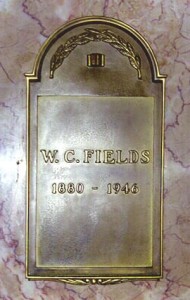
As it turns out, Fields didn’t use his headstone to take one last jab for posterity. (Perhaps he worried the joke would not stay fresh through the ages, or didn’t care since he wouldn’t be around to witness it?) Instead, it simply reads “W.C. Fields 1880 – 1946”.

plan your epitaph day wc fields

William Shakespeare

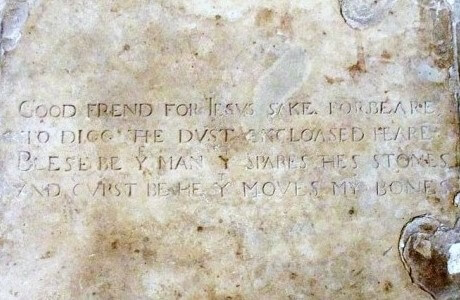
Hardie also cites Shakespeare’s epitaph. This one does exist in the Collegiate Church of the Holy Trinity in Stratford-Upon-Avon, England. The gravestone is badly eroded and reads:

plan your epitaph day

GOOD FREND FOR JESUS SAKE FORBEARE

TO DIGG THE DUST ENCLOASED HEARE

BLESE BE THE MAN THAT SPARES THES STONES

AND CURST BE HE THAT MOVES MY BONES

Shakespeare didn’t leave a spooky epitaph to be studied and interpreted in perpetuity. He left instructions. In his day, it was accepted practice to dig up bones from the church’s graveyard and tombs, moving them to make room for more burials. They were placed in a charnel house and subsequently burned.

(Some claim this was called the “bonefire of the vanities.” Although that would be a heck of an origin story for the title of Tom Wolfe’s book, we could find no proof of it.)

Shakespeare knew and disdained the church’s practice of recycling graves. He may have also meant to dissuade the government from moving his bones to Westminster Abbey. Thus far, his wishes have been honored.

A Sad Update

When we first wrote about him in 2015, Hardie was 79. He died the following year on October 27, 2016. It was surprisingly hard to find and verify this information, especially given the research capacity on today’s Internet. We had to triangulate his hometowns of Arcata and Eureka, CA, work history, and even his bequest to Humboldt State University to support future generations of students researching sustainable technology. We’ve been unable to find an obituary in any newspaper.

The saddest thing of all is that we haven’t found any record of the epitaph he wrote for himself, or a photo or description of his headstone. Sites like FindAGrave.com are dedicated to documenting grave markers worldwide. If you have this information, please contact us. It’s a shame not to know what Mr. Hardie chose to leave as his last words from beyond the grave.

What Now?

For anyone daunted by the prospect of writing their own epitaph, Mr. Hardie offered to write it for them. He didn’t provide prices, just noted it would be expensive. He did make exceptions for death row inmates and members of the U.S. military about to report to a war zone; he offered to write their epitaphs for free. (Death row inmates needed to provide the date of execution; service members, proof of their orders.)

We need to take a moment to point out that many who die in prison have no means to pay for their funerals and end up in prison graveyards like Captain Joe Byrd Cemetery in Texas, the largest in the country. They lie beneath markers that bear only name, inmate number, and date of death.  Notorious killers are routinely identified by inmate number alone to discourage visitation and vandalism. Not much need for epitaphs there, free or otherwise.

In any case, Mr. Hardie is no longer available to take requests, and it doesn’t appear that anyone else has picked up his mantle. It could be an interesting career in an untapped market for those with a gift for writing a customer’s final soundbite. Food for thought.

For now, let’s get back to the fun stuff. A Google search for “funny epitaphs” returns thousands of results, including this one at BoredPanda. If you need some inspiration, use this epitaph generator at WikiHow. (Yes, WikiHow is still a thing.)

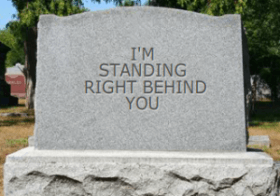
Here at Worldwide Weird Holidays, we want to get in on the fun and like to imagine the impact this would have in any cemetery at dusk:

plan your epitaph day tombstone

 Feel free to use it: no charge. It’s our gift to you.

Share this:

National Author’s Day

National Authors' DayToday is National Author’s Day. In 1928, teacher Nellie Verne Burt McPherson suggested the creation of a holiday dedicated to American authors at a meeting of the Bement, Illinois, Women’s Club.

McPherson was inspired by an experience she’d had more than a decade earlier while lying in a hospital recuperating from an illness. She’d written a fan letter to Irving Bacheller after reading his story, Eben Holden’s Last Day A’Fishin.

She was thrilled when the author responded by sending her an autographed copy of another one of his stories. She remembered his kindness when she pioneered the observance.

As president of the club, she submitted her idea to the General Federation of Women’s Clubs. It was celebrated unofficially for many years. In 1949, the United States Department of Commerce made it an official holiday, but it remained largely unknown for almost 20 years.

After McPherson’s death in 1968, her granddaughter, Sue Cole, began promoting the celebration of National Author’s Day. She urged readers to write to American authors to “brighten up the sometimes lonely business of being a writer.” Other ways to celebrate include re-reading a classic, picking up a current title, or writing reviews for your favorite books and authors on Goodreads or Amazon.  

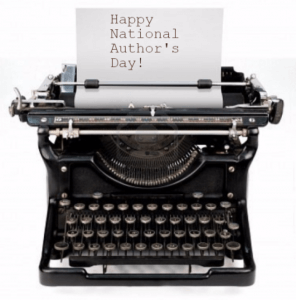
Happy National Author’s Day!

Share this:

November 20 is National Absurdity Day

national absurdity day National Absurdity Day: is there any occasion that cries out more loudly to be taken seriously while simultaneously laughing at anyone who does? Of course not, silly. Holidays can’t talk.

Grab a copy of The Myth of Sisyphus by Albert Camus or just about anything by Samuel Beckett. Add Pee Wee’s Big Adventure to your Netflix queue. Join the Church of the Flying Spaghetti Monster.

Meanwhile feast on this gem, courtesy of Anti-Joke:

A man walks into a bar and pauses: at the other end of the bar, there’s this guy with a big orange head. Just sitting there, looking into his drink. So the man asks the bartender, “Say, what’s up with the guy with the big orange head?” And the bartender says, “It’s an interesting story. Buy him a drink and maybe he’ll tell it to you.”

So the man walks over and introduces himself and offers to buy a round. The guy with the big orange head says, “Yeah, I’ll bet you want to know the story, huh?” To which the man replies, “Sure, if you don’t mind.”

The man with the big orange head sighs and says, “You know, I’ve gone over it in my mind a million times. Basically, it went like this: I was walking along the beach one day when I stubbed my toe on something. I looked down, and there was an antique brass lamp. I picked it up and dusted it off a little — when all of a sudden this enormous genie pops out!

“The genie thundered, ‘You have released me from my ten-thousand-year imprisonment, and I am in your debt. I will grant you three wishes as a token of my gratitude.'”

The man at the bar is agape. The guy with the big orange head continues: “So I said, ‘Wow, okay. Well, my first wish is to be fantastically wealthy.’

“The genie says, ‘Your wish is granted.’ And all of a sudden I have rings on my fingers and a crown on my head, and my wallet is full of money and a dozen ATM cards and the deed to a mansion in the hills — I mean, I was loaded!

“So I said, ‘Amazing! Okay, for my next wish, I want to be married to the most beautiful woman in the world.’

“The genie says, ‘Your wish is granted.’ And the ocean parts, and out walks this gorgeous woman in this beautiful dress. She takes my hand, and we fall in love and the genie marries us right there. It was incredible.

“The genie booms, ‘You have one wish remaining.'”

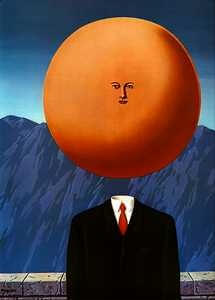
The man with the big orange head pauses and sips his beer. He says, “Now, you know, this may be where I went wrong. I wished for a big orange head.”

Happy National Absurdity Day!

Copyright 2020 Worldwide Weird Holidays

Share this: