Posts

Equal Pay Day 2019

national equal pay day

Equal Pay Day was established in 1996 to illustrate how far into the new year a woman must work to earn the same wages that a man, by dint of having been born with a penis, earned in the previous year.

Because Census data isn’t released until later in the year, Equal Pay Day has long been scheduled on the Tuesday in April that falls most closely to the estimated date. Tuesday was chosen to represent the extra day a woman must work to earn what men took home the previous week.

This year, it falls on April 2nd. But don’t get excited, ladies. The Equal Pay Act of 1963, which made it illegal to pay a woman less than a man for the same job and was signed into law by President John F. Kennedy, remains nothing more than a well-intentioned piece of paper with a very valuable autograph.

Three years ago, President Obama declared April 12, 2016 to be National Equal Pay Day. Did you enjoy the raise, the parade, and the day off?  Trick question. Nothing changed but adding the word “national.” Now we’re back to good old Equal Pay Day.

That year, President Obama also announced the establishment of the Belmont-Paul Women’s Equality National Monument in the house that had been the headquarters of the National Woman’s Party since 1929. It is named for former Party president Alva Belmont and founder Alice Paul, who played a vital role in the passage and ratification of the 19th Amendment, guaranteeing women’s right to vote.

When Alice Paul introduced the Equal Rights Amendment (ERA) in 1923, she said this regarding the work that had been done since the first women’s rights convention, held in 1848 in Seneca Falls, NY:

If we keep on this way, they will be celebrating the 150th anniversary of the 1848 Convention without being much further advanced in equal rights than we are … If we had not concentrated on the Federal Amendment we should be working today for suffrage … We shall not be safe until the principle of equal rights is written into the framework of our government.

Looking at where we are today, that statement was, sadly, prescient. When Paul died in 1977 at age ninety-two, the ERA was still being debated. Many contend ratification is still possible and continue the fight even though the amendment was “officially” defeated in 1982. Although the ERA never passed, Paul’s language prohibiting discrimination based on gender served as a template for the Civil Rights Act of 1964.
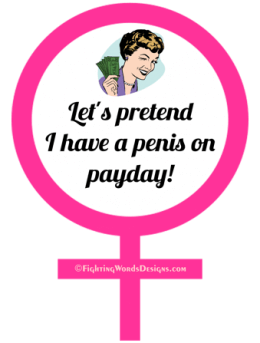
We have a few suggestions for Equal Pay Day 2019. First, dedicate a space to represent the net worth of legislators’ good intentions to the livelihood of their mothers, sisters, wives, and daughters. (Very easy. Just draw a zero.)

Then, demand that Congresspeople explain to children why their future efforts lose value the moment they are born girls. Garnish 21 percent of their wages until they enforce the Equal Pay Act. (They don’t even need to write a law. It’s already on the books.)

Perhaps the best thing we can do is stand up and shout, just keep pointing out how ridiculous it is to discriminate on the basis of plumbing. You know how everyone hates it when we’re shrill.

Until we succeed, have an angry Equal Pay Day!

Copyright © 2019 Worldwide Weird Holidays

Share this:

April 28 is National Cubicle Day

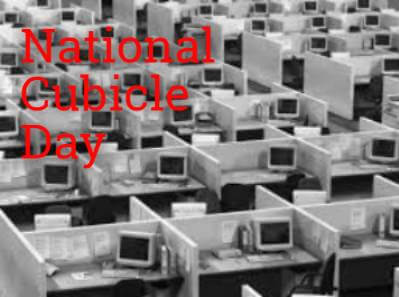
national cubicle dayToday is National Cubicle Day. Technically, it isn’t a “national” holiday, having never been decreed by Congress and the president. Then again, none of them work in cubicles, so what do they know?
The first cubicle was introduced by furniture company Herman Miller in 1968. Robert Propst designed the “Action Office” as an alternative to working in open areas, often called bullpens.  It had flexible configurations with partitions to pin up current projects and provide privacy, lots of desk space and varying desk heights so people could spend some of their time standing up to keep their circulation flowing.

In the real world, Propst’s partitions, meant as building blocks for various layouts, were used to reduce each workspace to the smallest footprint possible to cram even more people into a room. The standing desk detail was abandoned, although it sounds like a good way for a boss to keep an eye out for any slackers trying to take a walk on the company’s dime.

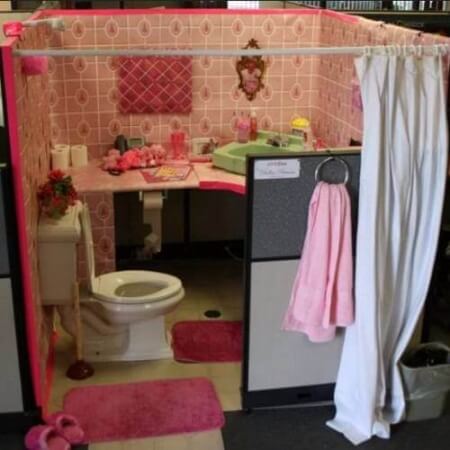
If it ever becomes legal to catheterize a workforce, we’re confident that proximity fences and shock collars will become standard employee retention features of “systems furniture” design. (Eventually, someone will realize folks need to be hydrated and add a hamster-style water bottle to one corner.) Maybe Jon Sanderson had that in mind when he pulled this incredible April Fool’s Day prank on his coworker:

national cubicle day

photo: the Chive

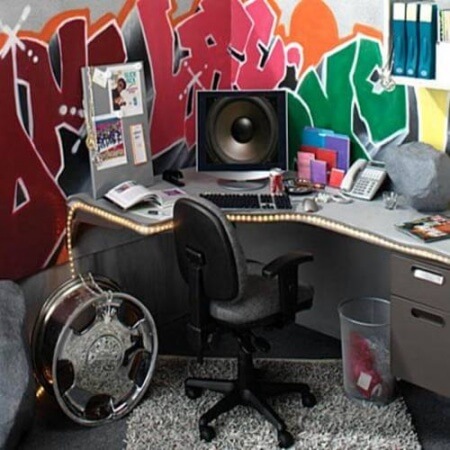
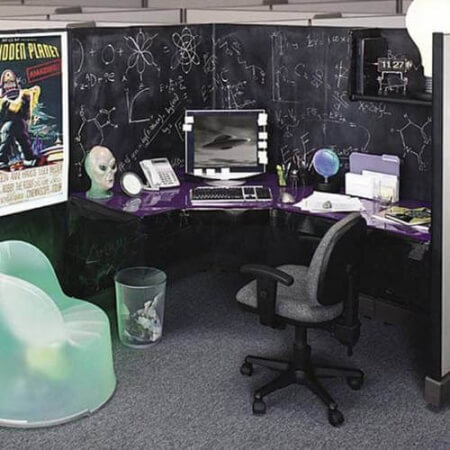
Here are a few more cubicles that almost make us want to work in one. Almost. This one is great, but you can’t see that the key to the restroom is attached to the rim:

Check out the chair on the left. It has an alien face hugger in it!

This one is pretty sweet, right down to the tiki gods.

National cubicle day

If you’re worried that you’d get the boot if you jazzed up your office space, you can always splash out on this  inflatable Instant Window:

national cubicle day

Happy National Cubicle Day, everybody!

Copyright © 2017 Worldwide Weird Holidays


Single Tasking Day

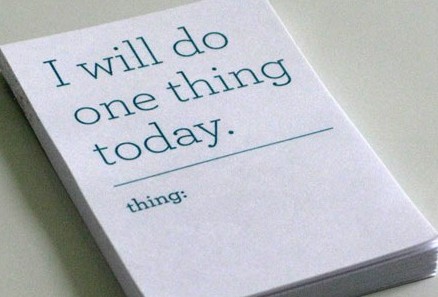
Today is Single Tasking Day. Your mission, if you choose to accept it, is to do just one thing at a time, without participating in the sham called multitasking.

single tasking day

Unlike computers, humans are not wired to work on many complex problems at once. Switching focus quickly from one thing to another can make us perceive that we’re managing multiple streams of information simultaneously, but each shift requires energy.

Our overall processing power becomes less efficient, even when dealing with things we do habitually—like scanning our phones, texting and going through emails—that don’t seem to require much attention but are, in fact, tying up the executive functions of our brains.

A study at Gresham College in London found that multitasking caused subjects’ problem-solving performance to drop by the equivalent of 10 IQ points. MIT neuroscientist Earl Miller says our brains aren’t wired to multitask. “When people think they’re multitasking, they’re actually just switching from one task to another very rapidly. And every time they do, there’s a cognitive cost.”

Per McGill University professor Daniel Levitin, “Asking the brain to shift attention from one activity to another causes the prefrontal cortex and striatum to burn up oxygenated glucose, the same fuel they need to stay on task. And the kind of rapid, continual shifting we do with multitasking causes the brain to burn through fuel so quickly that we feel exhausted and disoriented after even a short time. We’ve literally depleted the nutrients in our brain.”

So feed your brain; just do it slowly so you don’t get a cramp. And have a happy Single Tasking Day!

Copyright © 2017 Worldwide Weird Holidays

November 7 is National Notary Public Day

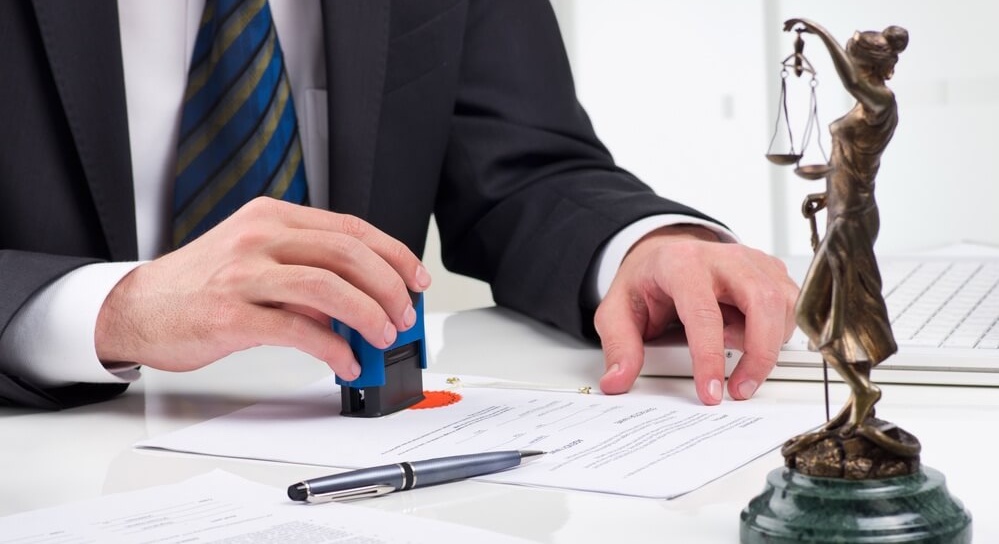
Today is Notary Public Day, created in 1975 to “recognize notaries for their public service and their contributions to national and international commerce.” Today’s date was selected because the first American notary public, Thomas Fugill, was appointed on November 7, 1639, by the Colony of New Haven.
notary public day

Today, nearly 4.8 million notaries public in the United States carry on the tradition of service. Let’s take a look at a few of these trusted public officials who’ve witnessed American history.

New World
When Christopher Columbus sailed in 1492, King Ferdinand of Spain sent a notary to keep track of any treasure that might be picked up by the Niña, the Pinta and the Santa Maria. When Columbus landed in the New World on October 12, 1492, notary Rodrigo de Escobedo was there to document the momentous event.

American Revolution
Thomas McKean served as Delaware’s delegate to the Continental Congress and voted to support the colonies’ bid for independence from England. He also was a notary and the last person to sign the Declaration of Independence.

Nathaniel Gorham, a Massachusetts notary and businessman, served as a delegate to the Constitutional Convention, and his signature appears alongside those of John Hancock, Alexander Hamilton and others on that historical document.

19th Century Notaries
Charles Bellinger Tate Stewart became a notary in 1841 and served in the fledgling Republic of Texas government when it declared independence from Mexico. He also designed the iconic Lone Star flag.

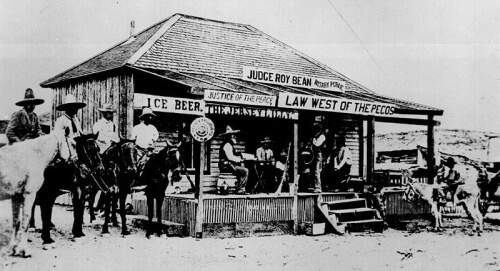
Another Texas notary well-known in Western folklore was the eccentric Judge Roy Bean, who founded the town of Langtry in 1882 and was notorious for holding court in a saloon he owned. He called himself the “Law West of the Pecos” and offered notary services along with ice-cold beer.

national notary public roy bean

In 1864, author Samuel Clemens, also known as Mark Twain, was appointed a notary public in Virginia City, Nevada by his brother, acting Nevada governor Orion Clemens. He resigned a few months later and left for California. Clemens later claimed he’d left town to avoid legal trouble after challenging a local man to a duel following their argument over one of Clemens’ newspaper articles.

The Civil War
The American Civil War ended in 1865 when Robert E. Lee, commanding general of the Confederate forces, surrenders at Appomattox. Lee took an amnesty oath, swearing to remain loyal to the United States and abide by its laws. C.A. Davidson, a West Virginia notary,  witnessed and certified Lee’s oath.

The document was misplaced and Lee never received a pardon or regained his citizenship. In 1975, Lee’s citizenship was posthumously restored by Congress, following the discovery of the notarized oath in State Department records.

Swearing in the President
When President Warren Harding died in 1923, Vice President Calvin Coolidge was staying with family in Vermont. Upon receiving word of Harding’s death, Coolidge took the oath of office before the nearest qualified official, his father (and notary) John.

21st Century Notaries
Many modern-day celebrities have served as notaries. Humorist writer Dave Barry became a Florida notary in 1994 to officiate a friend’s wedding. Actor Stanley Tucci and singer Jennifer Lopez also have served as notaries.

If you’d like to join them, learn how to become a notary in your state. And don’t forget to thank a notary public today.

Copyright 2016 Worldwide Weird Holidays