Posts

May 22 is World Goth Day

world goth dayToday is World Goth Day, a holiday that celebrates the global influence of the Goth subculture on music, art, literature, and fashion.

Many consider the 1979 release of Bauhaus’ first single, Bela Lugosi’s Dead, to be the genesis of the gothic rock genre, although the word “goth” had been used in a musical context for more than a decade. Bauhaus’ contemporaries include Siouxsie and the Banshees, Joy Division, Killing Joke, and The Cure.

Goth style has evolved from influences like punk’s “anti-fashion” movement and brooding, romantic Victorian mourning clothes. It includes many looks but is most often associated with dark clothing, black hair, and extreme facial pallor.

In October 2005, after the opening of Tim Burton’s Corpse Bride, the New York Times noted:

The costumes and ornaments are a glamorous cover for the genre’s somber themes. In the world of Goth, nature itself lurks as a malign protagonist, causing flesh to rot, rivers to flood, monuments to crumble and women to turn into slatterns, their hair streaming and lipstick askew.

A shout-out from the Gray Lady is impressive, even when it gets things wrong. (Slatterns? You wish!) Influences credited for the rise of Goth include movies from Blade Runner to Beetlejuice, artists from H.R. Giger to Salvador Dali, and authors from Mary Shelley to Anne Rice. Punk, New Wave, metal, vampire stories, and horror films have all contributed to or benefited from Goth culture.

U.K. deejays DJ Cruel Britannia and martin oldgoth (a lowercase rebel) created World Goth Day in 2009, when BBC 6 radio station ran a day of Goth programming. Brittania wrote of the idea, “I got it into my head that Goth Day was a good enough excuse to encourage goths to have their own Goth ‘Public Holiday’, so to speak, and celebrate what goth means to them in either their musical tastes, the books they read, or whatever part it plays in their darkly-inclined lifestyle.”

In 2015, World Goth Day was immortalized on Angry Birds Seasons The Pig Days Level 4-1. We don’t know what that pile of words means, but the walkthrough looks fun. Some might find its mix of bats, jack-o-lanterns, and ankh symbols offensive, but every goth or punk we’ve met has had a great, if dark, sense of humor. (Except for one. We’re talking to you, Vyvyan.)

For information on events happening near you and other good stuff, head to the holiday’s official website.  In 2016, South African band Terminatryx offered a free download of its track SleepWalkers, remixed by iRONic. The song will set you back less than a dollar, but we recommend springing for the whole album. We’re partial to CONsume, remixed by Martin Degville of Sigue Sigue Sputnik. We know, we know: our Eighties are showing!

Happy World Goth Day!

Share this:

May 21 is Sister Maria Hummel Day

sister maria hummel day

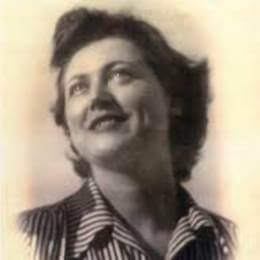
Sister Maria Innocentia Hummel

Today is Sister Maria Hummel Day, which celebrates the birth in 1909 of Berta Hummel, a German girl whose family recognized and encouraged her developing artistic talent from early childhood.

She entered Munich’s Academy of Applied Arts in 1927, when few German women could pursue higher education. After graduating in 1931 with top honors, she chose to become a nun in the Congregation of the Franciscan Sisters of Siessen and assumed the name of Sister Maria Innocentia.

She taught art at a school run by the convent and painted in her spare time. When the sisters noticed her portraits of children, they convinced her to let a religious publishing company print and sell them as postcards. Hummel later drew angels with gowns covered in slightly askew Stars of David and designed a symbol for the convent chapel in 1938 that united the Old and New Testaments by placing a cross behind a menorah.

In 1934, Franz Goebel, the owner of W. Goebel Porcelain Works, saw some of the postcards and was struck with the idea of rendering them in three dimensions. He approached Hummel, who didn’t want her work mass-produced as knick-knacks. She acquiesced at the insistence of the convent, which gave Goebel sole rights to manufacture the figurines. Royalties from sales would help finance its good works for 80 years.

Goebel displayed them at the 1935 Leipzig Trade Fair, an international trade show. Goebel had rightly surmised that sweet and innocent figurines of boys, girls, and angels would attract people weary of poverty and war. Ten years later, American soldiers carried them home after World War II, making them popular in the United States.

One person who was most definitely not a fan of Hummel: Adolf Hitler. In 1937, she released a painting titled “The Volunteers,” which depicted two young, disheveled goose-stepping brownshirts with laceless boots, one of whom carried a rifle upside down. Under them, she wrote the caption, “Dear Fatherland, let there be peace!”

Nazi newspaper Der SA-Mann declared that the children Hummel painted looked like “wasserköpfige und klumpfüßige Dreckspatzen,” which loosely translates to  “hydrocephalic, club-footed goblins.” Although a more literal translation would be “water-headed,
club-footed mudlarks,” we think you get the idea.

sister maria hummel day

Volunteers, 1990

The sale of Hummel figurines was banned within Germany, but export was permitted to generate profits from foreign markets. Her publishers were denied paper supplies; galleries were forbidden to exhibit her paintings. In 1940, the sisters were kicked out of the convent so a troop of Nazi soldiers could quarter there.

Forty of the 250 nuns were allowed to remain in a confined area with no heat. After three months at her childhood home, Hummel decided to return, with the blessing of the Mother Superior. Money earned from the sale of her artwork was the convent’s sole source of income.

In 1944, she contracted tuberculosis and went to a sanatorium for several months. Shortly after she returned, French troops liberated the convent. But her health worsened, and she died on November 6, 1946, at the age of 37. She was buried on the convent grounds.

Although we can find no surviving print of “The Volunteers,” the story of Sister Hummel’s most provocative artwork did not end after her death. In 1990, the rifle was righted, the shirt color changed, and her sad boys were cast, without irony, as cheerful patriots for a United States Desert Storm Edition.

We’re pretty sure Sister Maria Hummel would disapprove of that knick-knack.

Share this:

May Ray Day

May Ray DayToday is May Ray Day. Its goal is simple. If you look out the window and it’s sunny, go outside and enjoy it. (Common sense tip: If you’re in the middle of a business meeting, driving a car, or standing anywhere above the first floor, wait for a more appropriate time and place to step outside.)

I have been unable to determine the creator of May Ray Day. It could be someone who sells sunscreen or solar panels or who worships the sun and wants to indoctrinate others to believe in Ra, Helios, Sol, Utu, or the lesser-known gods of Melanoma, Squamous, and Basal Cell.

May is Skin Cancer Awareness Month. About 86 percent of melanomas and 90 percent of other skin cancers are associated with exposure to UV radiation. Before you head out, read these myth-busting facts from the Skin Cancer Foundation. We’ve thrown in one about tanning beds for good measure.

Myth: UVB radiation is a good source of vitamin D.

Fact: We can produce only a limited amount of vitamin D from UVB radiation. For Caucasians, that limit is reached after just five to 10 minutes of midday sun exposure. After reaching the limit, further exposure will not increase the amount of vitamin D in the body. Rather, it has the opposite effect: the vitamin D stored in the body begins to break down, leading to lower vitamin D levels. 

Myth: Sun exposure is the only source of vitamin D.

Fact: Vitamin D can be obtained from oily fish (like salmon, fresh tuna, trout and sardines) and cod liver oil, as well as from fortified orange juice and milk, yogurts, and some cereals. Supplements are readily available and inexpensive.

Myth: Tanning beds are a healthy option for boosting vitamin D levels.

Fact: The indoor tanning industry often makes the false claim that indoor tanning is helpful for vitamin D production. In reality, vitamin D is received through exposure to UVB rays; the bulbs used in tanning beds mainly emit UVA rays. Tanning beds are a known carcinogen. Just one indoor UV tanning session increases users’ chances of developing melanoma by 20 percent, and each additional session during the same year boosts the risk almost another two percent. 

So apply a liberal amount of broad-spectrum sunblock, put on your sunglasses, and don a wide-brimmed hat before venturing outside. (If it’s raining, don’t worry. There are plenty of days left in May. One of them will surely be sunny.)

Sun responsibly and have a happy May Ray Day!

Share this:

May 17 is National Walnut Day

national walnut dayToday is National Walnut Day, created in 1949 by the Walnut Marketing Board, now known as the California Walnut Board. Supposedly, in March of 1958, Senator William Knowland proposed the holiday, which President Dwight D. Eisenhower later affirmed.

I spent an hour trying to confirm that. I found no such proclamation or proposal beyond publication in the Congressional Record of remarks Knowland gave on March 21, 1958. It has nothing to do with walnuts. (You could check it out for yourself, but I don’t recommend it.)

It looks like a feat of marketing by the Board that has paid dividends in the pages of Google results that parrot the story as truth. But it gets better: the California Walnut Board cites a holiday blog as the source of its information. It’s the circle of life online: an ourobouros of unreliable sources forever (happily) eating its own tail. But I digress.

Most walnuts come from the Persian or English tree, Juglans regia, originally grown in Asia and now cultivated around the world. The lesser-known eastern black walnut tree, Juglans nigra, and butternut or white walnut tree, Juglans cinerea, are native to eastern North America.

According to A Latin Dictionary, the genus gets its name from the Latin word for walnut tree,  jūglans, which is a contraction of  Jōvis glans, which translates to “nut of [the god] Jupiter.” Perhaps that explains why many sites claim the arginine found in walnuts dilates blood vessels and increases blood flow, causing erections. (Don’t munch a handful before a business meeting.)

Black walnut has been hailed by some as a miracle cure because of its alleged ability to kill a parasite that is supposedly responsible for cancer. No word on whether it works: We can’t get anyone who used it to answer our calls.

In China, walnuts are prized for a different reason. In 2012, Reuters reported that a secondary market in “cultural playthings” had emerged as a result of weak or negative returns in the traditional stock market.

Once the toys of China’s imperial court, walnuts have become popular among the wealthy, who see them as a status symbol as well as an investment. They are collected in pairs and rotated in one’s hand to improve circulation.

Collector Kou Baojun in Beijing told Reuters that the larger, older, and more symmetrical the walnuts are, the more highly they are valued and can cost tens of thousands of dollars. He owns more than 30 pairs, most of which are over a century old and have become burnished from years of being polished in the palm.

“Look how well these have aged,” Kou said. “Playing with these kinds of walnuts isn’t for ordinary people.”

Grab a pair and have a happy National Walnut Day!

Share this: