Posts

December 7 is National Cotton Candy Day

Today is National Cotton Candy Day. The confection dates back to the 1400s, when it was called “spun sugar.” Producing it by hand was a costly and laborious task, making it unavailable to the general public. Four men—two of them dentists—helped usher in the modern process that would make it a summertime favorite at carnivals, fairs and the circus.  So why isn’t National Cotton Candy Day celebrated in July or August? We have no idea.

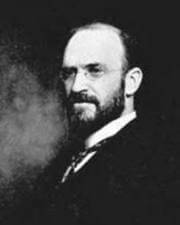
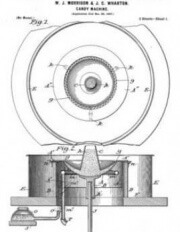
Here’s what we do know. cotton candy dayDentist William Morrison and confectioner John C. Wharton invented the first electric spinning machine in 1897 and were granted a patent two years later.
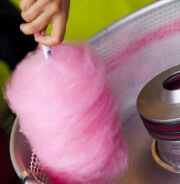
They introduced “fairy floss” at the 1904 World’s Fair in St. Louis, Missouri. Curious visitors bought more than 68,000 boxes at 25 cents apiece, spending a total of over $17,000.

In 1900, Thomas Patton patented a gas-fired rotating plate that allowed him to form threads of caramelizing sugar on a fork. It debuted at the Ringling Bros. Circus and was an instant hit with children, if not their mothers, who had to clean up the sticky mess left behind on hands, hair and clothes.

Although he never received a patent, dentist Josef Delarose Lascaux built his own machine and sold it to patients at his Louisiana office, where he could cater to sweet tooths and the inevitable cavities that followed. He is widely credited with changing the name to “cotton candy” in 1921.

cotton-candy dayIn 1949, Gold Medal Products launched a version with a spring base. It improved upon its predecessors by being more reliable, less likely to break down or overheat. Variations of this device are used to this day.

The next time you buy cotton candy, which starts out three times the size of your head but condenses seemingly instantaneously to a gritty coating on the roof of your mouth and a pastel crust in your hair, you can thank these four men for making us crave this diabolically delicious treat.

Copyright 2016 Worldwide Weird Holidays


December 6 is Microwave Oven Day

Today is Microwave Oven Day. We don’t know who created it or why they chose December 6th over any other day of the year. Our theory? Since it falls between Thanksgiving and Christmas, two holidays filled with labor-intensive meal preparation, maybe it’s supposed to remind us to take a break from complicated cuisine. So relax and take a bite of history about the accidental invention that changed the way the world cooks.

During World War II, Percy Spencer was testing magnetrons for use in Allied radar sets when he noticed that the candy bar in his pocket had begun to melt. A lesser man might have been alarmed, invested in lead-lined britches and called it a day.

But Spencer’s innate curiosity drove him to conduct a series of tests using, among other things, popcorn and eggs. He concluded that the energy of electromagnetic waves produces heat by agitating water, fat and sugar molecules, causing food to cook more quickly and evenly than by other means.

Spencer’s employer, Raytheon, filed a patent on October 8, 1945, for the “high-frequency dielectric heating apparatus.” In 1947, it introduced the first commercially available microwave oven, which stood almost six feet tall, weighed 750 pounds and cost $3,000. It was mainly used by ships and hotels.

microwave oven dayIn 1955, Raytheon and a company called Tappan collaborated on the RL-1, the first microwave oven designed for home use. At $1,295, it was out of reach of most consumers. Only 34 were manufactured the first year; a total of 1,396 were sold by the time production of the model ended in 1964.

Raytheon acquired Amana Refrigeration in 1965. Two years later, Amana launched the first countertop oven, called the Radarange, retailing at $495.  Its compact size was made possible by the development in Japan of smaller, more efficient electron tubes that improved upon the magnetron design.microwave oven dayIn response to a 1968 study which found microwaves sometimes leaked out of ovens, federal safety standards were set in 1971. According to the FDA, microwave ovens must meet a requirement limiting maximum radiation leakage to 5 milliwatts per square centimeter at a distance of 5 centimeters (1.97 inches) from the external surface of the oven.

Per a New York Times article on the subject:

Manufacturers are also required to line the doors of ovens with metal mesh that prevents microwaves from escaping, and to use a type of door latch that stops the production of microwaves whenever the latch is released.

Those features greatly limit exposure to levels of radiation that are already low. And since the radiation levels drop sharply with increasing distance, the levels two feet away are about one-hundredth the amount at two inches.

Over ninety percent of all U.S. homes now own a microwave oven. There have been no confirmed injuries. In fact, despite his cooked huevos, Percy Spencer fathered three children and died of natural causes in 1970 at the age of 76. (By the way, Spencer received a one-time payment of $2 for the patent to his invention, the same amount Raytheon paid all its inventors.)microwave oven day

So make a bowl of popcorn and celebrate Microwave Oven Day. Still, when you do, you might want to stand back and make sure you close the door. It’s the only way to be sure.

Copyright 2016 Worldwide Weird Holidays

Rockefeller Center Christmas Tree Lighting

The Rockefeller Center Christmas Tree Lighting has become a worldwide symbol of the holiday season. The tree is lit on the Wednesday after Thanksgiving, celebrated with live musical performances at Rockefeller Plaza and broadcast around the globe on television and the internet.

What’s the truth behind the legend? Worldwide Weird Holidays investigates.

Tree Story

Oneonta, New York, lost a longtime resident on December 10, 2016: a 14-ton, 94-foot-tall Norway Spruce we’ll call Bruce. (They’re all named Bruce.) He’d called the town home for nearly a century when the Eichler family contacted Rockefeller Center’s head gardener and chief Christmas tree hunter, Erik Pauzé. He visited, liked what he saw and Bruce’s fate was decided.

“We’ll miss the shade but for the most part we’re happy to gain the space back because it did monopolize the entire yard,” Craig Eichler said.

On Thursday, Bruce was cut down and loaded with the help of two hydraulic cranes onto a custom-made telescoping trailer that can stretch to 100 feet and accommodate a tree up to 125 feet tall, although the width of New York City streets limits the height to 110 feet.

Bruce was then bound like Gulliver and driven 140 miles to New York City on a route carefully plotted by a committee of local and city planners, under the watchful eye of a police escort.

At his final destination, the same cranes were used to fix Bruce into place by skewering his trunk onto a steel spike. A team of thirty giant-tree specialists attached guy wires to his midsection to hold him upright, then erected scaffolding to assist the workers who would later festoon him with 50,000 lights strung on more than five miles of electrical wire. Since 2007, the tree has been “green” (evergreen?), using LED lights and drawing part of its power from a 365-panel solar array installed on the roof.

The StarRockefeller center christmas tree lighting star

Bruce will have a fabulous, if hefty, headpiece. In 2004, the old fiberglass star decorated with gold leaf was replaced by the Swarovski Star, designed by German artist Michael Hammers. It weighs 550 pounds, is 9.5 feet in diameter and sports 25,000 crystals with a million facets. In 2009, Hammers decided to upgrade the star’s lighting system by adding 720 tiny white LEDs and 3,000 feet of wire to the star’s interior, which were then connected to 44 circuit boards.

That’s a lot of look.

History

Although the official Christmas tree tradition began in 1933, the year 30 Rockefeller Plaza opened, the practice began during its Depression-era construction, when workers decorated a twenty-foot-high balsam fir tree with “strings of cranberries, garlands of paper, and even a few tin cans” on Christmas Eve of 1931, according to Daniel Okrent’s Great Fortune: The Epic of Rockefeller Center

rockefeller center christmas tree lighting history

In the above photo, construction workers receive their paychecks next to the Christmas tree they’d set up on the Rockefeller Center site. Pauzé estimates from the number of tree rings that Bruce is approximately 95 years old, so he was likely a sapling in 1931.

Visiting Hours

If you’d like to see Bruce get lit up like a, well, you know, make your way to Rockefeller Plaza between West 48th and 51st Streets and Fifth and Sixth Avenues before 9 pm. Expect a lot of company, many security restrictions and possible rain.

But you won’t be allowed to bring umbrellas, backpacks or large bags, according to the New York City Police Department. The streets surrounding Rockefeller Center will be closed from 3 pm until after the ceremony.  Highly armed officers will patrol the area—only as a precaution, of course.

Bruce will be lit until midnight tonight, then from 5:30 am until midnight daily; he is expected to receive up to 750,000 visitors per day. On January 7, 2017, his lights will be doused forever at 8 pm and the process of removing him from his final perch will begin.

His remains will be donated to Habitats for Humanity. Those who benefit will never know how famous their house’s sturdy timber once was. I’d like to think that’s how Bruce would have wanted it.

Happy holidays!

Copyright 2016 Worldwide Weird Holidays

Share this:

November 29 is Square Dance Day

Today is Square Dance Day. Some of us remember awkward co-ed square dance lessons in the high school gym. Or maybe we watched a group do-si-do on a parade float down Main Street. How can we keep the memory alive of an American folk dance and its European roots? We’re glad you asked.

Square Dance Day
In 17th-century England, teams of six–all men, for propriety’s sake–began performing what was called the morris dance. The fad inspired a country dance in which couples lined up on village greens to practice weaving, circling and swinging moves reminiscent of modern-day square dancing.

French couples in the 18th century squared off for dances such as the cotillion and quadrille. Folk dances in Scotland, Scandinavia and Spain are also thought to have influenced square dancing.

Europeans brought these dances with them when they settled the North American colonies. French styles became popular after the American Revolutionary War when many newly-minted citizens disdained British traditions. Several square dancing terms have their origins in the French language, including “promenade,” “allemande” and “do-si-do”—a corruption of “dos-à-dos,” meaning “back-to-back.”

square dance day
A similar style called the “running set” caught on in 19th-century Appalachia. At first, participants memorized all the steps but soon the dances became so complicated that it became necessary to have someone call out cues.  This caller’s original function was to call out the steps in time to fiddle music, so dancers wouldn’t have to memorize them all.

As square dance calling became an art form in its own right, the best ones invented lines to say between cues such as “Don’t be bashful and don’t be afraid. Swing on the corner in a waltz promenade.” A caller might also come up with new dance steps and routines.

Waltzes and polkas, which allowed couples to get closer to each other without raising too many eyebrows, supplanted group-based dances by the late 19th century. As the jazz and swing eras dawned, square dancing came to seem even more outdated.

In the 1920s, automaker Henry Ford decided to revive the tradition as a form of exercise and, more important, as instruction in proper manners with the opposite sex. He paid for the development of a national program, opened ballrooms, made attendance mandatory for his factory workers, and produced instructive radio broadcasts for schools throughout the country.

Lloyd Shaw, a folk dance teacher in the 1930s, wrote books about the rescued art of square dancing and held seminars for a new generation of callers. In the 1950s, standards were developed for square dancing across the United States, allowing dancers to learn interchangeable routines and patterns.

Square Dance Day

Recordings made the square dance more accessible since a trained caller no longer had to be physically present. Anyone in the country could dance to Ernest Legg of West Virginia’s calling on 78:

Ladies do and the gents you know,
It’s right by right by wrong you go,
And you can’t go to heaven while you carry on so,
And it’s home little gal and do-si-do,
And it may be the last time, I don’t know,
And oh by gosh and oh by Joe.

Square dancing continues to thrive in some areas although its overall popularity has waned in recent decades, according to the United Square Dancers of America. Alabama, Georgia, South Carolina, Tennesse and Virginia have all seen fit to make the square dance their ‘folk dance’ State Symbol.

Want to know more? Let Bugs Bunny call the tune:

Happy Square Dance Day!

Sources:
History.com – Square Dancing: A Swinging History
Appalachian History –  And it’s home little gal and do-si-do

Copyright © 2017 Worldwide Weird Holidays