Posts

May 21 is Sister Maria Hummel Day

sister maria hummel day

Sister Maria Innocentia Hummel

Today is Sister Maria Hummel Day, which celebrates the birth in 1909 of Berta Hummel, a German girl whose family recognized and encouraged her developing artistic talent from early childhood.

She entered Munich’s Academy of Applied Arts in 1927, when few German women could pursue higher education. After graduating in 1931 with top honors, she chose to become a nun in the Congregation of the Franciscan Sisters of Siessen and assumed the name of Sister Maria Innocentia.

She taught art at a school run by the convent and painted in her spare time. When the sisters noticed her portraits of children, they convinced her to let a religious publishing company print and sell them as postcards. Hummel later drew angels with gowns covered in slightly askew Stars of David and designed a symbol for the convent chapel in 1938 that united the Old and New Testaments by placing a cross behind a menorah.

In 1934, Franz Goebel, the owner of W. Goebel Porcelain Works, saw some of the postcards and was struck with the idea of rendering them in three dimensions. He approached Hummel, who didn’t want her work mass-produced as knick-knacks. She acquiesced at the insistence of the convent, which gave Goebel sole rights to manufacture the figurines. Royalties from sales would help finance its good works for 80 years.

Goebel displayed them at the 1935 Leipzig Trade Fair, an international trade show. Goebel had rightly surmised that sweet and innocent figurines of boys, girls, and angels would attract people weary of poverty and war. Ten years later, American soldiers carried them home after World War II, making them popular in the United States.

One person who was most definitely not a fan of Hummel: Adolf Hitler. In 1937, she released a painting titled “The Volunteers,” which depicted two young, disheveled goose-stepping brownshirts with laceless boots, one of whom carried a rifle upside down. Under them, she wrote the caption, “Dear Fatherland, let there be peace!”

Nazi newspaper Der SA-Mann declared that the children Hummel painted looked like “wasserköpfige und klumpfüßige Dreckspatzen,” which loosely translates to  “hydrocephalic, club-footed goblins.” Although a more literal translation would be “water-headed,
club-footed mudlarks,” we think you get the idea.

sister maria hummel day

Volunteers, 1990

The sale of Hummel figurines was banned within Germany, but export was permitted to generate profits from foreign markets. Her publishers were denied paper supplies; galleries were forbidden to exhibit her paintings. In 1940, the sisters were kicked out of the convent so a troop of Nazi soldiers could quarter there.

Forty of the 250 nuns were allowed to remain in a confined area with no heat. After three months at her childhood home, Hummel decided to return, with the blessing of the Mother Superior. Money earned from the sale of her artwork was the convent’s sole source of income.

In 1944, she contracted tuberculosis and went to a sanatorium for several months. Shortly after she returned, French troops liberated the convent. But her health worsened, and she died on November 6, 1946, at the age of 37. She was buried on the convent grounds.

Although we can find no surviving print of “The Volunteers,” the story of Sister Hummel’s most provocative artwork did not end after her death. In 1990, the rifle was righted, the shirt color changed, and her sad boys were cast, without irony, as cheerful patriots for a United States Desert Storm Edition.

We’re pretty sure Sister Maria Hummel would disapprove of that knick-knack.
National Sea Monkey Day

Today is National Sea Monkey Day, also known as Sea-Monkey Day. In 1957, entrepreneur Harold von Braunhut noticed that desiccated brine shrimp were able to survive for extended periods of time in a suspended state known as cryptobiosis.

The result was a novelty item called Instant Life that could be reconstituted and grown in water. It was a neat, slightly creepy trick which caused many children to wonder if spontaneous generation was possible, and, if so, what might be swimming around in their bathwater at any given time. The product required a rethink.

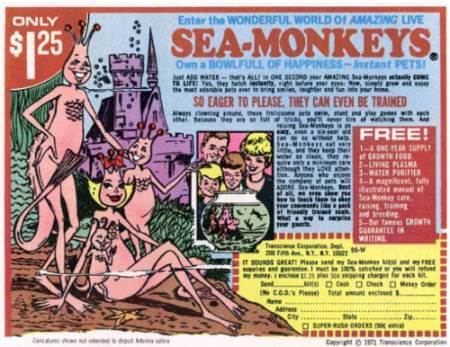
With the assistance of marine biologist Anthony D’Agostino, von Braunhut developed a type of brine shrimp that could more easily withstand shipping and hatch more successfully. He engaged cartoonist Joe Orlando to illustrate comic book advertisements and rebranded the shrimp as “Amazing Sea-Monkeys.”

National Sea Monkey Day

Expectation…

national sea monkeys day

…meets reality.

It may not surprise you to hear that sea-monkeys are not, in fact, monkeys. These tiny crustaceans don’t need the packet of “Mating Powder” included in kits because they can reproduce asexually when necessary. (That may help explain why they’ve been around for 100 million years.) They start life with one eye and grow two more. A female’s uterus can hold up to 200 eggs — don’t ask us who counted — and the male has two reproductive organs.

This was von Braunhut’s most financially successful invention, but not his only one. He held nearly 200 patents and was the creator of X-Ray Specs, Crazy Crabs, Amazing Hair-Raising Monsters, and the Invisible Goldfish, an empty bowl accompanied by the “100% guarantee” that no fish will ever appear. (The scope of the grift is breathtaking.)

He also designed the Kiyoga Agent M5 “Steel Cobra,” a pen-sized weapon that telescoped into a metal baton, marketing it as the most effective self-defense tool available without a license. Burt Reynolds used it to whip some bad guys in his 1981 movie, “Sharkey’s Machine.”

It soon attracted the kind of publicity its inventor preferred to avoid. In 1987, Richard Girnt Butler, chief of the Aryan Nations, then considered the country’s most dangerous white supremacist group, faced charges of plotting to murder federal officials and overthrow the U.S. government. He enclosed a Kiyoga brochure in a fundraising letter, stating that the “manufacturer has made a pledge of $25 to my defense fund for each one sold to Aryan Nations supporters.”

It was an outrageous claim that drew attention to von Braunhut. Butler soon confirmed to a reporter at the Spokane, Washington-based Spokesman-Review that the inventor was an old pal and “member of the Aryan race who has supported us quite a few years.”

The following year, The Washington Post revealed von Braunhut had helped purchase firearms for members of a Ku Klux Klan group in Ohio. It also reported that “the 62-year-old supporter of neo-Nazi groups was born and raised in New York City as Harold Nathan Braunhut, a Jew,” going so far as to track down a cousin who said he probably attended his bar mitzvah. Harold Nathan Braunhut added von to his name as an adult in order to sound more Germanic.

According to the Los Angeles Times, rumors had swirled about von Braunhut’s ethnicity for years. Floyd Cochran, former spokesman for the Aryan Nations, called him a misfit with “a rather large nose for a person of the Aryan Nations,” adding, “He’d give long speeches about numerology and he’d make references to the pyramids. It just didn’t play very well.” No doubt his donations kept him in good stead. Cochran wasn’t informed how much von Braunhut contributed, but said Butler called upon him often.

Al Davis of Larami Limited, which held the Sea Monkeys license in 1988, stated he called von Braunhut after receiving calls from retailers and distributors worried that profits were funding racist groups. “When I called Harold on this,” Davis said, “he said something to me I find hard to believe to this day. ‘Al,’ he said, ‘Hitler wasn’t a bad guy. He just received bad press.'”

News clippings show von Braunhut attended the annual Aryan Nations Congress held in Idaho until at least 1995. He was often a featured speaker and was sometimes given the honor of lighting the ceremonial cross. In December 1995, von Braunhut, who claimed to be an ordained priest and often wore a clerical collar to Aryan Nations meetings, presided over the funeral of Betty Butler, the chief’s wife. Although he denied writing or distributing them, the return address for National Anti-Zionist Institute (NAZI) newsletters was the same P.O. box used to receive orders for Sea-Monkey kits.

Von Braunhut died in 2003 at the age of 77. His Sea-Monkeys remain a multimillion-dollar brand and have attracted headlines again. On April 15, 2016, the New York Times published an article about the protracted legal battle between his widow, Yolanda Signorelli, an actress best known for her role in the 1967 bondage film Venus in Furs, and Big Time, the company to whom she licensed certain rights a few years after her husband’s death.

The contract had specified that Big Time would buy the packets of critters from her in exchange for the right to package and distribute the product and supplies, such as aquariums and other add-ons. There was a provision that would allow it to buy her company, including the secret formula, for a one-time fee of $5 million upfront and $5 million more to be paid in installments.

In 2013, Big Time informed Signorelli that it considered its payments for the packets to have been a layaway plan, concluded that it owned the Sea-Monkeys franchise, and began importing knockoff brine shrimp from China. She sued for breach of contract. The case dragged on for many years, ending in an undisclosed settlement. We’ll never see the result — much like an invisible goldfish. Likewise, Instant Life, a three-part documentary series shown at the 2022 Sundance Film Festival, is unavailable to stream at this time.

And that, boys and girls, is the true story of how a bigot and his brine shrimp contributed to race hatred and the scourge of child labor in Asia.

Sources:

The Sea Monkeys and the White Supremacist, Los Angeles Times
The Battle over the Sea-Monkey Fortune, New York Times
Hitler and the Sea-Monkeys, Southern Poverty Law Center
Instant Life, Sundance Festival Blog
Contrasts of a Private Persona, Washington Post

May 9 is Vast Wasteland Day

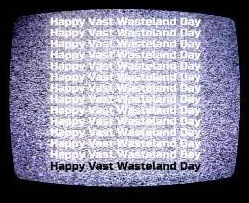
vast wasteland dayToday is Vast Wasteland Day. On May 9, 1961, Federal Communications Commission (FCC) Chair Newton Norman Minow gave a speech at the National Association of Broadcasters convention, chastising television programmers for their failure to serve the public interest.
First, a little backstory on Mr. Minow is in order. He was born in Milwaukee, WI, on January 17, 1926. He served in the U.S. Army during World War II, earned a law degree in 1950, then spent a year as a clerk for U.S. Supreme Court Chief Justice Fred M. Vinson.

The following year, he was hired by Adlai Stevenson, worked on the Illinois governor’s two presidential campaigns, and became a partner in his law firm. He campaigned for John F. Kennedy before the 1960 election. In 1961, President Kennedy appointed Minow as the chair of the FCC.

Now we’re caught up to May 9, 1961, when he said this:

When television is good, nothing — not the theater, not the magazines or newspapers — nothing is better. But when television is bad, nothing is worse. I invite each of you to sit down in front of your television set when your station goes on the air and stay there for a day without a book, without a magazine, without a newspaper, without a profit and loss sheet or a rating book to distract you. Keep your eyes glued to that set until the station signs off. I can assure you that what you will observe is a vast wasteland.

You will see a procession of game shows, formula comedies about totally unbelievable families, blood and thunder, mayhem, violence, sadism, murder, western bad men, western good men, private eyes, gangsters, more violence, and cartoons. And endlessly, commercials — many screaming, cajoling, and offending. And most of all, boredom. True, you’ll see a few things you will enjoy. But they will be very, very few. And if you think I exaggerate, I only ask you to try it.

The dated reference to stations signing off will be familiar to anyone old enough to remember the image of an American flag billowing to the strains of the national anthem, followed by a test pattern or color bars. Or to those who woke up on the couch to the sound of static, bathed in the glow of the spooky, Poltergeist-y snow that instantly made you feel there was someone waiting in the shadows, brandishing an axe.

Other than that, the speech could be given today. It would probably be met with a resounding, “So what?” rather than the ire that occurred in 1961. It was considered by many to be an elitist attack on programmers and viewers who enjoyed lowbrow or escapist fare.

Fun Fact: The writers of the 1964-1967 TV series Gilligan’s Island named the tour boat that ran aground the S.S. Minnow as a sarcastic reference to his name.

Minow doesn’t seem to mind. When asked in an interview by NPR what he considered his most valuable contribution, he mentioned convincing Congress to pass laws that paved the way for communications satellites. He recalled telling President Kennedy, “Communications satellites will be much more important than sending man into space, because they will send ideas into space. Ideas last longer than men.”

Until his death at 97 on May 6, 2023, nearly 62 years to the day after his “vast wasteland” speech, Minow still influenced communications-related law as senior counsel at Chicago-based law firm Sidley Austin LLP.  In 1988, he recruited Barack Obama to work there as a summer associate, where he met his future wife, Michelle Robinson. He supported Obama’s campaign for the presidency and for reelection.

He received 12 honorary degrees, sat on too many boards to mention here, wrote four books, funded Sesame Street, and co-sponsored the Digital Promise Project, which uses the Internet to further education. He also served as Honorary Consul General of the Republic of Singapore.

If we’d gotten the chance to meet Mr. Minow, we would have been sorely tempted to ask him a question solely to see his reaction. Imagine his facial expression if we’d asked what he thought of the Kardashians?

January 11 is Cigarettes are Hazardous to Your Health Day

Today is Cigarettes are Hazardous to Your Health Day. Today, this may elicit a resounding,” Duh!” But on January 11, 1964, when Surgeon General Luther L. Terry, M.D. released his report linking smoking to cancer, it was far from accepted wisdom and vehemently disputed by tobacco companies.

The report came after a year-long, comprehensive review by a committee of experts of 7,000 scientific articles about the effects of smoking. Terry chose to release it on a Saturday to minimize any effect on the stock market and maximize coverage in the Sunday papers.

Twenty years later, Terry recalled that the report “hit the country like a bombshell. It was front page news and a lead story on every radio and television station in the United States and many abroad.” Later it was ranked among the top news stories of 1964.

Smoking and Health: Report of the Advisory Committee to the Surgeon General revealed cigarette smoking was responsible for a 70 percent increase in the mortality rate of smokers versus non-smokers. It estimated that average smokers had a nine- to ten-fold risk of developing lung cancer compared to non-smokers; heavy smokers, more than twenty-fold. The risk rose with the duration of smoking and diminished after cessation.

The report also named smoking as the most important cause of chronic bronchitis and pointed to a correlation between smoking and emphysema, and smoking and coronary heart disease. It noted that smoking during pregnancy reduced the average weight of newborns.

On one issue the committee balked: nicotine addiction. It insisted that the “tobacco habit should be characterized as an habituation rather than an addiction,” in part because the addictive properties of nicotine were not yet fully understood.

While the 1964 report lacked concrete recommendations, it had an impact on public attitudes and policy. A Gallup poll conducted in 1958 found that only 44 percent of Americans believed smoking caused cancer, while 78 percent believed so by 1968. In the course of a decade, it had become common knowledge that smoking damaged health, and mounting evidence of health risks gave Terry’s 1964 report public resonance.

Here is a brief, incomplete chronology of events and efforts made to combat tobacco and the companies that peddle it.

Cigarettes in U.S. History

  • 1913 –R. J. Reynolds launched Camel, the first modern mass-produced cigarette made from blended tobacco.
  • 1917 –Free cigarettes were included in the field rations of many American soldiers in World War I.
  • 1928 –Doctors Herbert L. Lombard and Carl R. Doering offered the first detailed statistical data showing a higher proportion of heavy smokers among lung cancer patients than among controls.
  • 1938 –Raymond Pearl demonstrated statistically that smoking shortens life expectancy.
  • 1941-45 –Tobacco was again supplied to American servicemen in World War II.
  • 1946 –Doctors Alton Ochsner and Michael DeBakey published an article in Archives of Surgery linking smoking to lung cancer and citing research articles from several countries.
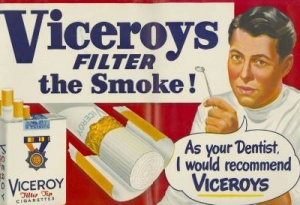
  • 1950 –The Federal Trade Commission stated cigarette ads that highlight health benefits are deceptive.
cigarettes are hazardous to your health day
  • 1964 –Surgeon General Luther L. Terry issued Smoking and Health.
  • 1965 –Congress mandated health warnings on cigarette packs.
  • 1969-The Public Health Cigarette Smoking Act passed Congress, imposing a ban on cigarette advertising on television and radio after September 30, 1970.
  • 1973 –Arizona passed the first state law designating separate smoking areas in public places.
  • 1983 –Lung cancer surpassed breast cancer as the leading cause of death from cancer in women.

cigarettes are hazardous to your health day

  • 1987 –Congress banned smoking on all domestic flights of two hours or less; two years later smoking is banned on all domestic flights.
  • 1988 –Surgeon General C. Everett Koop’s report,  The Health Consequences of Smoking: Nicotine Addiction, called nicotine “a powerfully addicting drug.” In a 618-page summary of 2,000 studies, Koop declared, “It is now clear that… cigarettes and other forms of tobacco are addicting and that actions of nicotine provide the pharmacologic basis of tobacco addiction.”
  • 1992 –The Environmental Protection Agency placed passive smoke on its list of major carcinogens, making it subject to federal workplace and other regulations.

*****

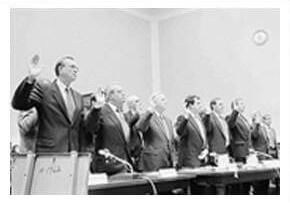
  • 1994 –Seven tobacco company executives testified before Congress that “nicotine is not addictive.”
    cigarettes are hazardous to your health day

The televised panel, led by Representative Henry Waxman, questioned the executives for six hours.

One executive insisted that cigarettes are no more addictive than coffee, tea or Twinkies.

The difference between cigarettes and Twinkies,” Waxman replied, “is death.

*****

  • 2006 –On August 17, 2006, U.S. District Judge Gladys Kessler issued a 1,683-page ruling holding tobacco companies liable for covering up health risks associated with smoking and for targeting children.
    cigarettes are hazardous to your health day
    The judgment ordered the companies to issue “corrective” ads admitting to the deceptive use of terms such as “light” and “low-tar,” among other things.

    The companies appealed for the next 11 years, claiming the findings pertained to the alleged inaccuracy of the companies’ public statements about smoking and health, not to whether anyone in the public was actually deceived by the defendants.

    Perhaps the ad should simply say, “A lie is the responsibility of the person who believes it.” That’s as good a defense of callous (and profitable) disregard for human life as any we may ever hear.

  • 2017 — The companies finally ran out of appeals. In December, Altria, RJ Reynolds Tobacco, Lorillard, and Philip Morris USA were forced to run ads that stated facts such as, “Cigarette companies intentionally designed cigarettes with enough nicotine to create and sustain addiction” and “More people die every year from smoking than from murder, AIDS, suicide, drugs, car crashes, and alcohol combined.”

*****

It’s clear that the work of Dr. Terry and many others greatly affected health. Since 1964, smoking rates in the United States have dropped by more than half. It’s estimated that eight million lives have been saved by tobacco control efforts — yet up to 20 million more have been lost. Until the day we all kick the habit, every day will be Cigarettes are Hazardous to Your Health Day.

copyright notice 2024 Worldwide Weird Holidays