Posts

December 10 is Dewey Decimal Day
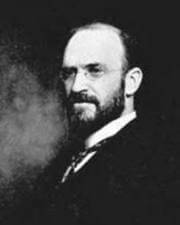
dewey decimal dayToday is Dewey Decimal Day. Melville Louis Kossuth Dewey was born on December 10, 1851, in the hardscrabble town of Adams Center in Northern New York State. At the age of 22, while studying at Amherst College in Boston, he devised one of the most efficient methods of classification ever known, copyrighting the Dewey Decimal System three years later in 1876. He’s proven to be much harder to classify.

Dewey abhorred waste, championing conversion to metric measurements and the use of streamlined phonetic spellings. Upon leaving home, he shortened his name to Melvil and attempted to change his last name as well, but admitted defeat when his bank refused to recognize his new signature. Otherwise, we’d be referring to the Dui Decimal System right now.

Many libraries at that time utilized a numbering system that indicated the floor, aisle, section and shelf upon which each book was stored. When rearrangement became necessary, all of the books had to be reclassified. Dewey was determined to devise a simple, workable, permanent classification system.

He formulated a system of Arabic numerals with decimals for book classification. All printed knowledge would be organized into ten numerical classifications ranging from 000 to 900, with as many decimals as necessary to define the content of the book being classified.

Within three years, A Classification and Subject Index For Cataloguing and Arranging the Books and Pamphlets of a Library was published. It was widely adopted in the United States and England as well as elsewhere in the world. This system has proven to be enormously influential and remains in widespread use.

In 1883, Dewey was recruited by Columbia University to become its librarian. The following year, he founded the School of Library Economy—the first school for librarians ever organized. It opened on January 5, 1887. He personally enrolled each student. Of the twenty-six, nineteen were women.

Columbia forbade admittance to females. Since Dewey believed that women were destined to become librarians, he ignored this rule. That didn’t make him a feminist, though. His enrollment questionnaire required an applicant to report her height, weight, hair and eye color. Inclusion of a photograph was strongly recommended.

In spite of the school’s financial success, Columbia shuttered it the following year and Dewey moved on, accepting an invitation to become director of the New York State Library in 1883. In 1895, he founded a private resort in Lake Placid, New York, and began to campaign for the Olympic Games to be held there. Ten years later, Dewey was forced to resign as State Librarian after complaints that his Lake Placid Club denied entrance to smokers, drinkers, blacks and Jews.

In 1926, he moved to Florida to establish a new branch of the resort. He died on December 26, 1931, in Lake Placid, Florida. The following year, Lake Placid, New York, hosted the Winter Olympics.

Turns out Dewey was more complicated than his system.

Copyright 2016 Worldwide Weird Holidays

Official Lost and Found Day

official lost and found dayOfficial Lost and Found Day was created in 2012 to encourage people to seek out things they’ve lost. The holiday became “official” three years later when it was recognized by Chase’s Calendar of Events. It is always observed on the second Friday of December.

Collecting lost things in a central location is nothing new. The practice was documented on papyrus in ancient Greece and Rome. Japan’s system dates back to a code written in 718 A.D. that called for severe punishment of those who failed to turn over items they’d found. In 1733, two officials who kept a parcel of clothing were paraded through town and then executed. (Thankfully, the law was reformed in the late 19th century.)

In 1805, Napoleon ordered the establishment of a place “to collect all objects found in the streets of Paris.” In 1893, the city began to actively try to track down the owners. While the policy is still in force, it’s estimated that only one in four lost belongings finds its way back to its original home.

In the course of its history, the Paris Lost and Found has received five human skulls, a 17th-century saber, World War I helmets, muzzle-loading pistols, a Victorian Era tripod and telescope, two floor-length wedding dresses and two chunks of masonry from the World Trade Center site.

Transport for London’s lost property office opened in 1934 and collects about 130,000 objects each year, ranging from  obvious items like mobile phones and wallets to more unusual ones like kitchen sinks, urns filled with ashes, false teeth, prosthetic limbs, wheelchairs and breast implants.

How can we “find” the meaning of Official Lost and Found Day? Founder Lance Morgan explains:

Official Lost and Found Day is a day for renewed hope and belief that lost items should never be forgotten or abandoned to lost and found limbo.  Please take a moment on Official Lost and Found Day to make one more effort, one more leap of faith, that what you’ve lost isn’t gone, it’s just not conveniently handy.  Reach out, make a call, stop by the office, retrace your steps.  What was lost can be found. It’s up to you.

At Worldwide Weird Holidays, we’re going to start by looking between the sofa cushions. Even if you don’t find a thing, have fun looking and we think you’ll find yourself having a happy Official Lost and Found Day!

Copyright 2016 Worldwide Weird Holidays

Share this:

December 8 is Take It in the Ear Day

What the heck is Take It in the Ear Day?

We don’t know who came up with Take It in the Ear Day, why they did or what it means. We can’t find any reference to its origin; it’s kept alive by holiday sites. (Full disclosure: we are now contributing to that.)take it in the ear day

“Taking it in the ear” sounds, at best, uncomfortable and very possibly unsanitary. At worst, if it’s missing an “r,” as some say, it’s illegal in Florida, Alabama, Michigan, Idaho, Kansas, Mississippi, Louisiana, North Carolina, Oklahoma, South Carolina, Texas, and Utah. (Those states refuse to follow the 2003 U.S. Supreme Court ruling that such laws are unconstitutional.)

How can I celebrate Take It in the Ear Day?

Here are a few fun ear-centric activities to try:

At a gathering, intone, “Friends, Romans, countrymen, lend me your ears.” The force of their tepid laughter will indicate the depth of their fondness for you. Someone who is embarrassed for you is most assuredly your friend.

Whisper sweet nothings into your true love’s ear. It should go without saying that this person, while not necessarily loving you back, at the very least knows you and will not be alarmed by your approach. (Otherwise, pepper spray and restraining orders may ensue. Also, lay off the garlic.)

Call a friend and listen. (Say hello first, of course, or it could get confusing.) Sometimes all someone needs is a sympathetic ear. You can also gift that honor to others by talking their ears off. They may never appreciate your sacrifice so we’ll say it: Well done.

Pierce your ear(s). Know when to say when, though. If you go to the beach and a metal detector dragging an old guy attaches itself to your head, you may need to cut back on your ear gear. (A note about ear gauges: nobody likes floppy earlobes except Buddha and plastic surgeons.)

Make a pair of Spock ears in your microwave. Instructions here.

Our Favorite Ear Quotes

The ear is the avenue to the heart.
Voltaire

Give every man thy ear, but few thy voice.
William Shakespeare

I ain’t the same person I was when I bit that guy’s ear off.
Mike Tyson

Just do it!

While we aren’t sure what “it” is, we do know that today should be fun. Remember this old adage: Never stick anything smaller than your elbow in your ear. If you can do that, you either have a tiny elbow or a huge elephantine ear–or both–and you deserve a holiday of your own. (Call us!)

Copyright 2016 Worldwide Weird Holidays

December 7 is National Cotton Candy Day

Today is National Cotton Candy Day. The confection dates back to the 1400s, when it was called “spun sugar.” Producing it by hand was a costly and laborious task, making it unavailable to the general public. Four men—two of them dentists—helped usher in the modern process that would make it a summertime favorite at carnivals, fairs and the circus.  So why isn’t National Cotton Candy Day celebrated in July or August? We have no idea.

Here’s what we do know. cotton candy dayDentist William Morrison and confectioner John C. Wharton invented the first electric spinning machine in 1897 and were granted a patent two years later.

They introduced “fairy floss” at the 1904 World’s Fair in St. Louis, Missouri. Curious visitors bought more than 68,000 boxes at 25 cents apiece, spending a total of over $17,000.

In 1900, Thomas Patton patented a gas-fired rotating plate that allowed him to form threads of caramelizing sugar on a fork. It debuted at the Ringling Bros. Circus and was an instant hit with children, if not their mothers, who had to clean up the sticky mess left behind on hands, hair and clothes.

Although he never received a patent, dentist Josef Delarose Lascaux built his own machine and sold it to patients at his Louisiana office, where he could cater to sweet tooths and the inevitable cavities that followed. He is widely credited with changing the name to “cotton candy” in 1921.

cotton-candy dayIn 1949, Gold Medal Products launched a version with a spring base. It improved upon its predecessors by being more reliable, less likely to break down or overheat. Variations of this device are used to this day.

The next time you buy cotton candy, which starts out three times the size of your head but condenses seemingly instantaneously to a gritty coating on the roof of your mouth and a pastel crust in your hair, you can thank these four men for making us crave this diabolically delicious treat.

Copyright 2016 Worldwide Weird Holidays