Posts

December 20 is Mudd Day

Today is Mudd Day. It commemorates the birthday of Dr. Samuel Mudd, who was accused of conspiring to assassinate President Abraham Lincoln and hiding his killer, John Wilkes Booth, after the fact.
Mudd Day

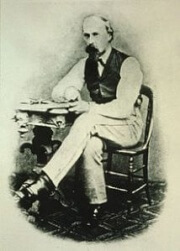
Dr. Samuel Mudd

After killing Lincoln on April 14, 1865, Booth fractured his fibula when he jumped from the president’s box seat to the stage of the Ford Theater and fled the scene. He and co-conspirator David Herold rode on horseback to Dr. Mudd’s house, arriving in the middle of the night. Mudd splinted Booth’s leg and let the men rest in a bedroom upstairs. They were at the house for at least twelve hours before leaving in late afternoon to continue their flight.

(The fugitives were cornered two weeks later in a Virginia tobacco shed by Union cavalry. Herold surrendered. Booth refused. Soldiers set the shed on fire and shot Booth as he tried to escape the flames.)

It’s possible Mudd didn’t know about the assassination. He went into town to run errands during the day of April 15th and certainly would have learned the news then. But he failed to report Booth’s visit for another twenty-four hours.

Authorities found Mudd’s hesitation suspicious. His inaction certainly allowed the men more time to escape. Under interrogation, he changed his story several times. He may have done so due to the stress of being questioned. He was arrested on April 26th, coincidentally the same day Booth was killed and Herold taken prisoner.

On June 29, 1865, Mudd was found guilty of conspiring to murder President Lincoln. He was sentenced to life in prison, escaping the death penalty by one vote. Four of the convicted, including Herold, were hanged eight days later.

Mudd was pardoned by President Andrew Johnson and released from prison in 1869. He died of pneumonia on January 10, 1883. Despite ongoing efforts to have his record expunged, Mudd’s conviction has never been overturned. A Facebook page is dedicated to clearing his name and his home has become a museum.

*****

One thing is clear, however. The phrase “your name is mud” has no connection to Dr. Mudd. Use of the word “mud” to label things as worthless or unwholesome dates back as far as the 16th century. Its usage was later applied to people, as documented in a 1703 description of London’s low life, Hell upon Earth:

Mud, a Fool, or thick skull Fellow.

The following citation appeared in an 1823 dictionary of slang terms.

Mud – a stupid twaddling fellow. ‘And his name is mud!’ ejaculated upon the conclusion of a silly oration, or of a leader in the Courier.

Oddly, “mud” was also used as a general intensifier. There are many published examples of “as fat as mud,” “as rich as mud,” “as sick as mud” etc. Eventually, the meanings coalesced into an epithet that insulted a person’s worth and identity, and sometimes carried a threat of violence. “Your name is mud” has been in use ever since.

Happy Mudd Day, we think.

Copyright 2016 Worldwide Weird Holidays

Bake Cookies Day

Today is Bake Cookies Day. So, you know, preheat the oven. Here’s a tried-and-true formula from Allrecipes.com:

Best Chocolate Chip Cookies

Recipe by Dora
“Crisp edges, chewy middles.”

Ingredients

  • 1 cup butter, softened
  • 1 cup white sugar
  • 1 cup packed brown sugar
  • 2 eggs
  • 2 teaspoons vanilla extract
  • 3 cups all-purpose flour
  • 1 teaspoon baking soda
  • 2 teaspoons hot water
  • 1/2 teaspoon salt
  • 2 cups semisweet chocolate chips
  • 1 cup chopped walnuts

Directions

  1. Preheat oven to 350 degrees F (175 degrees C).
  2. Cream together the butter, white sugar, and brown sugar until smooth. Beat in the eggs one at a time, then stir in the vanilla. Dissolve baking soda in hot water. Add to batter along with salt. Stir in flour, chocolate chips, and nuts. Drop by large spoonfuls onto ungreased pans.
  3. Bake for about 10 minutes in the preheated oven, or until edges are nicely browned.

Happy Bake Cookies Day!

Copyright 2016 Worldwide Weird Holidays

December 16, 1773: Boston Tea Party

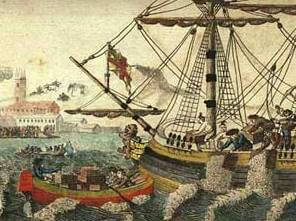
boston tea partyToday is the anniversary of the Boston Tea Party. On December 16, 1773, the Sons of Liberty, disguised as Mohawks, stole aboard three British ships and emptied 342 chests of tea into Boston Harbor. This act of defiance, part of a wave of resistance throughout the colonies, was a protest against British rule. Earlier that year, Parliament had passed the Tea Act to shore up the failing East India Company.

Overall, the price of tea was lowered to undercut the prices of Dutch tea smugglers. (The colonies were legally permitted to buy tea only from the British.) However, it reaffirmed an existing three-pence-per-pound duty, one of many pieces of legislation enacted by Parliament without the input and consent of the colonies; this is often referred to as taxation without representation. The principle of self-governance, not the burden of higher taxes, motivated political opposition to the Tea Act.

The East India Company selected consignees in New York, Boston, Philadelphia and Charleston and shipped 500,000 pounds of tea across the Atlantic in September. Meanwhile, colonists held several mass meetings where it was decided to refuse the tea and send it back to England with the duty unpaid.

Under pressure from these groups, the brokers in Charleston, New York, and Philadelphia turned away the shipments. Merchants in Boston, including three relatives of the governor, refused to cooperate and allowed the ships to dock. The Dartmouth arrived on November 28th, the Eleanor on December 2nd, and the Beaver on December 15th.

Around midnight on December 16th, a large crowd gathered to watch Samuel Adams and members of Sons of Liberty board the ships. It took nearly three hours to smash open all 342 chests and dump more than 92,000 pounds of tea into the water. (The tea, by the way, was from China: Bohea, Congou and Souchong black teas, plus Singlo and Hyson green teas.) For weeks, the harbor reeked of it.

The name “Boston Tea Party” was not coined until the 1820s. It was known simply as “the Destruction of the Tea in Boston.” Many colonists, including George Washington, condemned it at the time as an act of vandalism.

Parliament saw Massachusetts as the hub of resistance to British rule and enacted laws to punish the colony in general and Boston in particular. The Coercive Acts of 1774 shut down the port of Boston until damages were paid, nullified colonial self-government in Massachusetts, declared British officials immune from criminal prosecution and required colonists to house British troops on demand.

The Acts were intended to isolate Boston and New England. The other colonies were expected to abandon them and quash any of their own ideas of insurrection due to fear of reprisal. Instead, the Acts outraged and unified the colonists, who rushed to the city’s aid, sent supplies and began to organize groups to discuss the injustice of British rule and mobilize resistance.

In September and October of 1774, the First Continental Congress convened in Philadelphia and petitioned Parliament to repeal the Coercive Acts, vowing to boycott British goods until then. Massachusetts began forming militias to defy martial law. On February 9, 1775, Parliament declared it to be in a state of rebellion.

On April 19, 1775, the first shots between British and American soldiers were fired at Lexington and Concord in Massachusetts. It is undeniable that the Boston Tea Party and Great Britain’s draconian response to it helped spark the American Revolution.

There were many other precipitating factors but the Boston Tea Party galvanized the populace and helped build a nation. It has been invoked in recent years by groups that appear to lack a working knowledge of the event. Let’s honor its place in history by treating it with the dignity and respect it deserves. (If you’d like to enjoy a cup of tea while you do, that’s fine with us.)

Copyright 2016 Worldwide Weird Holidays

National Ugly Christmas Sweater Day

Today is National Ugly Christmas Sweater Day, celebrated on the third Friday in December. Today we pay tribute to all the sweater-blind relatives who ever wielded knitting needles or visited a store, picked something up and said, “Oh my goodness, this is so cute! [Insert name here] will love this [flammable fabric] sweater with the [most hideous feature] on it!”

national ugly christmas sweater dayThe odds are good–especially if you’re a child of the 70s and 80s–that you’ve  warehoused those ugly sweaters in the back of your closet for years out of misguided family loyalty and, of course, guilt. Now you could dig out those atrocities and donate them, knowing they would find a home, most likely on the back of a hipster whose facial hair is the subject of national discussion about its “relevance.” (Google the words hipster beard finished if you don’t believe us.)

If the idea of bearded men in skinny jeans doesn’t inspire you to part with your disasters of Christmas past, what we’re about to tell you may or may not help. Those sweaters that look like a wearable form of schizophrenia could end up being worn by teenage girls. The most irritating thing about this, if you’ve ever seen it, is that they look so good in them.

national ugly christmas sweater dayWhen we were forced to wear them, the razzing we endured guaranteed at least one trip to cry hot, quiet tears in the girl’s bathroom. It was there that we hatched a plan to smuggle a second top in our backpacks and change before homeroom. We felt like criminal masterminds, right?

Now those knitted prisons of cheer are in demand. “Tacky holiday sweaters have been a staple of our holiday selection at Savers for as long as grandmothers have knit them,” says Sara Gaugl, director of communications for Savers, a nationwide secondhand store chain, “but they shifted from being tacky to trendy in the last decade.”

We have it on good authority—our own—that the way to heal the emotional scarring caused by these experiences is deceptively simple: embrace the ugliness. You will be able to wear the tackiest sweater in the history of history if you follow these simple steps:

  • If you have an ugly Christmas sweater in your closet, something even the moths won’t touch, drag it out of there and put it on. Let the shudder pass through you and take a deep cleansing breath. Now, look in the mirror for a few seconds. Work up to one minute. Breathe into a paper bag if needed. Observe the panic. Make it your friend.
  • If you’ve already jettisoned your ugly sweaters, we applaud your triumph. But now, you must buy a new one, preferably at a thrift store. Be sure to bring a hankie to cover your nose if the smell of decades-old, infrequently washed acrylic, polyester and wool becomes overwhelming. You can do this.
  • If you need to put an own artisanal spin on it to make it your own, have become intoxicated with the heady wafts of camphor floating up from your purchase,  or are simply seized by the holiday spirit, check out this video on the Savers website with instructions for a DIY ugly Christmas sweater. Remember, do not make it look good or you will be branded both lame and vain.

If you still need a little more exposure therapy to quell your anxiety, watch one or all of the following movies: Step Brothers, The Santa Clause (all 3), Deck the Halls, National Lampoon’s Christmas Vacation, or Dumb and Dumber, in which Lloyd Christmas (Jim Carrey) has an entire ugly Christmas sweater-filled dream sequence.

You’re ready. Here’s the acid test. Leave your house wearing the sweater. Go for a walk in a populated area. (Thought you could sneak that by us, eh?) Go to the grocery store. Wear it to your office Christmas party.  Go all out and host an ugly Christmas sweater party.

If you’re out and about and the realization that you’re too old/smart/unironic to be wearing deliberately ugly clothing, fear not. You know that rictus grin you made when you opened a gift and a crime against humanity with two sleeves and a neck hole looked back? Slap that on your face and no one will be the wiser.

Happy National Ugly Christmas Sweater Day!

Copyright 2016 Worldwide Weird Holidays