strange, bizarre and kooky holidays in February

February 2 is Sled Dog Day

Today is Sled Dog Day which recognizes the heroism of 20 men and 150 dogs who raced to save the town of Nome, Alaska from an epidemic. In January of 1925, children began to fall ill, gasping for breath. At least four died. Diphtheria is a highly contagious respiratory disease, often lethal without treatment. It’s curable, but the nearest supply of antitoxin serum was in Anchorage, 1,000 miles away.

On January 25th the town’s only doctor, Dr. Welch, arranged for the serum to be transported by train to Nenana, the end of the line, still almost 700 miles away. Experienced dogsledders, called mushers, decided to run their teams in relays to deliver the 20-pound batch of serum, wrapped in fur, to Nome.sled dog day
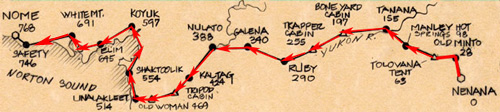
The serum arrived in Nenana on the evening of January 27th. Musher “Wild Bill” Shannon tied the package to his sled and set off on the first 52-mile leg of a 674-mile journey that became known as the “Great Race of Mercy.” Wind chill reached -60° Fahrenheit.

The teams averaged six miles per hour and covered about 30 miles of ground apiece, but when Leonhard Seppala, a famous musher at the time, received the serum on January 31st in Shaktoolik, he covered 91 miles with lead dog Togo. He then handed it off to Charlie Olson, who traveled 25 miles before giving it to Gunnar Kaasen for what was supposed to be the second-to-last leg of the relay.
sled dog day

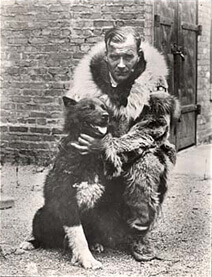
Kaasen and Balto

Kaasen ran straight into a blizzard, the snow sometimes so intense it caused a white-out in which he couldn’t see any of his 13-dog team. He trusted his lead dog, Balto, who relied on scent to guide them. At one point the sled flipped, pitching the serum into a snowbank and sending Kaasen scrambling to find it.

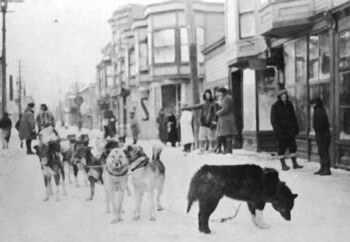
He arrived in Port Safety in the early morning hours of February 2nd, but when the next team was not ready to leave, he pressed on to Nome himself. At 5:30 AM, Balto led the way into Nome to deliver the serum, frozen solid, to Dr. Welch. The doctor thawed the antitoxin, then injected the townspeople. Three weeks later, he lifted the quarantine.
sled dog day

Balto and team in Nome after delivering vaccine

The relay had taken five-and-a-half days, cutting the previous record by almost half. Many mushers had suffered frostbite and four of the dogs died from exposure.

The story got international attention and Balto became a superstar. Within weeks, he was contracted to star in a short Hollywood film entitled Balto’s Race to Nome. After traveling to Seattle, Washington and shooting on Mt. Rainier, Kaasen, his wife, Balto and the rest of the team embarked on a nine-month vaudeville tour of the country. They arrived in December of 1925 to witness the unveiling of a bronze likeness of Balto in New York City’s Central Park.
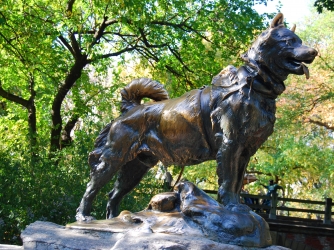
Statue of Balto in New York's Central Park (Credit: Getty Images)

The statue is located on the main path leading north from the Tisch Children’s Zoo. In front of it, a slate plaque depicts Balto’s sled team, and bears the following inscription:

Dedicated to the indomitable spirit of the sled dogs that relayed antitoxin six hundred miles
over rough ice, across treacherous waters, through Arctic blizzards from Nenana
to the relief of stricken Nome in the Winter of 1925.

Endurance · Fidelity · Intelligence

Although Seppala also toured the country and appeared with Togo in an advertising campaign for Lucky Strike cigarettes, he felt cheated by the attention lavished on Kaasen and Balto. He had raised Balto and considered him genetically inferior, with a boxy build; he’d neutered him as a puppy to ensure his line would not continue.
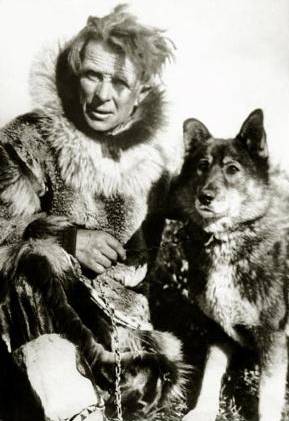
sled dog day

Seppala and Togo

A quote from biography Seppala: Alaskan Dog Driver reads, “The chief thing which disturbed me was that Togo’s records were given to Balto, a scrub dog who was pushed into the limelight and made immortal. It was almost more than I could bear when the ‘newspaper’ dog Balto received a statue for his ‘glorious achievements.'”

The timing and circumstances surrounding what happened next is unclear. Both men worked for Pioneer Mining and Ditch Company near Nome. Kaasen was recalled by the company, most likely at his superior Seppala’s behest. Some accounts say Seppala’s friend, mountaineer Roald Amundsen confronted Kaasen in Chicago, Illinois, a stop on the vaudeville tour he’d been forced to resume due to financial difficulties, and told him to return home immediately. With Kaasen in Alaska, there would be nothing to divert attention from a ceremony Seppala had planned in which Amundsen would award a gold medal to Togo.

No matter how it came to pass, Kaasen found himself financially unable to secure passage for the dogs and with no time to raise funds. He had no choice but to leave them with the tour’s promoter, who had no use for 13 dogs and sold them at a stop in Los Angeles, California to a “museum” where they were tied up in a small dark room, neglected and sometimes abused. For a dime, people could peek in the room’s one small window and see the hero dogs that had saved a town.

This went on for several months until businessman George Kimble, visiting from Cleveland, Ohio, saw an advertisement for the attraction and went to have a look. Incensed at their deplorable condition, fearing that they would soon pine away and die, he approached the owner who offered to sell them to him for $2,000.

Mr. Kimble worked together with a Cleveland newspaper, The Plain Dealer, to get the word out. Children and adults all over the country donated and in only ten days, Kimble was able to rescue the dogs and bring them to Cleveland. (At this point, only seven dogs remained. It’s unknown what happened to the other six.) On March 19, 1927, Balto and his teammates received a hero’s welcome in a triumphant parade. The dogs were then taken to the Brookside Zoo and lived the rest of their lives in comfort.

After Balto died in 1933, his remains were mounted by a taxidermist and donated to the Cleveland Museum of Natural History. In 1998, the Alaska legislature passed HJR 62- the ‘Bring Back Balto’ resolution. The museum refused to return Balto but in October of that year, they loaned him for five months to the Anchorage Museum of History and Art, which drew record crowds.
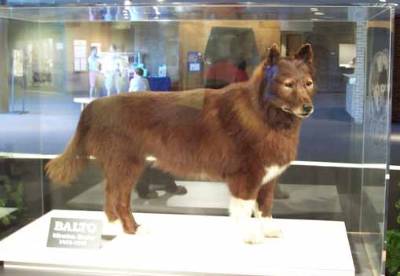
sled dog day

Sunlight has faded Balto’s coat from black to brown.

After Togo’s death in 1929, Seppala had him custom mounted and displayed at Yale University’s Peabody Museum of Natural History. (His skeleton is still there.) In 1964, the stuffed dog was transferred to a museum in Vermont.

During all the years he was displayed, Togo was not enclosed. His coat had begun to bald where he was petted. His significance forgotten, Togo was put into storage in 1979. A carpenter who happened to have a background in racing sled dogs discovered him in 1983 atop an old refrigerator.

The sled run of 1925 became international news again. The museum was pressured by legislators, dog clubs, and museums to do something, whether it was to try to repair the taxidermy, bury him where he had died or, as a letter-writing campaign begun by Alaskan schoolchildren urged, return him to the place of his greatest triumph. sled dog day
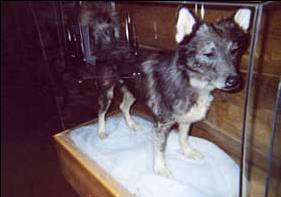
Today he is on display in a glass case at the Iditarod Trail Sled Dog Race Headquarters Museum in Wasilla, Alaska.

Raise a glass to Balto and Togo and all the dogs that save lives or just make our lives better. Hear, hear and have a happy Sled Dog Day!

Copyright © 2017 Worldwide Weird Holidays

World Sword Swallower’s Day

world sword swallower's dayFebruary 27, 2016, marks the ninth annual World Sword Swallower’s Day, observed on the last Saturday of the month with performances at Ripley’s Believe it or Not locations across the U.S., Australia, Denmark, England and Malaysia.

Sword Swallowers Association International (SSAI) president Dan Meyer explains the genesis of World Sword Swallowers Day:

“I established World Sword Swallower’s Day in 2007 to promote this ancient art, still carried on by a few dozen surviving performers, to celebrate the courageous and daring performers who risk their lives to entertain audiences, to honor veteran performers, to raise awareness of the medical contributions sword swallowers have made in the fields of medicine and science, and to raise funds for esophageal cancer research and the Injured Sword Swallowers’ Relief Fund. “

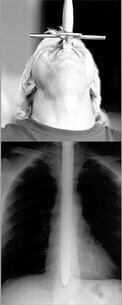
Meyer is a 39-time world record holding sword swallower and motivational speaker who has given TEDx Talks around the globe, performed and lectured at events in 35 countries. He is available for corporate team building retreats, medical conferences and high school assemblies through his company, Cutting Edge Innertainment. While you’re there, check out this disturbing gallery of X-ray fluoroscopes tracking the sword or swords as they enter and leave his esophagus.

SSAI is a non-profit organization accepting donations to enable website maintenance, historical research and bookings. It also supports charities that study esophageal cancer, dysphagia, and other swallowing disorders. SSAI explains the need for its Injured Sword Swallowers’ Relief Fund:

There are on average from 4 to 6 serious sword swallowing injuries per year that require hospitalization, with costs of treatment running from $50,000 to $75,000 USD per injury. Any donations submitted will be sent directly to SSAI members who are struggling to pay off staggering medical bills that are the result of sword swallowing injuries.

If you’re near any of these Ripley’s Believe It or Not Odditoriums at 1:45 pm (local time), prepare to be amazed as sword swallowers demonstrate their craft. The free show will culminate in the simultaneous “Big Swallow” at 2:27:16 pm on 2/27/16. We guarantee that the next time you get a tickle in your throat, it won’t seem so bad. Funny thing, perspective.

Happy World Sword Swallower’s Day!


Copyright 2016 Worldwide Weird Holidays

International Hair Freezing Day

February 25, 2016, marks the sixth annual International Hair Freezing Day, a relatively new highlight of Canada’s Yukon Sourdough Rendezvous. The festival, in its 52nd year, runs from Friday, February 19th through Sunday, February 28th in Whitehorse, Yukon Territory. At least 20,000 people are expected to attend.

Today’s festivities include the International Ice Carving Competition, Texas Hold ‘Em Poker Tournament, a pop-up casino at the Yukon Inn, sponsored by the Lion’s Club of Whitehorse, a fiddle show, a professional burlesque show with proceeds to raise funds for Rendezvous’ Kidsfest. (It’s all about the kids, of course.)

The Queen’s Luncheon takes place today at the Yukon College cafeteria. Those competing for the title of 2016 Rendezvous Queen will mingle with guests and be questioned as part of the judging process. The festival’s website is vague about pageant requirements, other than the ability to keep a straight face while having their photos taken in costumes straight from the rack of a vintage novelty photography studio.

Whatever talent portions lie in store for the ladies cannot possibly compare to what the gentlemen vying for 2016 Sourdough Sam must endure. (Seriously, there would be lawsuits.) Competitions include lip-synching, performing a dance floor striptease and—our favorite—a kielbasa-eating contest done while in drag.

This year’s entrants made a promotional video!

Getting back to the International Hair Freezing Contest: the event has been sponsored since 2011 by Takhani Hot Pools. Fed by hot springs flowing continuously at a rate of 385 liters (86 gallons) per minute, the pool area nearest the source is about 42° C (107.6° F). The far side of the pool drops to about 36° C (96.8° F). It doesn’t smell like rotten eggs as sulfurous springs do.Takhini Hot Springs is fortunate to contain no sulphurous odour as is common to most hot springs.

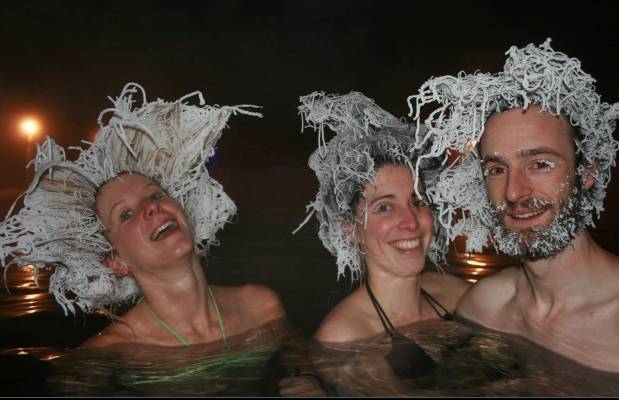
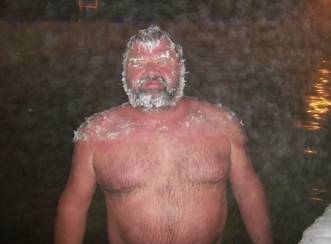
The contest rewards the participant who engineers the most creative frozen hairstyle while soaking in the pool. As the steam accumulates on your hair, the cold air freezes it, allowing you to shape it. When it’s finished, document it with a photo and submit it to Takhini’s Facebook page or email it to its website. Winners will be announced in March.

International Freeze Your Hair Day

After the above photo of the winners of the 2015 International Freeze Your Hair Day became popular worldwide, Takhini owner Andrew Umbrich has raised first prize from $150 to $750 CAD for 2016. Before you book the next flight, check out Umbrich’s competition guidelines. They may give you a headache.

Step 1: Come to the hot springs when it is cold. Preferably -20 or colder. If it is warmer than that it may take longer for desired frozen results.
Step 2: Dip your head in the hot springs and wet your hair.
Step 3: Take your head out of the water and allow the cold air to slowly freeze your hair. All wet hair will eventually freeze, this includes eyebrows and even eyelashes.
If you have very long hair, a good method to freeze it is to lay it down on the sides of the pool so it may freeze in single, long strands. Later, it can be propped up and it will stick straight up.
Step 4: Keep your ears warm. Periodically dip each ear into the hot springs water and be careful not to let your hair touch the water. If that cannot be done, then be tough.
Step 5: Wait.
Step 6: Wait some more.
Step 7: When the hair begins to freeze, slowly mold the hair into the desired shape. For example, one could gather all their hair into a point.
Step 8: Let the hair completely freeze. It will become pure white with frost and ice. Don’t worry, your hair won’t break or snap off.
Step 9: Take a picture and send it to the front desk, our Facebook page, or our email.
Step 10: Dunk your head in the water. Your hair will instantly unfreeze and your head will be nice and warm again.

Still thinking about it? Frozen eyelashes sound good to you? Have you always associated your sense of personal toughness with your ears’ endurance to bitter cold? (Umbrich told an interviewer that -20° C works for hair sculpting, but -30° C is ideal. Ideal. To literally spell it out, that is twenty-two degrees below zero Fahrenheit. We’ve seen documentaries of penguins suffering in warmer temperatures!)International Freeze Your Hair Day

If the image above doesn’t send you running for a cup of hot cocoa and an electric blanket or three, this may be the perfect holiday for you!

Brrr! Have a happy International Hair Freezing Day!

Copyright 2016 Worldwide Weird Holidays

Inconvenience Yourself Day

inconvenience yourself dayInconvenience Yourself Day has been celebrated on the fourth Wednesday in February since 2006. Julie Thompson, president of Environmental Resources Network in Fort Lauderdale, FL, created the holiday to encourage us all to recognize how our actions impact the lives of those around us.

It’s easy to become so focused on our own crazy to-do lists that we forget to hold open a door, let a customer with only a few items get ahead of us in line, thank someone who has helped us or just be kind to others when there is no tangible benefit to us.

We’d like to add a few suggestions to slow the pace of our hectic lives, if only for today. Call a friend instead of texting. Write a letter instead of a Facebook message. Cook a favorite meal instead of throwing something together. (Get the “good” china out of storage, if you have it; what are you saving it for?) Take a walk without any mobile devices and look around at your neighborhood, not just the view of the sidewalk you see past your cell phone.

The secret payoff of inconveniencing ourselves: it makes us feel good. Who knows? It could become a habit. Slow down, say thanks and have a happy Inconvenience Yourself Day!

digiprove_notice