April 19 is Bicycle Day
Today is Bicycle Day, a holiday originated in 1985 by Northern Illinois University professor Thomas Roberts to commemorate the first LSD trip, taken on April 19, 1943.
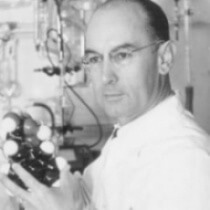
Albert Hofmann
Chemist Albert Hofmann synthesized lysergic acid diethylamide (LSD) on November 16, 1938, at the Sandoz laboratory in Basel, Switzerland, while experimenting with ergot fungus to find medicinal treatments for circulatory and respiratory depression.
When animal testing showed no effects other than restlessness, research was discontinued and the substance destroyed. Hofmann still believed it was an important discovery. Almost five years later, he decided to take another look. While synthesizing it, he began to experience strange sensations.
Later, Hofmann reported the incident to his supervisor:
Last Friday, April 16, 1943, I was forced to interrupt my work in the laboratory in the middle of the afternoon and proceed home, being affected by a remarkable restlessness, combined with a slight dizziness. At home I lay down and sank into a not unpleasant intoxicated like condition, characterized by an extremely stimulated imagination. In a dreamlike state, with eyes closed (I found the daylight to be unpleasantly glaring), I perceived an uninterrupted stream of fantastic pictures, extraordinary shapes with intense, kaleidoscopic play of colors. After some two hours this condition faded away.
Hofmann believed the LSD had caused the experience after he had accidentally absorbed a small amount through his fingers. To test his theory, he waited until the next working day, Monday, April 19, 1943, and purposely swallowed 250 micrograms, the amount he incorrectly estimated as the minimum dose required to have any effect. (It’s actually 20 micrograms.)
Here are his lab notes from April 19th:
4/19/43 16:20: 0.5 cc of Vi promil aqueous solution of diethylamide tartrate orally = 0.25 mg tartrate. Taken diluted with about 10 cc water. Tasteless.
17:00: Beginning dizziness, feeling of anxiety, visual distortions, symptoms of paralysis, desire to laugh.
At that point, Hofmann lost his ability to write. In his autobiography, LSD: My Problem Child, he described the struggle to speak intelligibly when asking his assistant to escort him home. Due to wartime restrictions on the use of motor vehicles, they had to make the journey on a bicycle. He wrote of the ride:
On the way home, my condition began to assume threatening forms. Everything in my field of vision wavered and was distorted as if seen in a curved mirror. I also had the sensation of being unable to move from the spot. Nevertheless, my assistant later told me that we had travelled very rapidly.
At home, Hofmann’s condition rapidly worsened as he experienced anxiety, feared he was going mad and became convinced the LSD had poisoned him. He had moments of clarity, telling his assistant to call a doctor and ask a neighbor for milk, which he believed might work as an antidote.
When his neighbor arrived, he barely recognized her, seeing instead a malevolent witch wearing a lurid mask. He drank two liters of the milk she brought. By the time the doctor showed up, Hofmann felt the worst had passed but was still unable to speak. His heart rate and blood pressure were normal. He had no physical symptoms other than extremely dilated pupils.
Reassured that he wasn’t dying, Hofmann’s fear gradually gave way to a sense of wellbeing.
Now, little by little I could begin to enjoy the unprecedented colors and plays of shapes that persisted behind my closed eyes. Kaleidoscopic, fantastic images surged in on me, alternating, variegated, opening and then closing themselves in circles and spirals, exploding in colored fountains, rearranging and hybridizing themselves in constant flux.
After six hours of brutal highs and lows, the effects subsided. Hofmann awoke the next morning feeling physically tired but mentally refreshed and happy, experiencing heightened senses of taste and sight that lasted throughout the day.
His experiment showed that LSD could evoke profound psychoactive effects at very low doses. Sandoz named the new drug Delysid and began sending samples to psychiatric researchers. Due to the intensity of focus and introspection it caused, Hofmann couldn’t imagine that anyone would use it recreationally. (Much to his chagrin, proponents like Timothy Leary proved him wrong about that.)
In 1953, The CIA began to investigate its possible use in mind control through its now notorious Project MKUltra. The program’s charter was to find drugs that could induce confessions or wipe an enemy’s mind clean so it could be reprogrammed.
LSD was administered to mental patients, prisoners, drug addicts and prostitutes. Other experiments involved employees, college students and military personnel, many of whom were provided with little to no information about the nature of the tests.
The CIA conducted 149 separate mind-control experiments; up to 25 of those used unwitting subjects. This violated the Nuremberg Code, enacted after World War II to punish Nazi doctors who experimented on concentration camp prisoners.
In 1973, the CIA shuttered MKUltra and ordered all records destroyed. First-hand testimony, court transcripts and the few surviving government documents show that at least one test subject died. (Frank Olson, an army scientist, committed suicide one week after his drink was mistakenly spiked with the drug.) Many others suffered psychological damage or insanity as a result of the project.
By the end of the 1970s, Sandoz discontinued manufacture of the drug that had once shown such promise. Hofmann’s ride was largely forgotten until Professor Roberts resurrected it in 1985 as “Bicycle Day.” Since 1985, it has been celebrated on April 19th, the anniversary of the first intentional LSD trip.
Have a safe and happy Bicycle Day!
P.S.: If you truly want to have your mind blown, scroll to Chapter 7, page 319 of Advisory Committee on Human Radiation Experiments: Final Report – October 1995 to read about “Non-therapeutic research on children,” which entailed feeding radioactive substances to disabled kids.
The craziest thing we encountered while researching this holiday was Human Drug Testing by the CIA, 1977: Hearing before U.S. Senate Subcommittee on Health and Scientific Research of the Committee on Human Resources. The entire text is fascinating but skip to page 183 to read Dr. Sidney Gottlieb try to evade Senator Ted Kennedy’s questions about Operation Midnight Climax, in which agents hired prostitutes to work in rooms they outfitted with full surveillance. They could then dose the johns and/or prostitutes and observe their behavior.

 their first NFL championship, the Tigers won their first World Series and the Red Wings won their first NHL championship