
Posts

Dictionary Day

dictionary day

An immense effect may be produced by small powers wisely and steadily directed.
Noah Webster, 1821

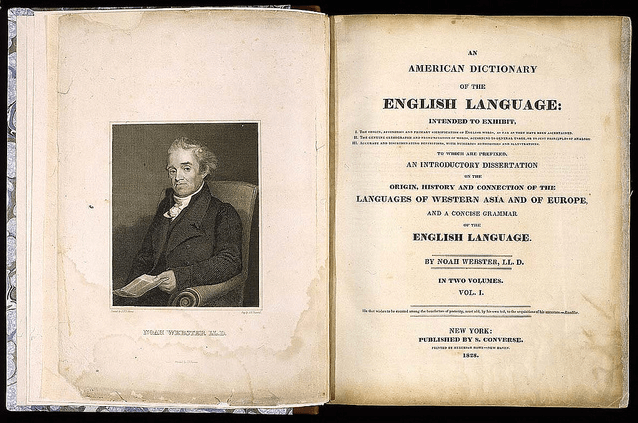
Dictionary Day was founded to celebrate the life of Noah Webster, born on October 16, 1758. Why would anyone spend twenty-seven years of his life working in solitude to produce an American dictionary?

Webster sought to create a unifying, distinctly American standard for the spelling, usage, and pronunciation of words. He felt British spelling was unnecessarily complicated and changed words such as colour to color, plough to plow, musick to music.

In the process, Webster learned more than twenty languages, which allowed him to thoroughly examine each word’s origin and definition. This research significantly contributed to the fields of philology and lexicography.

By the time he finished in 1825 at the age of 66, Noah Webster had penned 70,000 words. Of those, 12,000 had never been included in any dictionary. (Among them: skunk, chowder, squash, and hickory.) American Dictionary of the English Language was published in 1828.

Critics disparaged Webster’s changes and additions, particularly his inclusion of non-literary scientific and artistic terminology, as presumptuous and detrimental to the purity of the English language. Despite such pronouncements, Noah Webster has become known as the father of the American dictionary.

You might be asking yourself right now, “What’s so weird about this holiday?” Nothing, except that few people other than English teachers and rabid word nerds know about it. This was a man of astounding tenacity who helped determine the very language we speak and the words you’re reading right now.

We just blew your mind.

More words:
TEDtalk: Erin McKean redefines the dictionary
Dictionary Day and the Quest for Words – visualthesaurus.com
national lowercase day

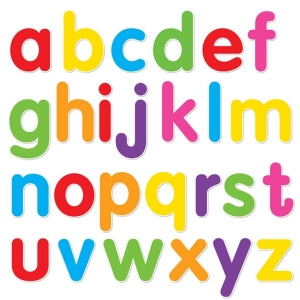
National Lowercase Day alphabetWhile English majors past, present, and future may grind their teeth in frustration, freewheeling texters will love today’s holiday: national lowercase day! This is the day to turn your back on the rules of capitalization if you were ever facing them at all.
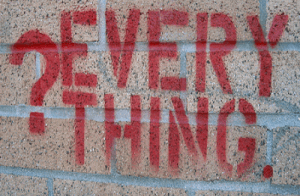
This fun, unofficial holiday has no clear author or point of origin. We could only trace it back to a 2011 mention in a now-defunct blog.

Fun fact: Poet E.E. Cummings often wrote and signed his name in lowercase; he also omitted the punctuation. e e cummings was a rebel, bending the language to his own liking.

Fun fact: While trying to find an example of the use of lowercase letters, I remembered the poet E.E. Cummings’ apparent penchant for using lowercase initials. After cursory research that appeared to confirm this, I wrote the now-stricken sentences. My thanks go to John Cowan for pointing out my error. I have no desire to add more misinformation to the internet. Author Norman Friedman writes here about Cummings’ widow’s reaction to his book being published without “E.E.” properly capitalized.

If shunning capitalization is not your cup of tea, you’ll be happy to know it is also National Dessert Day!

Tomorrow, we return to normalcy. If you’re looking for more information about capitalization and just about everything else, you can’t go wrong with The Chicago Manual of Style.

Happy national lowercase day!

International Skeptics Day

Reality is that which, when you stop believing in it, still exists.
Philip K. Dick

international skeptics day

I’m not sure how he’d feel about International Skeptics Day since there’s no evidence that it’s an official holiday anywhere. Considering the number of skeptical organizations worldwide, perhaps it should be.

The sticklers among us might point out that Skeptics Day is also listed in some quarters as occurring on January 13.

Others might say the dearth of critical thinking calls for as many reminders of the need for skeptical inquiry as possible.

Perhaps the weirdest thing about this holiday is that we seem to need it at all.

To learn more:

  • Watch the YouTube channel of the James Randi Foundation. Many tried and failed to win Randi’s years-long Million Dollar Challenge, which promised the prize to anyone who could show proof of the paranormal. The challenge ended in 2015, the money unclaimed.
  • Plumb the resources of the Committee for Skeptical Inquiry.
  • Find like-minded skeptics in your neighborhood at meetup.com.
  • Consult Snopes.com, the Web’s Google search for hoaxes and misinformation, before you forward that chain email about how the government is poisoning us all with cheese.
  • Watch an old episode of Mythbusters, a show that made testing urban legends entertaining. (After the series wrapped, it became clear that the biggest myth was that the two hosts got along.)
  • Read A Practical Guide to Critical Thinking, which is sure to help you resist that midnight infomercial, win an argument, and separate fact from fiction in almost any situation.

No matter how or when you choose to celebrate International Skeptics Day, have fun!

Kraken Myths and Legends Day

Cephalopod Awareness DayTechnically, there are five International Cephalopod Awareness Days (ICAD) in the annual celebration of the most intelligent invertebrates in the world.
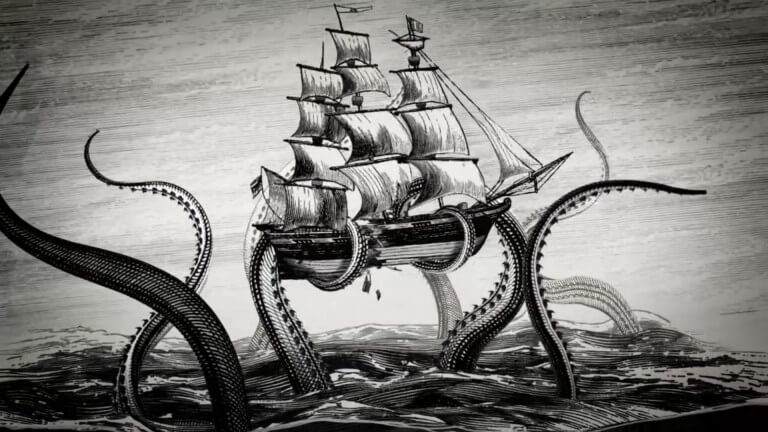
The first Cephalopod Awareness Day was established in 2007 by members of The Octopus News Magazine Online forum (TONMO) to bring attention to the diversity, conservation, and biology of the world’s cephalopods.

Octopi have eight arms, while squid and cuttlefish have eight arms and two tentacles. So the eighth day of the tenth month was chosen to show appreciation for animals with a combination of 8 or 10 appendages. Then four days were added to the holiday to celebrate all cephalopods.

Let’s Call it Kraken Day (please?)

October 11 is Myths and Legends Day, celebrating all the fantastical cephalopods of movies, literature, and legend.  Since ancient times, cephalopods have been a recurring motif in myth, arts, and literature, and they remain a subject of popular culture today.

Cephalopod Awareness Day

Things to do today:
Stop by TONMO. If you’re lucky, you’ll catch a live feed of the conference.
Check out https://www.facebook.com/CephDays/
Put Clash of Titans (the original) on your Netflix queue and 20,000 Leagues Under the Sea on your Kindle reader.

Happy Cephalopod Awareness Day!