Posts

January 31 is Scotch Tape Day

Today is Scotch Tape Day and celebrates the invention of cellophane tape in 1930. The story begins in the early 1920s at Minnesota Mining and Manufacturing, now known as 3M, which made only sandpaper at the time. Richard Gurley Drew, a banjo-playing college dropout hired as a research assistant, soon changed the course of the company’s history.
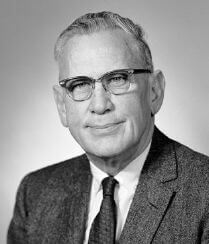
scotch tape dayWhile delivering sandpaper samples to an auto body shop, Drew noticed painters’ frustration with the tape they used to mask car parts. Overly sticky, it ripped off bits of paint when removed, ruining the detail and forcing them to start over. He made it his goal to find a solution to their problem.

For the next few years, Drew experimented until he found the perfect combination of treated crêpe paper, cabinetmaker’s glue and glycerin. It adhered well yet stripped off easily without taking paint with it when removed. Automakers immediately recognized its value and began placing orders for it. The tape was marketed as Scotch Masking Tape in 1925.

Drew rose quickly through the ranks.  In 1929, he struck upon the idea of using DuPont’s recently invented cellophane to make transparent tape. Cellophane was a moisture-proof material used to wrap and present baked goods and grocery items. Its only drawback was the difficulty of sealing packages securely and attractively. Drew hoped to develop tape that would blend with the wrap.

The machinery used to apply adhesive to masking tape was ill-equipped to deal with cellophane, which curled and ripped. The amber glue used on masking tape looked terrible on a transparent surface. Drew and his team had to design new machines and a new clear adhesive made from a combination of oil, rubber and resins.
scotch tape day

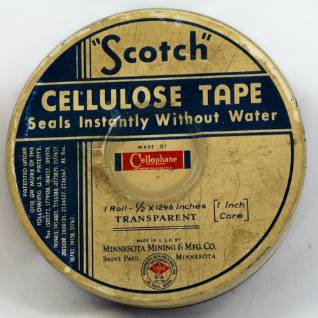
The resulting Scotch Cellulose Tape was introduced in 1930. By that time, DuPont had already developed a new type of cellophane that could be sealed with heat, negating the need for tape. Despite the fact that Drew’s invention missed its target market and debuted during the Great Depression, the adhesive tape sold well to thrifty customers.

In fact, the desperate times may have spelled success for Scotch tape when other products would have failed. Even the racial slur the name is supposedly based on may have helped boost its sales. Scottish people were considered stingy. It was an ethnic stereotype that served 3M well: when money is scarce, stinginess is a virtue and a “cheap” product is a smart buy.

3M later promoted the legend with ads featuring “Scotty McTape,” a cartoon mascot who repeated the story that in 1925, auto painters told a 3M rep (presumably Drew) to go back to his “Scotch” bosses and tell them to put adhesive all over the tape. That’s unlikely since 3M didn’t make tape at the time and, in any case, the problem for the painters was that the adhesive was too strong.scotch tape day
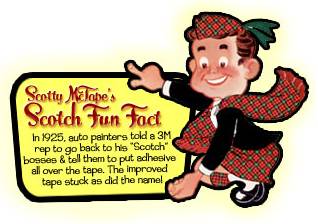
Soon Scotty McTape was declared a member of Clan Wallace and began wearing its red tartan (and Wallace Hunting green plaid.) In the early 1970s, it was decided that McTape was no longer an effective marketing tool and the character was retired. The casual racism of Scotch tape’s name has been forgotten. Dispensers decorated in plaid are purchased every day with no awareness of their association with the clan of William Wallace, also known as Braveheart.

Richard Drew died in 1980 and was posthumously inducted into the Inventors Hall of Fame for U.S. patent number 1,760,820. While working for a sandpaper manufacturer, he invented a tool that has become an essential part of our lives. The next time you reach for adhesive tape, at home or the office, take a moment to imagine life without it. We can’t but, thanks to Mr. Drew, we don’t have to.

Happy Scotch Tape Day!

Copyright © 2017 Worldwide Weird Holidays

January 26 is Lotus 1-2-3 Day

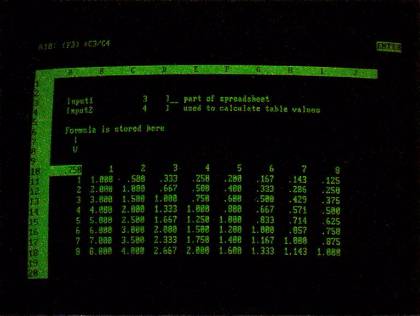
Today is Lotus 1-2-3 Day, when we celebrate the original “killer app.” On January 26, 1983, Lotus Development Corporation released the application for the IBM PC,  named for its three-pronged functionality: as a spreadsheet, graphics package and database manager.

Co-founder Mitch Kapor named the company after a yoga position. A child of the Sixties, he studied Eastern religions, taught transcendental meditation and spent time as a disc jockey and a standup comic before “finding himself” as a software developer.

lotus 1-2-3 day

The rest, as they say, is history. Sales of Lotus 1-2-3 quickly surpassed those of VisiCalc, its chief competitor and Kapor’s former employer. Lotus was well-known for its philanthropy and progressive corporate culture.

In July 1995, IBM executed a hostile takeover and gradually absorbed Lotus. In March 2013, IBM officially retired the brand name but not before Lotus earned a permanent place in computer history.

Copyright © 2017 Worldwide Weird Holidays

Share this:

Wright Brothers Day

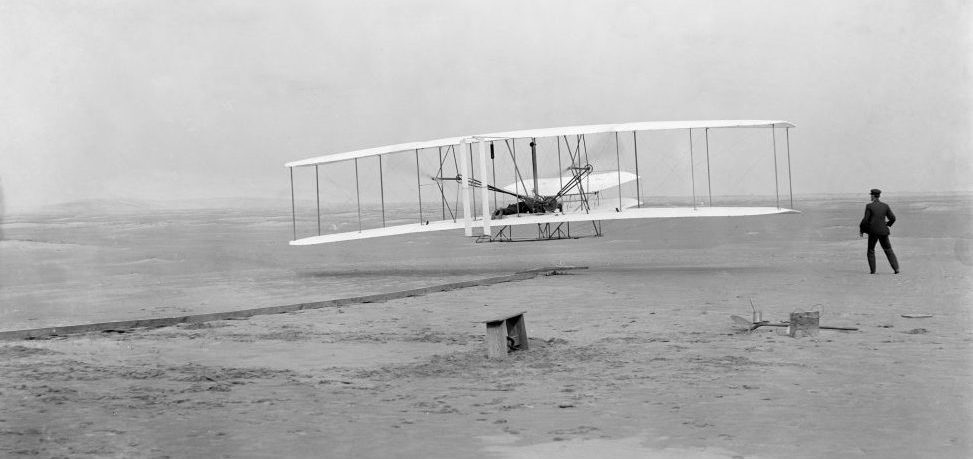
Today is Wright Brothers Day. On December 17, 1903, Orville Wright made the first successful flight of a heavier-than-air, mechanically propelled airplane.

Orville’s brother Wilbur, who’d won a coin toss to determine who flew first, had made the first attempt on December 14, 1903. He was unable to get off the ground and caused minor damage to the plane which took a couple of days to repair.

Wright Brothers Day

First flight, December 17, 1903

Orville’s flight over the dunes near Kitty Hawk, North Carolina, lasted 12 seconds and traveled 120 feet before landing on the sand. Wilbur followed, and the two switched off several times. Wilbur’s last flight lasted almost a full minute and covered 852 feet.

The brothers’ plans to keep flying were dashed when winds flipped the aircraft, damaging it to the point that it was never used again. The plane known as the Wright Flyer hangs in the Smithsonian National Air and Space Museum but nearly didn’t make it there.

Samuel Langley, former Secretary of the Smithsonian Institution and founder of the Smithsonian Astrophysical Observatory, had created the Langley Aerodrome, a plane with no landing gear that had to be launched by catapult. His first flight test had ended in failure nine days before the Wright brothers’ flight.

Langley and the Smithsonian attempted to invalidate the brothers’ patents. After the Aerodrome had been modified and successfully flown a few hundred feet in 1914, the Smithsonian put it on display as “the first man-carrying aeroplane in the history of the world capable of sustained free flight.” The attempt to rewrite history was unsuccessful and the courts upheld the patents.

Because of this, Orville Wright—Wilbur died in 1912—refused to donate the Wright Flyer to the museum. Finally, in the 1940s, the Smithsonian Institution admitted it had misrepresented Langley’s Aerodrome and Orville relented. The Flyer arrived at the museum in 1948, shortly after Orville’s death.

In 1959, President Dwight D. Eisenhower signed a proclamation designating December 17 Wright Brothers Day.

When astronaut Neil Armstrong stepped onto the moon on July 21, 1969, he carried, in a pocket of his spacesuit, a piece of muslin fabric from the left wing of the Wright Flyer and a bit of wood from its left propeller.

Happy Wright Brothers Day!

Copyright 2016 Worldwide Weird Holidays

Share this:

December 6 is Microwave Oven Day

Today is Microwave Oven Day. We don’t know who created it or why they chose December 6th over any other day of the year. Our theory? Since it falls between Thanksgiving and Christmas, two holidays filled with labor-intensive meal preparation, maybe it’s supposed to remind us to take a break from complicated cuisine. So relax and take a bite of history about the accidental invention that changed the way the world cooks.

During World War II, Percy Spencer was testing magnetrons for use in Allied radar sets when he noticed that the candy bar in his pocket had begun to melt. A lesser man might have been alarmed, invested in lead-lined britches and called it a day.

But Spencer’s innate curiosity drove him to conduct a series of tests using, among other things, popcorn and eggs. He concluded that the energy of electromagnetic waves produces heat by agitating water, fat and sugar molecules, causing food to cook more quickly and evenly than by other means.

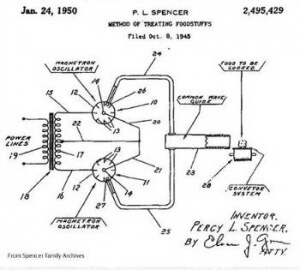
Spencer’s employer, Raytheon, filed a patent on October 8, 1945, for the “high-frequency dielectric heating apparatus.” In 1947, it introduced the first commercially available microwave oven, which stood almost six feet tall, weighed 750 pounds and cost $3,000. It was mainly used by ships and hotels.

microwave oven dayIn 1955, Raytheon and a company called Tappan collaborated on the RL-1, the first microwave oven designed for home use. At $1,295, it was out of reach of most consumers. Only 34 were manufactured the first year; a total of 1,396 were sold by the time production of the model ended in 1964.
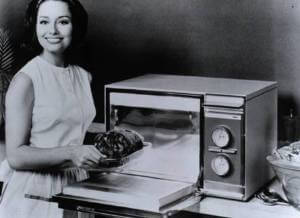
Raytheon acquired Amana Refrigeration in 1965. Two years later, Amana launched the first countertop oven, called the Radarange, retailing at $495.  Its compact size was made possible by the development in Japan of smaller, more efficient electron tubes that improved upon the magnetron design.microwave oven dayIn response to a 1968 study which found microwaves sometimes leaked out of ovens, federal safety standards were set in 1971. According to the FDA, microwave ovens must meet a requirement limiting maximum radiation leakage to 5 milliwatts per square centimeter at a distance of 5 centimeters (1.97 inches) from the external surface of the oven.

Per a New York Times article on the subject:

Manufacturers are also required to line the doors of ovens with metal mesh that prevents microwaves from escaping, and to use a type of door latch that stops the production of microwaves whenever the latch is released.

Those features greatly limit exposure to levels of radiation that are already low. And since the radiation levels drop sharply with increasing distance, the levels two feet away are about one-hundredth the amount at two inches.

Over ninety percent of all U.S. homes now own a microwave oven. There have been no confirmed injuries. In fact, despite his cooked huevos, Percy Spencer fathered three children and died of natural causes in 1970 at the age of 76. (By the way, Spencer received a one-time payment of $2 for the patent to his invention, the same amount Raytheon paid all its inventors.)microwave oven day

So make a bowl of popcorn and celebrate Microwave Oven Day. Still, when you do, you might want to stand back and make sure you close the door. It’s the only way to be sure.

Copyright 2016 Worldwide Weird Holidays