Posts

February 26 is Levi Strauss Day
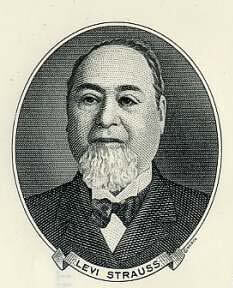
Levi Strauss dayToday is Levi Strauss Day. It celebrates the birthday on February 26, 1829, of the man who invented blue jeans with a little help from his friends.

Strauss, born Löb Strauß, grew up in Bavaria, Germany, where he, his family and his community faced discrimination because they were Jewish. They paid extra taxes and were only allowed to live in certain areas.

In 1847, after his father died of tuberculosis, 18-year-old Strauss and his mother and two sisters traveled to the U.S. and joined his two older brothers in New York City, where they had opened a dry goods business. He worked there through 1852.

He moved to San Francisco in 1853 to capitalize on the influx of miners hoping to strike it rich. The California Gold Rush, begun in 1849 after a nugget was found during construction of Sutter’s Mill, was in full swing. Levi Strauss & Company became a thriving business, selling fabric, clothing and other goods.

In 1872, Strauss received a letter from Jacob Davis, a tailor who had found a way to make pants constructed from Strauss’ sturdy cloth even more durable, by affixing metal rivets on the pockets and the fly seam. He couldn’t afford the patent application fee. Strauss covered it and they received the patent the following year.levi strauss day
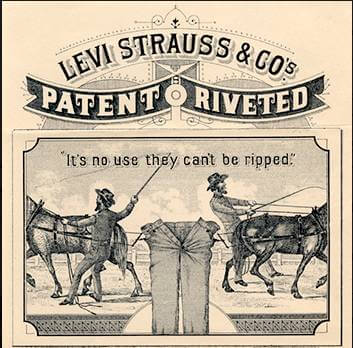
Strauss never doubted their “waist overalls” would be a huge success. They offered two options: pants made of heavy “duck” canvas or blue denim. By 1911, the company phased out canvas altogether.

Why did miners overwhelmingly choose what would come to be known as blue jeans? According to Jude Stewart, author of ROY G. BIV: An Exceedingly Surprising Book About Color, it has a lot to do with the dye process.She posted on Slate, “Unlike most natural dyes that, when heated, penetrate cloth fibers directly, indigo binds externally to the cloth’s threads, coaxed by a chemical agent called a mordant.

“With each washing some of these dye molecules are stripped away, taking bits of the threads with them. The process softens rough fabrics and individualizes the color. This extreme customization––plus the fact that jeans could be ‘shrunk to fit’––made every pair a second skin.”

Historian Lynn Downey added: “Once someone had worn a pair of denim pants, experiencing its strength…and how the denim became more comfortable with every washing…he never wanted to wear duck again; because with cotton duck, you always feel like you’re wearing a tent.”

Strauss helped finance the first synagogue in San Francisco and contributed to various charities, especially those benefitting orphans. As his company grew more successful, Strauss was able to expand his generosity even further by funding many scholarships for students applying to the University of California.

Strauss brought his nephews into the company—he had no children—and groomed them to take over for him. He stayed on as president until his death on September 26, 1902, at the age of 73. The basic jeans that bear his name have changed little since.*

*You may have noticed the rivet beneath the fly is gone. According to legend, cowboys squatting near campfires got crotch burns when the metal overheated. In reality, it was eliminated due to the World War II mandate to conserve metal. The back pocket rivets were removed in the 1950s after complaints they scratched furniture.

Levi’s are arguably the most famous pants on the planet. Happy Levi Strauss Day, everybody!

Copyright © 2017 Worldwide Weird Holidays


February 23 is International Dog Biscuit Appreciation Day

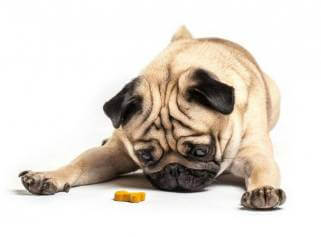
international dog biscuit appreciation dayToday is International Dog Biscuit Appreciation Day, also known as National Dog Biscuit Day.

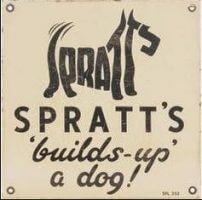
The modern biscuit our dogs know and love owes its existence to Ohio electrician James Spratt. It gets its international pedigree because he got the idea while on a trip to London around 1860, where he reportedly saw sailors who’d just docked throwing leftover hardtack overboard to stray dogs on the pier, who gobbled it up.

Hardtack derives from British sailors’ slang term for food, tack. Cheap and long-lasting, made from flour, water and salt, it was eaten when fresh food was unavailable, especially on extended 0cean voyages and military campaigns. It was called by other names as well: pilot bread, ship’s bread, sea biscuits, molar breakers and worm castles, due to frequent infestations which necessitated dropping a piece into hot coffee, then skimming off the insects which floated to the top.

Spratt was already a successful American businessman who had patented a type of lightning rod. While in London to sell them, he seized upon the opportunity to create and dominate a lucrative market that would target wealthy owners of sporting dogs. He formulated his dog biscuits with fresher ingredients than sailors and soldiers enjoyed: meat, vegetables and wheat.

He opinternational dog biscuit dayened a factory there and began an unprecedented advertising campaign, using large colored billboard displays which depicted a Native American buffalo hunt, implying it was the source of the meat in “Spratt’s Patent Meat-Fibrine.” The true origin remained a closely guarded secret; after selling the company, Spratt retained the sole contract to supply meat for the dog biscuits until his death in 1880.
In 1876, he supplied free food to exhibitors at the Centennial International Exposition in Philadelphia, PA, the second World’s Fair held in the United States. The same year, he filed U.S. Patent #3864 for Spratt’s “Meat-Fibrine Dog Cakes or Biscuits…a square interspersed with punctures, with a St. Andrew’s Cross between the words ‘Spratt’s Patent,’ impressed in the center of the square.”

Spratt’s dominated the market until the early 1900’s when a biscuit made of waste milk from slaughterhouses and fashioned into the shape of a bone rose to prominence. It eventually became known as Milk-Bone and captured the imagination of dog owners everywhere. In 1931, the National Biscuit Company, now known as Nabisco, bought the formula.

In recent years, as health problems caused by obesity have become more prevalent due to a rich diet, dog treat and food formulas have evolved and more nutritious options are available. There’s no doubt that dog biscuits have come a long way and deserve a little recognition. So give your pooch a big hug and have a happy International Dog Biscuit Appreciation Day!

Copyright © 2017 Worldwide Weird Holidays

Single Tasking Day

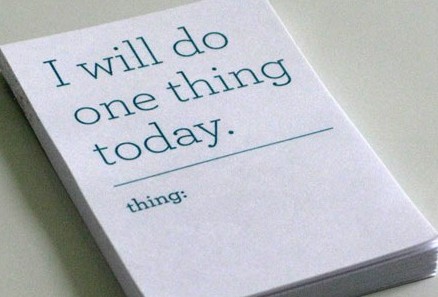
Today is Single Tasking Day. Your mission, if you choose to accept it, is to do just one thing at a time, without participating in the sham called multitasking.

single tasking day

Unlike computers, humans are not wired to work on many complex problems at once. Switching focus quickly from one thing to another can make us perceive that we’re managing multiple streams of information simultaneously, but each shift requires energy.

Our overall processing power becomes less efficient, even when dealing with things we do habitually—like scanning our phones, texting and going through emails—that don’t seem to require much attention but are, in fact, tying up the executive functions of our brains.

A study at Gresham College in London found that multitasking caused subjects’ problem-solving performance to drop by the equivalent of 10 IQ points. MIT neuroscientist Earl Miller says our brains aren’t wired to multitask. “When people think they’re multitasking, they’re actually just switching from one task to another very rapidly. And every time they do, there’s a cognitive cost.”

Per McGill University professor Daniel Levitin, “Asking the brain to shift attention from one activity to another causes the prefrontal cortex and striatum to burn up oxygenated glucose, the same fuel they need to stay on task. And the kind of rapid, continual shifting we do with multitasking causes the brain to burn through fuel so quickly that we feel exhausted and disoriented after even a short time. We’ve literally depleted the nutrients in our brain.”

So feed your brain; just do it slowly so you don’t get a cramp. And have a happy Single Tasking Day!

Copyright © 2017 Worldwide Weird Holidays

National Handcuff Day

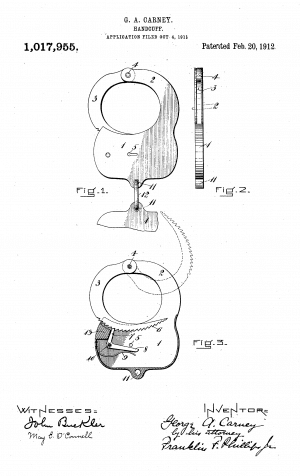
national handcuff dayToday is National Handcuff Day. On February 20, 1912, George A. Carney was awarded U.S. patent number 1,017,955 for his “swinging bow ratchet-type” adjustable handcuff.

Prior to Carney’s invention, there was no standard style and handcuffs were heavy and awkward to use. His lightweight design features a freely swinging arm that enables law enforcement officers to secure cuffs on a suspect quickly and easily, with one hand. More than 100 years later, most handcuffs still use the same swing-through structure, with some minor modifications.

James Milton Gill purchased the patent, founded the Peerless Handcuff Company, and in 1914 began to sell the first model based on Carney’s configuration.  The company has been innovating and improving cuff design ever since. In 1932, Peerless introduced the barrel-style key which quickly became the universal standard for all handcuffs.

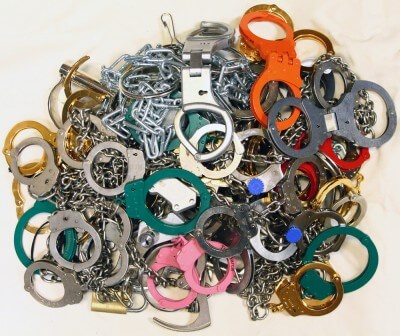
National Handcuff Day was created in 2010 to honor Carney’s invention. Each year, Peerless and Handcuff Warehouse: The Ultimate Source for Restraints sponsor a contest in which the prize is a free set of cuffs. In 2016, they awarded a pair to the entrant who most closely guessed the weight of this pile. Give it a whirl then read on to find the answer.

If you guessed 49.5, it’s a shame you didn’t enter. You’d have won a shiny new pair of handcuffs. (Sheri Barber took the prize with her guess of 49.)

The contest has since returned to its usual quiz format. Click here to enter this year’s competition. (You could use the internet to help answer the questions. Only you, your flexible ethical standards and your Google search history will know for sure.) Please note that we cannot control any ads you may see or email lists you may be added to as a result of your actions.

Have a happy National Handcuff Day!

Copyright © 2017 Worldwide Weird Holidays