Posts

Global Handwashing Day

Today is Global Handwashing Day. We know, we know: eww! When it comes to that ill-advised hot dog wolfed at a highway rest stop, we are all like Mulder on the X-Files: we want to believe. That counter’s clean, the food freshly prepared by people who treat every day as handwashing day. So this must be one of those silly, made-up holidays. Right? Why are we still talking about this?global handwashing dayGlobal Handwashing Day was founded in 2008 by the Global Public-Private Partnership for Handwashing to raise awareness of how proper hygiene can prevent disease transmitted by hand.  Here’s a tweet promoting the holiday, along with its embedded graphic.
Why #GlobalHandwashingDay? B/C 1 trillion germs can live in 1 gram of poop (abt weight of a paper clip)! https://bit.ly/1JUaOrD
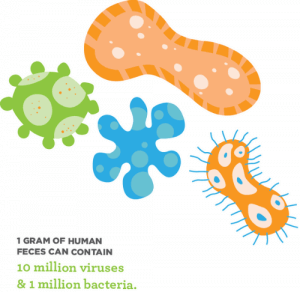
global handwashing feces facts

Wait a minute. The numbers in the tweet and its graphic don’t match. Although I think we can all agree that either number is unsettling, we feel it’s our duty to get to the bottom of this. Who knew that researching this would end up in such a dark place?

Okay, now that we’ve gotten our juvenile punning (mostly) out of the way, let’s learn a little bit about the strangers in our poop. According to a study cited by the Centers for Disease Control, a gram of feces can contain a total of 1 trillion germs. So the tweet is right. Reporting of the number of viruses and bacteria, however, varies wildly. You might want to take our word for it. The Google search alone will make you want to douse yourself in hand sanitizer (which, by the way, isn’t as effective as you’d think.)

Now that you’ve got a face full of feces facts, here’s a dollop more. A German site called my.microbes aims to be the first social network to connect members with similar microbial profiles to “share experiences, remedies, health and diet tips.” Watch out, Match.com! [2025 Update: Since I wrote this in 2015, this German site has been so well scrubbed and/or buried that the only mention I found on Google is my cross-post on sister site Magick Sandwich. I had to resort to the Wayback Machine to prove this site was real. No BS!]

If you’ve got your mind on your manure and your manure on your mind, track your output with the Poop Log app. According to the developer, he updated it to include the ability to attach photos because “it is the most requested feature from my users.” Poop Log allows you to track your bowel movements using the Bristol Stool Scale. [In 2015, this was the only poop tracking app we could find. Ten years later, there are at least fifteen offered on Google Play. A healthy deposit, in our opinion.]

The Bristol Scale was devised in England and is very, well, descriptive. Click here to view it, but maybe not when you’re eating sausage. We’re not showing it here because we don’t want to support poop porn. We will show you this enthusiastic review of PoopLog, though:pooplog review Leland, we wish you the best in your turd analysis. Perhaps the Poop Map would be a useful app for you, too. Just a quick word of advice: turn off the flash when you take a shelfie™* in a public place, which we fervently hope is a restroom. The uninformed might frown on you taking a photo of what came from your posterior for posterity.

Now, if you’ll excuse us, we’re going to go wash our hands. We may never stop.

*sh– + selfie: don’t make us spell this out
Share this:

Heimlich Maneuver Day

June 1st is Heimlich Maneuver Day. You may think you know everything you need to know about this procedure and the man who may or may not have invented it. But, stick around because this one gets weird.

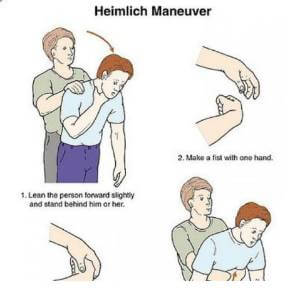
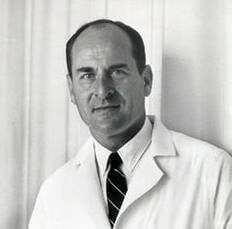
In 1974, the journal Emergency Medicine published Dr. Henry Heimlich’s article about a method to combat choking that has saved countless lives.

heimlich maneuver day 1

At the time, a series of blows to the back was the treatment of choice. Thoracic surgeon Heimlich said he set out to find a better way and realized that when choking, air is trapped in the lungs. When the diaphragm is elevated, the air is compressed and forced out along with the obstruction.

He anesthetized a beagle to the verge of unconsciousness, plugged its throat with a tube, then conducted experiments to find an easy way to get the dog to expel it. After succeeding, he reproduced the result with three other beagles.

Refined for use on humans, his technique entails standing behind the choking person, making a fist below the sternum but above the belly button, and pulling it in and up to dislodge the blockage.

In 1976, the Heimlich maneuver became a secondary procedure to be used only if back blows were unsuccessful. In 1986, the American Heart Association (AHA) revised its guidelines, recommending the Heimlich maneuver as the primary option for rescuers.

heimlich maneuver day

Heimlich was a fierce proponent of using the procedure to rescue drowning victims, but the AHA warns it can lead to vomiting, aspiration pneumonia, and death.

But his most controversial theory is “malariotherapy,” the practice of infecting a patient with malaria to treat another ailment. Although he had no expertise in oncology, Heimlich was convinced it could treat cancer.

In 1987, after the Centers for Disease Control (CDC) refused to supply him with infected blood, he went to Mexico City and convinced the Mexican National Cancer Institute (MNCI) to allow him to treat five patients with malariotherapy. Four of the patients died within a year. The project was abandoned with no follow-up studies.

In 1990, The New England Journal of Medicine published Heimlich’s letter proposing malariotherapy as a treatment for Lyme disease. Before long, sufferers around the world began to ask for the treatment. But lack of supporting evidence and poor patient reviews spelled the end of the exercise.

Within a few years, he decided it could tackle AIDS. Anthony Fauci, Director of the National Institute for Allergy and Infectious Diseases (NIAID), labeled the idea “quite dangerous and scientifically unsound.” However, Heimlich was able to secure financing from Hollywood donors and establish a clinic in China.

In 1994, his Heimlich Institute paid four Chinese doctors between $5,000 and $10,000 per patient to inject at least eight HIV patients with malarial blood. At the 1996 International Conference on AIDS, he announced that in two Chinese patients, CD4 counts that decrease as HIV progresses to AIDS, had increased after malariotherapy and remained elevated two years later.

When experts reviewed the studies, they found that the test used by Chinese doctors to measure CD4 levels was notoriously unreliable, rendering the results useless. Heimlich pressed on, but this time had a difficult time finding sponsors.

In 2005, Heimlich determined that a rebranding was in order. Reasoning that the word “malaria” might scare people off, he changed the name to “immunotherapy.” When speaking to a journalist, he refused to disclose the exact location of his latest clinical trial in Africa. Due to its ethically dubious practice of initially denying treatment for malaria, the study had been conducted without governmental permission.

That same year, the AHA undertook a de-branding effort: its guidelines no longer refer to the Heimlich maneuver by name. It is now simply referred to as an “abdominal thrust.” Since 2002, Heimlich’s son Peter has worked to pierce the myth surrounding his father, labeling him a fraud and exposing alleged human rights abuses, including experimentation on unwitting people in violation of international ethical standards regarding informed consent.

On Monday, May 23, 2016, the 96-year-old reportedly performed his maneuver on 80-year-old Patty Ris, a fellow resident at Deupree House, a senior living community in Cincinnati, Ohio. He told a reporter it was the first time he’d used his invention to save a life. (In 2003, he told BBC Online News that he’d saved someone at a restaurant three years earlier.) While many news outlets reported it as fact, some came to question its veracity.

While it’s an understatement to say that Dr. Henry Heimlich was a complex and problematic individual, there is no denying that he created a life-saving procedure. Unless he didn’t. According to emergency room physician Edward Patrick, he helped develop the maneuver before Heimlich took sole credit and slapped his name on it.

Patrick’s backstory is bizarre, including a possible scam involving “saving” a girl from drowning to help Heimlich convince the AHA to recommend it. (As mentioned earlier in the post, AHA rejected it. And in reality, the girl slipped into a coma and died four months later.)  We’re not saying any of this is true, of course. Along with every other allegation, Patrick is allegedly quite litigious.

However you decide to celebrate it, have a happy day free of the need for the Heimlich maneuver!

Share this:

May Ray Day

May Ray DayToday is May Ray Day. Its goal is simple. If you look out the window and it’s sunny, go outside and enjoy it. (Common sense tip: If you’re in the middle of a business meeting, driving a car, or standing anywhere above the first floor, wait for a more appropriate time and place to step outside.)
I have been unable to determine the creator of May Ray Day. It could be someone who sells sunscreen or solar panels or who worships the sun and wants to indoctrinate others to believe in Ra, Helios, Sol, Utu, or the lesser-known gods of Melanoma, Squamous, and Basal Cell.

May is Skin Cancer Awareness Month. About 86 percent of melanomas and 90 percent of other skin cancers are associated with exposure to UV radiation. Before you head out, read these myth-busting facts from the Skin Cancer Foundation. We’ve thrown in one about tanning beds for good measure.

Myth: UVB radiation is a good source of vitamin D.

Fact: We can produce only a limited amount of vitamin D from UVB radiation. For Caucasians, that limit is reached after just five to 10 minutes of midday sun exposure. After reaching the limit, further exposure will not increase the amount of vitamin D in the body. Rather, it has the opposite effect: the vitamin D stored in the body begins to break down, leading to lower vitamin D levels. 

Myth: Sun exposure is the only source of vitamin D.

Fact: Vitamin D can be obtained from oily fish (like salmon, fresh tuna, trout and sardines) and cod liver oil, as well as from fortified orange juice and milk, yogurts, and some cereals. Supplements are readily available and inexpensive.

Myth: Tanning beds are a healthy option for boosting vitamin D levels.

Fact: The indoor tanning industry often makes the false claim that indoor tanning is helpful for vitamin D production. In reality, vitamin D is received through exposure to UVB rays; the bulbs used in tanning beds mainly emit UVA rays. Tanning beds are a known carcinogen. Just one indoor UV tanning session increases users’ chances of developing melanoma by 20 percent, and each additional session during the same year boosts the risk almost another two percent. 

So apply a liberal amount of broad-spectrum sunblock, put on your sunglasses, and don a wide-brimmed hat before venturing outside. (If it’s raining, don’t worry. There are plenty of days left in May. One of them will surely be sunny.)

Sun responsibly and have a happy May Ray Day!

Share this:

May 11 is National Root Canal Appreciation Day

national root canal appreciation dayToday is National Root Canal Appreciation Day, created in 2005 by Wisconsin dentist Chris Kammer.

Dr. Kammer became known as “America’s Favorite Rock’n’Roll Dentist” in July 2004 when he performed his original rap song “Get Out the Brush” at Madison Mallards collegiate league ballpark, inspiring 5,991 baseball fans to brush their teeth simultaneously.

Sadly, that number was surpassed the following year by 13,380 people at a Colgate-sponsored event at San Salvador’s Cuscatlán Stadium in El Salvador. Yet another Colgate-sponsored event in 2019 nearly doubled that number with 26,382 synchronized brushers and has remained the Guinness World Record ever since.

In April 2005, Dr. Kammer announced he would inaugurate Root Canal Appreciation Day on May 11th by returning to the ballpark and performing a root canal on home plate. He encouraged other dentists to perform root canals in public places. Wisconsin Governor Jim Doyle and Madison Mayor Dave Cieslewicz issued proclamations recognizing the holiday.

We can find no confirmation that he did the procedure; it seems like the kind of publicity stunt that would have a gotten a little, you know, publicity. We found a recent podcast in which he discusses a dental hygiene program that he calls “Gums of Steel.”

We also came across Dr. Kammer’s 2011 audition for American Idol. You didn’t think we’d make you go to bed tonight wondering what “Get Out the Brush” sounds like, did you? It’s mercifully short and every bit as entertaining when watched with the sound off. Either way, it will quickly become obvious why: a) he should keep his day job, and b) we don’t want his hands in our mouths.

Happy National Root Canal Appreciation Day!

Share this: