Posts

December 25 is A’phabet Day

a'phabet dayToday is A’phabet Day, always observed on December 25th. It was created by Robert L. Birch and Puns Corps as a secular alternative for people who want to send cards to their friends during the holiday season.

Instead of a traditional Christmas card, they can send greetings using the “a’phabet” and leaving gaps where the “L” would appear. For this reason, the holiday is also known as No-L Day. Get it?

We don’t know when the holiday was first celebrated. We found references to Puns Corps as far back as April 16, 1981, when Birch gave a speech called “Wit and the Emancipators” that explored the capacity of humor and wordplay to persuade.

According to usbiz.org, Puns Corps has been in operation since 1999 and can be reached at these coordinates: 38.864921,-77.174267 (Falls Church, Virginia.) Sadly, Mr. Birch passed away in 2005, but his memory lives on in the many punny holidays he created.

Happ A’phabet Day!

Copyright 2016 Worldwide Weird Holidays

December 24 is National Eggnog Day

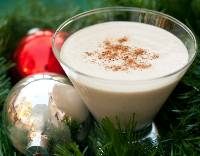
national eggnog dayToday is National Eggnog Day, celebrated each year on Christmas Eve. The sweetened drink is traditionally made with milk and/or cream, sugar, eggs, and spices, often mixed with spirits such as rum, brandy or some combination of liquors.

Also known as egg milk punch, it has a rich history dating back to “posset,” a hot beverage that mixed milk and eggs with wine or beer. Eggs and milk were a rare commodity among the peasants of medieval England, so it was most often drunk by the wealthy in toasts to health and prosperity.

In the 1700s, eggnog crossed the Atlantic to the Americas, where its use was more widespread due to colonists’ direct access to chickens and cows. England’s high import taxes on brandy, its preferred alcoholic ingredient, made cheap, readily available rum a popular substitute.

If you’d like to try your hand at making eggnog, you can’t go wrong with George Washington’s recipe. The father of our country used four different kinds of alcohol. Parties at Mount Vernon must have been a lot of fun.

He might have had a tipple before penning the directions: he forgot to include the number of eggs needed. Cooks of his era estimated that a dozen eggs would suffice. Here are his instructions:

One quart cream, one quart milk, one dozen tablespoons sugar, one pint brandy, 1/2 pint rye whiskey, 1/2 pint Jamaica rum, 1/4 pint sherry—mix liquor first, then separate yolks and whites of eggs, add sugar to beaten yolks, mix well. Add milk and cream, slowly beating. Beat whites of eggs until stiff and fold slowly into mixture. Let set in cool place for several days. Taste frequently.

If the thought of raw eggs doesn’t thrill you, try this cooked version. Omit the alcohol if you’re the designated driver. Have a happy National Eggnog Day!

December 22 is National Cookie Exchange Day

Today is National Cookie Exchange Day. Take a break from last-minute decorating, shopping, wrapping, and planning for the coming holiday. Happy? Humbug? Even if you don’t celebrate Christmas, it’s difficult to avoid the stress leading up to the biggest holiday of the year.

National Cookie Exchange Day

Sit back and eat a cookie or three. Swap your favorites with friends and family, try one of the following recipes:

Snickerdoodles
Molasses Drops
Classic Sugar Cookies
Soft Christmas Cookies
Pumpkin Cookies with Cinnamon Cream Cheese Frosting

Or visit a bakery and take the whole day off. We’ll never tell! The point of this holiday is to relax and enjoy yourself.

Happy National Cookie Exchange Day!

Copyright 2016 Worldwide Weird Holidays

Forefathers’ Day

forefathers' day

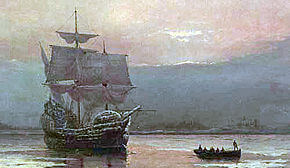
Forefathers’ Day commemorates the landing of the Mayflower and the pilgrims’ subsequent founding of Plymouth Colony in North America. The ship arrived on December 11, 1620. So why is the anniversary celebrated on December 21 or December 22?

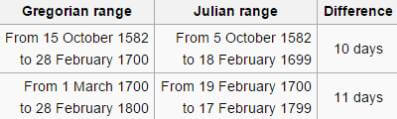
In 1582, Pope Gregory XIII announced his Gregorian calendar would replace the Julian calendar introduced in 46 B.C. by Julius Caesar.  The Roman emperor’s system had miscalculated the length of the solar year by 11 minutes.

This concerned the pope because it meant that Easter, traditionally observed on March 21, fell further away from the spring equinox with each passing year. Ten days were subtracted to realign the seasons with the calendar. The beginning of the new year was also moved to January 1 from March 25.

England and the colonies didn’t convert to the new system until September 1752, causing the month’s calendar to look like this:

 cal 9 1752
  September 1752
 S  M Tu  W Th  F  S
       1  2 14 15 16
17 18 19 20 21 22 23
24 25 26 27 28 29 30

Benjamin Franklin wrote of the change, “It is pleasant for an old man to be able to go to bed on September 2, and not have to get up until September 14.”

When the Old Colony Club of Plymouth inaugurated Forefathers’ Day in 1769, it mistakenly reset the anniversary of the ship’s landing to December 22. (Perhaps it utilized the 11-day difference appropriate to its own century.)
Founders' Day

Members still observe the holiday on December 22, wearing top hats and marching down Plymouth’s main street led by a drummer. After firing a small cannon at the end of the route, they return to their club for breakfast and toasts to the Pilgrims.

Other groups like the General Society of Mayflower Descendants observe the occasion, sometimes called Compact Day, on December 21, as does the Pilgrim Society, a group formed in 1820 that serves a traditional dinner of succotash, stew, corn, turnips, and beans.

No matter how or when you choose to celebrate it, have a happy Forefathers’ Day!

Copyright 2016 Worldwide Weird Holidays