
December 12 is Poinsettia Day
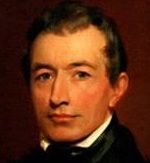 Today is Poinsettia Day, which marks the death of Joel Roberts Poinsett on December 12, 1851. Poinsett was appointed in 1825 by President John Quincy Adams as Envoy Extraordinary and Minister Plenipotentiary to Mexico. (The title “Ambassador” wasn’t created until 1896.)
While there, Poinsett, an amateur botanist, introduced the American elm to Mexico. In 1829, he returned to his home in South Carolina with cuttings of a shrub with red flowers and cultivated it in his greenhouse.
The plant has a rich history in Mexico. The Aztecs called it Cuitlaxochitl (from cuitlatl, for residue, and xochitl, for flower) and used the leaves to dye fabrics and the sap to control fevers. Today it’s known in Mexico and Guatemala as La Flor de la Nochebuena (Flower of the Holy Night) and is displayed during celebrations of the Dia de la Virgen de Guadalupe, which also happens to take place on December 12.
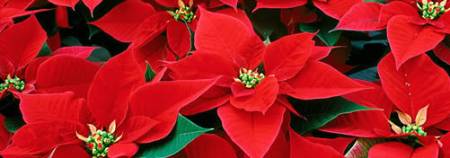
We’re not sure who started the rumor that poinsettias are poisonous, but we’ve found many studies refuting it, including this one, published in the American Journal of Emergency Medicine:
To determine if there was any validity to the toxicity claims, 849,575 plant exposures reported to the American Association of Poison Control Centers were electronically analyzed. Poinsettia exposures accounted for 22,793 cases and formed the subset that was analyzed to critically evaluate the morbidity and mortality associated with poinsettia exposures. There were no fatalities among all poinsettia exposures and 98.9% were accidental in nature, with 93.3% involving children. The majority of exposed patients (96.1%) were not treated in a health care facility and 92.4% did not develop any toxicity related to their exposure to the poinsettia.
Experts say a fifty-pound child would have to eat at least five hundred leaves just to get a bellyache. Since they taste terrible and a plant has a fraction of that number of leaves, it’s unlikely anyone is going to make a meal of them.
Although poinsettia leaves won’t kill pets, either, its emetic properties can make them throw up which, let’s face it, is no fun for anyone involved. Just to be on the safe side, keep it away from Fido and Mr. Whiskers. Everyone else can enjoy the sight of this iconic symbol of the holiday season and have a happy (and healthy) Poinsettia Day!

 n from two Klingon characters in Star Trek VI: The Undiscovered Country. General Chang barks, “To be or not to be?” (