
Cremation Day
 Cremation Day is more fun than it sounds. Let’s rephrase: it’s more fun to read about than it sounds. Trust us.
On December 9, 1792, the first recorded open-air cremation in the United States took place in Charleston, South Carolina. The decedent was Colonel Henry Laurens, former president of the Continental Congress, who had once co-owned the largest slave trading company in North America.
Laurens, who suffered from a fear of being buried alive, stipulated in his will that his body be burned on the grounds of his plantation. (One wonders why it never occurred to him to be afraid of being burned alive.) His ashes were then placed in an urn and buried in the family cemetery.
The plantation is now a Trappist monastery, exposed by PETA in 2007 for starving chickens for weeks to increase egg production. Now the monks raise mushrooms instead.
Humble Beginnings
Cremation dates back to ancient Greece and Rome, where urns called amphorae were used to store the ashes of the cremated. The Greeks buried them under mounds of earth and stone. Romans built columbaria, vaults containing niches to hold the urns.
Vikings burned the dead atop funeral pyres, but the rest of what we see on TV and in movies is bunk. They did not place the deceased in boats and set them ablaze. An untended fire over water could not reach or maintain a temperature high enough to incinerate a body, leaving charred remains to be picked apart by birds or washed ashore.

Also, boats were much too valuable to burn every time someone died. They would have spent all their time shipbuilding. Ship captains were sometimes buried with a small ceremonial ship. One of these boats, dating back to the ninth century, was unearthed in Norway in 1904. It contained sacrificial women and livestock but no burnt timber. Sorry, Hollywood.
The first cremation chamber, called a retort, was constructed by Professor Lodovico Brunetti and introduced at the Vienna Medical Exhibition of 1873. He displayed the furnace with four pounds of cremated human remains and a sign that read: “Vermibus erepti, puro consumimur igni!”, which, loosely translated from Latin, means “Saved from worms, we are consumed by pure fire!”
Dr. Francis J. LeMoyne constructed America’s first modern crematory in 1876 on property he owned in Washington, Pennsylvania, after the local cemetery refused to host it. Housed in a simple brick building, it remains in remarkable condition 139 years later. (Tours are available the second Saturday of May through September from 2 to 4 pm.)
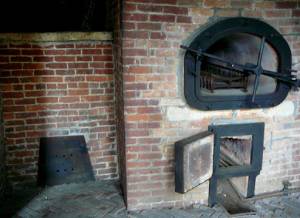
As luck would have it, the New York Cremation Society had just come into possession of its first dead body, Baron Joseph Henry Louis Charles De Palm, a German aristocrat who had apparently died without a penny to his name(s).
The society contacted LeMoyne and requested the use of his facility, seeing it as an opportunity to showcase the superiority of cremation. On December 6, 1876, surrounded by a throng of reporters, scientists, and physicians, the baron’s body was produced.
Unfortunately, DePalm had been dead for six months, poorly preserved with potter’s clay and phenol. The gruesome sight of the withered, shrunken corpse did not further the cause. Though the procedure went well, the herbs and pine branches could not alleviate the stench. Newspaper accounts were less than glowing.
It’s said that Dr. LeMoyne built the crematory due to his own fear of being buried alive. (Honestly, does anyone look forward to that possibility?) He died in 1879 and, in accordance with his wishes, was cremated on the premises.
Happy Endings
Cremation’s acceptance grew slowly. Between 1876 and 1901, 25 new crematories were built across the U.S. By the time the Cremation Association of America was founded in 1913, there were 52. More than 10,000 cremations took place that year.
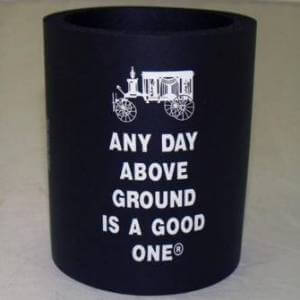
Bronze urns became fashionable in the 1920s, some so heavy that the floors underneath had to be reinforced. Various styles were favored across the country. Round ones were preferred in the Northeast, while rectangular and book shapes sold well on the West Coast. In the Midwest, book, box, and vase models were popular, according to Jason Engler, Senior Cremation Advisor to the National Museum of Funeral History, which can be rented for parties and has a lovely gift shop with items like this “Any Day Above Ground is a Good One®” beer koozie.
In the 1980s, bronze prices soared, and urns made of aluminum, cloisonné, and other lower-cost materials made post-cremation receptacles affordable to the masses. Times have changed since then: Of the 1.9 million people cremated in the U.S. in 2023, about 600,000 chose to be scattered rather than stored.
If only they’d known about LifeGem, a company that turns ashes into a cocktail ring. Just seal no more than eight ounces of your loved one in a plastic container and ship it. (Add a lock of your hair to create a “unity LifeGem heirloom diamond.” Why should the dead have all the fun?)
The carbon is extracted and superheated, which “converts your loved one’s carbon to graphite with unique characteristics and elements that will create your one-of-a-kind LifeGem diamond.” What kind of graphite? Like a pencil? A fishing rod? Fuselage? A neutron moderator in a nuclear reactor?
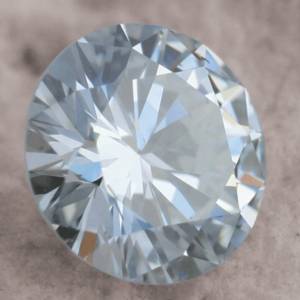
Specialists transfer the graphite to a machine that heats and compresses it for several weeks. At this point, any resemblance to your loved one is purely ceremonial, DNA long gone, so it’s faceted and etched with your choice of messages to guarantee its uniqueness.
A half-carat colorless LifeGem costs $5,599. Volume discounts are available. Now everyone can have a piece of Grandpa. Just make sure you take him off when you wash the dishes.
Happy Cremation Day!
More death-related holidays:
Sylvia Plath Day
Create a Great Funeral Day
Plan Your Epitaph Day
RIP Visit a Cemetery Day